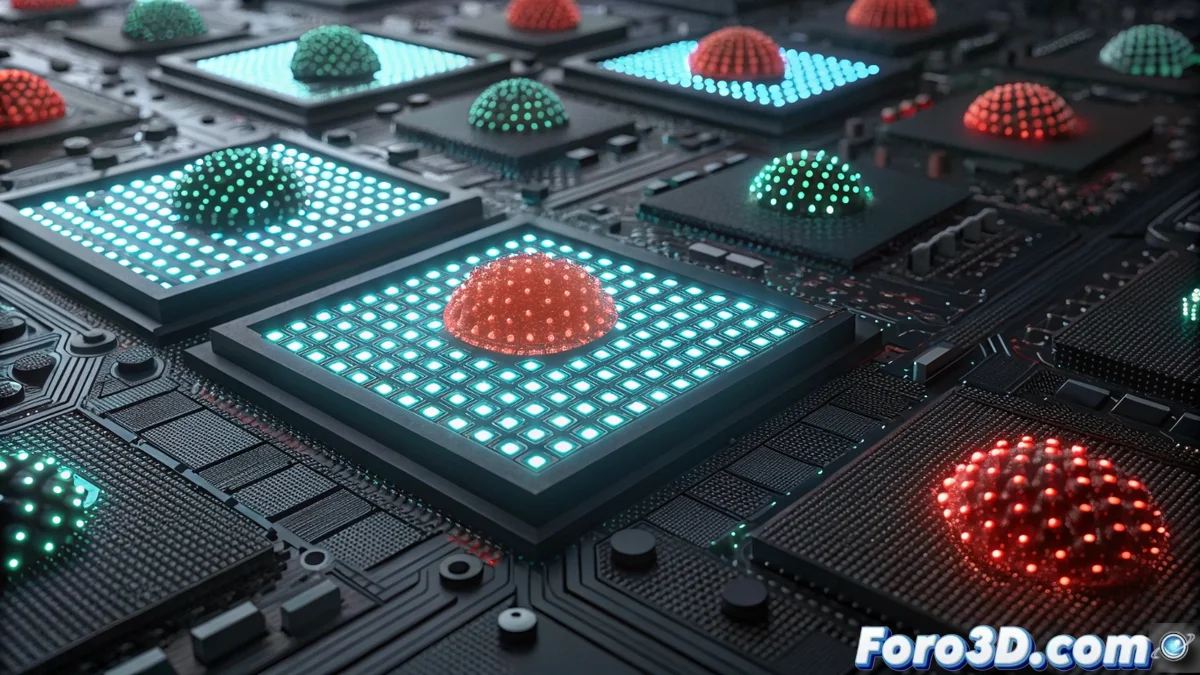
MicroLED: the display technology where each pixel is its own light
In the constant evolution of displays, MicroLED emerges as a paradigm shift. Unlike conventional technologies, here each light point is a microscopic and inorganic light-emitting diode that operates completely autonomously. This design completely eliminates the need for a backlight or rear lighting panel, providing unprecedented control over each pixel. The result is image quality that promises to redefine our display standards. 🚀
Fundamental advantages: brightness, contrast, and durability
The unique architecture of MicroLED unlocks benefits impossible for other technologies. By being able to turn off pixels individually, perfect blacks and infinite contrast are achieved. Simultaneously, these microscopic diodes are capable of reaching levels of dazzling brightness, far surpassing LCD/LED and OLED screens. This combination positions it as the natural successor in the quest for the perfect image.
Main technical strengths:- Pixel-by-pixel lighting control: Each MicroLED is independent, allowing absolute contrast and exceptional color accuracy.
- Extreme brightness: Capable of exceeding 5000 nits, ideal for environments with high ambient light and HDR content.
- Ultra-fast response: Response times are nearly instantaneous, eliminating motion blur in fast-action scenes.
MicroLED is not just an incremental improvement; it is a qualitative leap toward total visual fidelity, combining the best of several technologies into one.
Invincible against burn-in and with exceptional longevity
Perhaps its most decisive advantage over OLED is its resistance to burn-in or permanent burnout. Being manufactured with inorganic materials, MicroLED diodes do not suffer the organic degradation that affects pixels of the rival technology. This translates into an extraordinarily long lifespan, maintaining brightness and color fidelity unaltered for tens of thousands of hours of use, even with static content.
Key durability benefits:- Zero burn-in risk: Ideal for user interfaces, static logos, or use as a professional monitor.
- Color stability: Inorganic compounds do not degrade with heat or time, maintaining the original calibration.
- Inherent robustness: The technology is more resistant and reliable in the long term, reducing panel fatigue.
Manufacturing challenges and a promising future
The major obstacle to its mass adoption is the manufacturing complexity. Assembling millions of red, green, and blue micro-diodes with nanometric precision on a substrate is a slow, expensive, and defect-prone process. Currently, this limits its production to large-format screens at very high prices. However, the industry is heavily investing in techniques such as mass transfer of microchips to reduce costs and increase efficiency. The path is paved for MicroLED to reach premium televisions, reference monitors, and eventually portable devices. The future of displays is bright, literally, and this time it's here to stay without fading. ✨