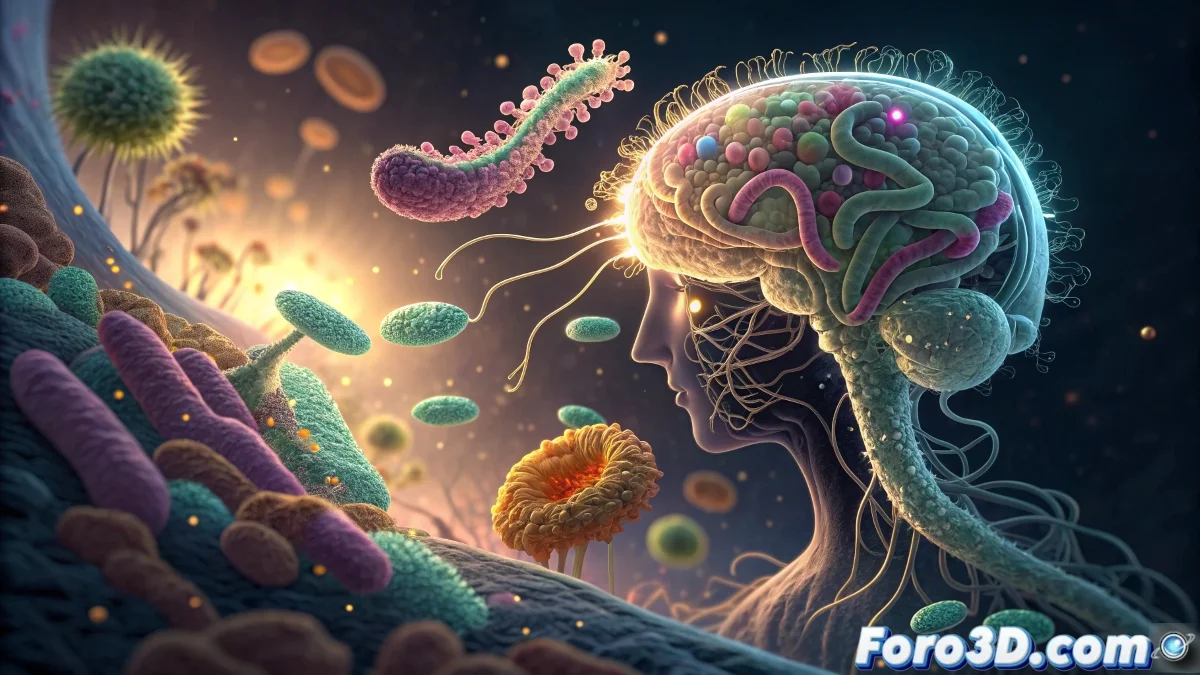
Microbiological Revolution: How the Infant Microbiome Transforms Our Understanding of Human Development
The scientific exploration of the microbial universe inhabiting our body has completely redefined our understanding of human health from its earliest moments. What began as simple bacteriological curiosity has become a paradigmatic revolution that connects microbiology, neurology, and immunology in surprising ways 🦠
Origins of Microbial Colonization
Pioneering studies from the 1990s revealed that natural birth establishes the first microbial signature in the newborn, transmitting specific bacterial communities from mother to baby. This initial transfer functions as a foundational inoculum that determines the trajectory of immunological development for years to come.
Key Factors in Initial Colonization:- Vertical transmission during vaginal birth that establishes specific bacterial communities
- Breastfeeding as a continuous source of beneficial microorganisms and prebiotics
- Skin-to-skin contact that transfers protective skin microbiota
The infant microbiome is not simply a passenger, but an active architect of early human development
Gut-Brain Axis: The Revealing Connection
Recent research has demonstrated that microbial signals constantly travel from the digestive tract to the brain through multiple pathways. Bacterial metabolites such as butyrate and acetate cross the blood-brain barrier and modulate crucial neuroinflammatory processes for cognitive development.
Discovered Communication Mechanisms:- Production of microbial neurotransmitters that influence mood states
- Modulation of the enteric nervous system through short-chain fatty acids
- Regulation of intestinal permeability that affects systemic inflammation
Technical Implementation in Houdini for Scientific Visualization
Creating precise visualizations of the infant microbiome requires a meticulous approach in Houdini, combining advanced particle simulations with dynamic volumes. The process begins with a structural setup that respects the real biological scale of these microscopic ecosystems 🔬
Initial Project Setup:- Create new project with metric scale (Edit → Preferences → Scene Units → Meters)
- Set timeline to 300 frames with 24 fps frame rate for detailed animations
- Configure viewport to scientific mode (Display Options → Visualization → Scientific)
- Import medical DICOM data using File → Import → Medical Imaging node
- Convert geometry to VDB with VDB From Polygons (density VDB with voxel size 0.001)
- Create three main nulls: intestinal_microbiota, nervous_system, metabolites
- Add POP Network with source rate of 5000 particles per frame
- Configure POP Wrangle with custom attributes: species (0-5), reproduction_rate (0.1-0.8)
- Set POP Solver with gravity 0.2 and drag 0.15 for organic movement
- Create Principled Shader with subsurface radius (0.5,0.2,0.1) for organic tissues
- Configure VOP network for emission controlled by metabolic_activity attribute
- Set variable roughness map (0.1-0.8) to differentiate mucosal surfaces
- Use triple point light system with temperatures: 6500K (blue-beneficial), 4000K (green-metabolites), 3000K (amber-cells)
- Configure light intensity between 2-5 depending on the scene
- Add HDRI environment with intensity 0.5 for soft global illumination
- Implement Pyro solver for metabolites with density 0.03 and temperature 0.1
- Use POP Grains for bacterial adhesion with attraction strength 0.7
- Configure Vellum solver for cell membranes with stretch stiffness 100
- Set Mantra renderer with samples 512-1024 for scientific quality
- Separate AOVs into: microbial_colonies, metabolites, human_structures
- Export EXR sequence with deep data for subsequent scientific analysis
Impact on Future Medicine
The comprehensive understanding of the infant microbiome is driving a new era of personalized medicine where microbial interventions could prevent developmental disorders years before they manifest. This perspective completely transforms our approach to pediatric health from its earliest foundations 💫