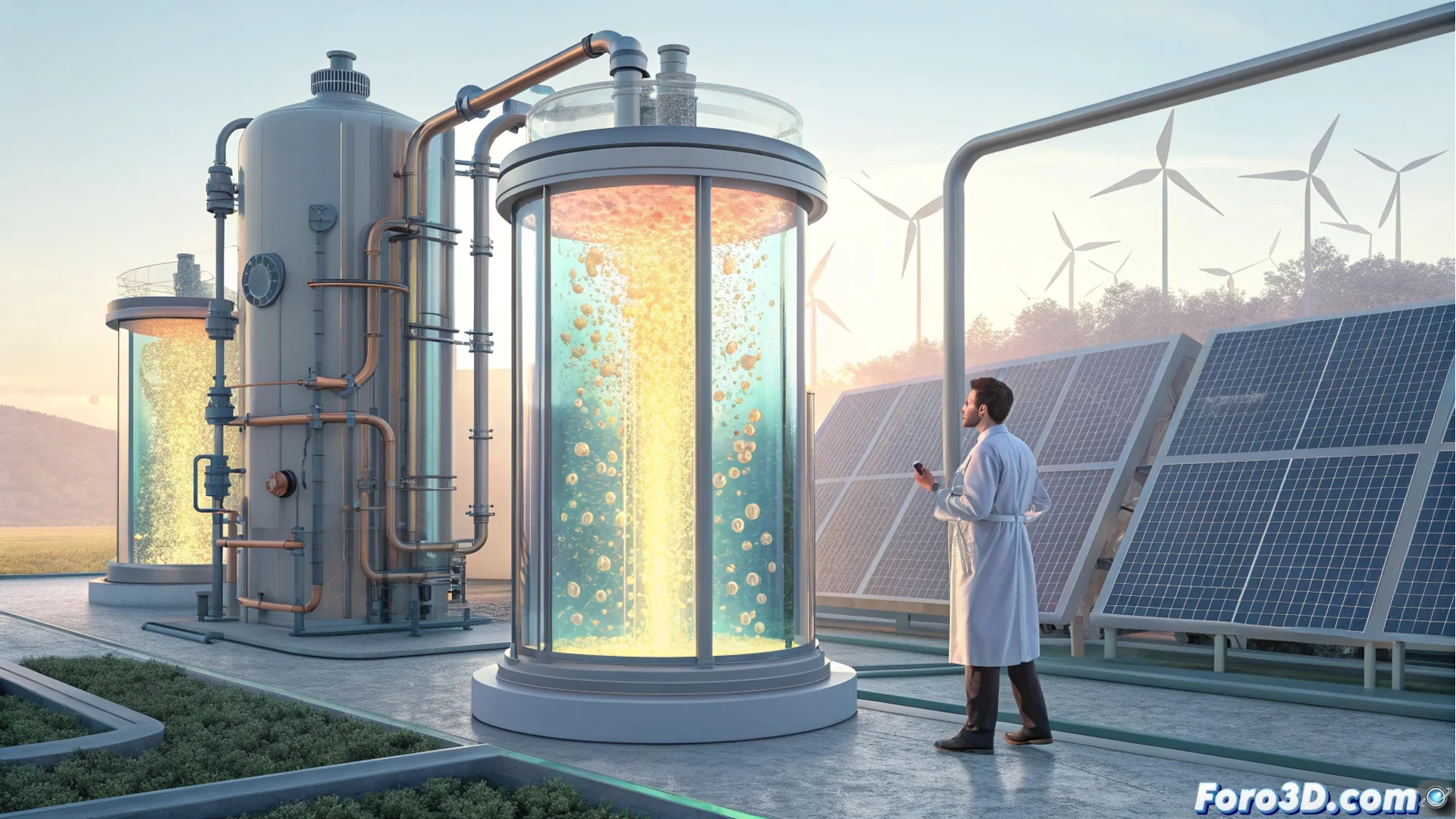
Microbes Convert Carbon Dioxide from the Air into Edible Protein
An emerging technology proposes manufacturing proteins for human consumption using carbon dioxide present in the atmosphere as the main raw material. This method relies on microorganisms that metabolize this gas, combined with hydrogen produced from water using electricity from renewable sources. The end result is a nutrient-rich ingredient that challenges traditional food production models. 🌱
An Integrated Energy and Biology System
The mechanism operates in a synchronized manner. First, an electrolyzer powered by solar or wind energy splits water molecules to release hydrogen. This gas, along with CO₂ captured directly from the air, is channeled into a fermentation tank. In this controlled environment, specialized bacterial strains, such as Hydrogenomonas, assimilate these gaseous compounds to build their cellular structures. Optimizing conditions inside the bioreactor is key to accelerating microbial growth. The resulting culture is processed through centrifugation and spray drying, producing a fine, neutral powder ready to use as a supplement.
Key Advantages of the Process:- Uses atmospheric carbon dioxide as the main raw material, potentially helping to reduce its concentration.
- Requires a drastically lower land and water footprint compared to livestock farming or conventional agriculture.
- Produces a protein powder with nearly 70% content, plus fats and fibers.
Perhaps soon the steak won't come from the pampas, but from a tower that sucks in the city's smoke. An ironic twist where what pollutes ends up nourishing.
Impact on Sustainability and Food Security
This approach addresses several global challenges simultaneously. By not depending on large areas for cultivation or grazing, it offers a way to produce food with minimal environmental disruption. The final product is odorless and tasteless, allowing manufacturers to incorporate it into a wide range of products like pastas, beverages, or meat analogs to improve their nutritional profile. Additionally, the modular nature of the system allows implementation in various locations, facilitating more local and resilient supply chains in the face of extreme weather events. 🔄
Characteristics of the Resulting Ingredient:- Presented as a fine powder with a neutral color, easy to store and transport.
- Versatile for nutritionally enriching processed foods without altering their flavor.
- Produced in a controlled and sterile environment, reducing contamination risks.
The Future of Nutrient Production
This technology represents a paradigm shift in how society can obtain proteins. It combines the capture of a greenhouse gas with the generation of nutritious food, closing a resource cycle in an innovative way. Its development continues, with the goal of scaling the process and making it economically viable to compete with traditional protein sources. The potential to create more decentralized and sustainable food systems is one of its greatest attractions. 🚀