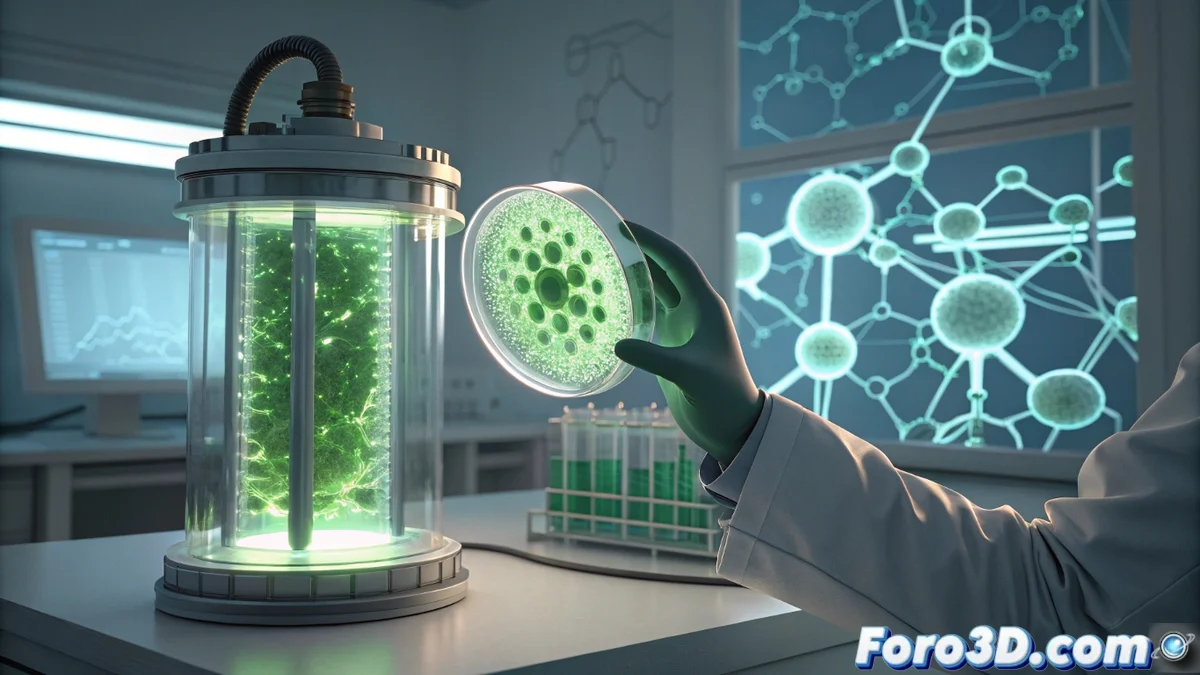
Microalgae Bioplastics that Capture CO2
Innovation in sustainable materials takes an aquatic turn. Scientists and companies now manufacture biodegradable polymers from microalgae biomass. These organisms offer a double advantage: they grow quickly and actively sequester carbon dioxide from the atmosphere during their development. Thus, a greenhouse gas is transformed into the basis for producing plastic. 🌱
From Aquatic Organism to Useful Polymer
To obtain this material, microalgae are first cultivated in controlled systems like photobioreactors. Then, the cells are processed to extract lipids and polysaccharides. Through chemical or biological pathways, these compounds are converted into polymers such as PLA or PHA. The final result is a plastic that industry can use to make packaging, films, or single-use components. Once their function is fulfilled, these materials biodegrade under appropriate conditions, without generating persistent microplastics.
Key advantages of the process:- Does not compete for land: Algae grow in water, without using agricultural land destined for food.
- Carbon capture: The growth process fixes atmospheric CO₂, mitigating climate change.
- Closed cycle: The final material can be composted, closing the cycle naturally.
Turning a problem into a solution: CO₂ is not buried, it is transformed into a useful product that then returns to the earth.
Challenges for Large-Scale Manufacturing
Although the concept is solid, producing algae bioplastics on a massive scale still faces barriers. Research efforts focus on optimizing algae strains for higher yields, reducing the energy required to process the biomass, and lowering the total cost of the process. Some pilot facilities already demonstrate that it is technically viable, but rivaling conventional plastics, with their established infrastructure and very low prices, requires further development.
Strategies to overcome obstacles:- Integrate processes: Use algae to treat wastewater, where they clean the water while generating valuable biomass.
- Utilize the entire cell: Valorize all components of the microalga to create additional revenue streams and make the process more economical.
- Innovate in cultivation: Improve the efficiency of photobioreactors and methods for harvesting biomass.
A Circular and Promising Future
This technology represents a step toward a true circular economy. Instead of just storing carbon, it is used to create everyday objects that, after their useful life, are reintegrated into the environment. The path to scaling up is clear, though it requires investment and continuous innovation. The potential to close the carbon cycle with genuinely sustainable materials drives this fascinating line of research. 🔄