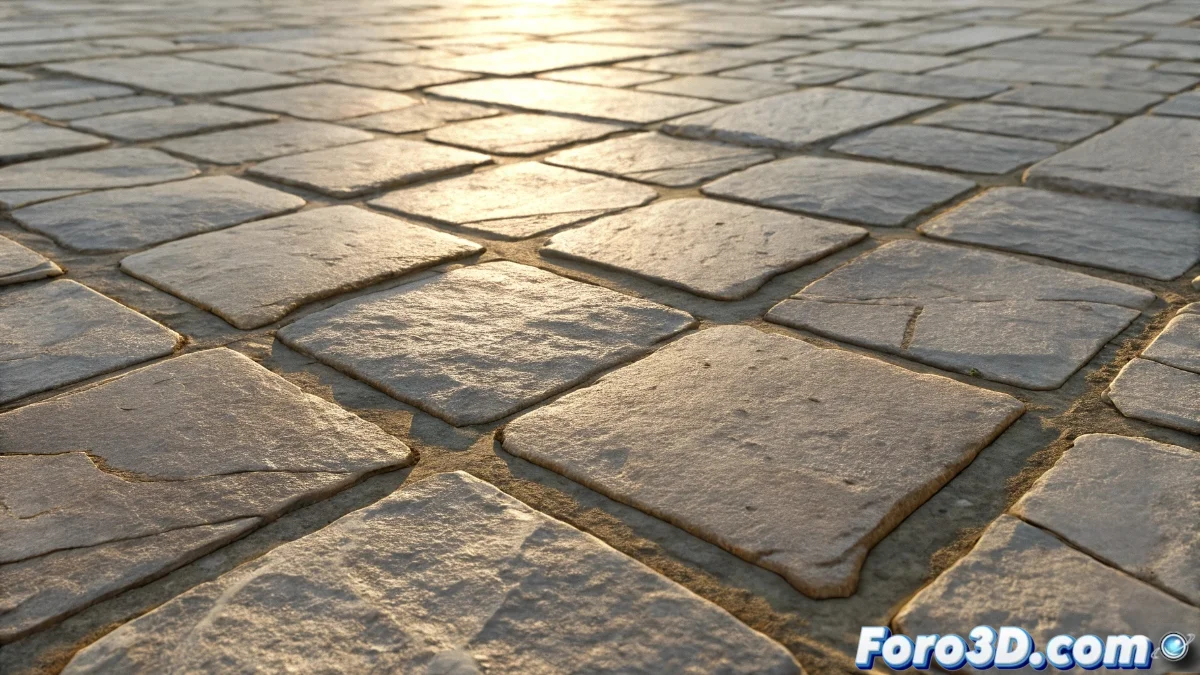
Micro-variations in UV tiling: eliminating repetitive patterns in textures
UV tiling is an essential technique in computer graphics that allows replicating textures over large surfaces, but its direct application generates cyclic patterns easily identifiable by human perception. These evident repetitions compromise immersion and reduce the realism of virtual environments, particularly in materials like rocks, woods, or pavements where natural variability is crucial. Micro-variations emerge as an innovative response to this challenge through subtle alterations in each tile that preserve aesthetic coherence while eradicating the sensation of mechanical repetition 🎨.
Technical implementation with shaders and noise algorithms
Developers implement these micro-variations primarily through shaders that apply controlled random transformations to UV coordinates. The most widespread methodology uses procedural noise textures like Perlin or Simplex to slightly modify coordinates, rotate tiles, or alter their scale within barely perceptible limits as individual modifications but impactful as a global set. This approach enables generating unique variations for each tile instance without significantly increasing RAM memory consumption, as alterations are processed at runtime instead of storing multiple texture versions 💻.
Key advantages of the implementation:- Generation of unique variations without the need for additional textures
- Real-time calculation that optimizes memory usage
- Adaptability to different types of materials and surfaces
The true art lies in making no one notice your art - if someone comments on how realistic the stone floor looks without repeated patterns, you have failed so successfully that you have triumphed without anyone noticing the work behind that artificial naturalness.
Creative control and artistic parameterization
Micro-variation systems incorporate meticulously configurable parameters that allow digital artists to manage the intensity and characteristics of variations. Variables such as displacement strength, rotation amplitude, and scale modification are available in materials to achieve the ideal balance between visual diversity and stylistic consistency. The secret lies in keeping alterations within thresholds that do not distort the interpretation of the original material while suppressing automatic repetition, manufacturing the illusion of unique textures without the computational costs associated with high-resolution textures or more elaborate texture atlases 🎭.
Essential parameters for artists:- Displacement strength: Controls the intensity of positional modifications
- Rotation range: Defines the angular limits for orientation variations
- Scale variation: Allows adjusting dimensional differences between tiles
Impact on the final visual experience
The correct application of micro-variations radically transforms the perception of virtual scenarios, creating environments that breathe naturalness without revealing the underlying technical mechanisms. This approach represents the perfect meeting point between technical efficiency and artistic expression, demonstrating that the most significant advances in computer graphics often reside in elegant solutions that solve fundamental problems without apparent complexity. Success is measured by the invisibility of the technique - when viewers experience a believable virtual world without questioning its authenticity, micro-variations have fulfilled their purpose masterfully ✨.