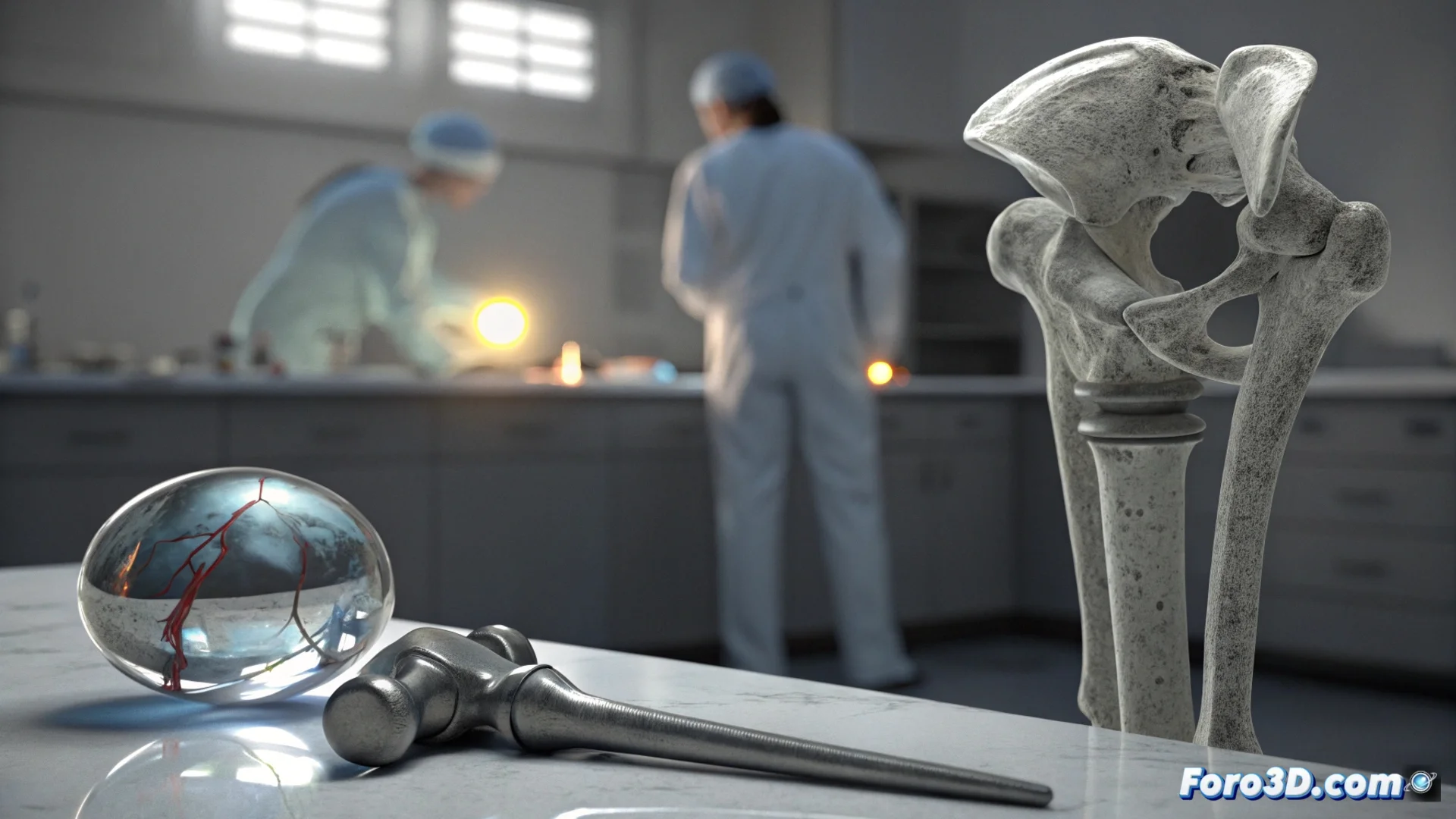
Micro-CT Analyzes Worn Joint Prostheses
The X-ray microscale computed tomography, known as micro-CT, is applied to investigate why medical implants fail. This non-destructive technique allows scanning joint components with incredible detail, achieving micrometric resolutions. The result is a complete three-dimensional volumetric model, both internal and external, of the implant, revealing its true structure. 🔍
Inspecting the Invisible to Find the Origin of the Problem
The process generates data that allows inspecting the part for defects that escape the eye. The analysis focuses on two main types of problems. On one hand, it detects defects originated during manufacturing. On the other, it reveals signs of material fatigue due to use. Comparing the scanned 3D model with the original design plans helps to accurately quantify how much the component has worn and deformed. 📊
Types of Defects Identified by Micro-CT:- Internal Porosity: Small voids within the metallic or ceramic material.
- Subsurface Cracks: Fissures that begin under the surface and are not visible externally.
- Foreign Material Inclusions: Impurities trapped during the production process.
- Fatigue Microcracks: Small cracks that initiate in areas of high mechanical stress and can propagate until causing a fracture.
The findings from micro-CT are crucial for determining whether a failure is due to a manufacturing error, an inadequate design for the loads supported, or extreme use conditions by the patient.
Transforming Data into Tangible Improvements
The volumetric data obtained is processed with specialized software to segment and measure each defect. This information not only diagnoses the failure but serves as a basis for preventing it from recurring. Manufacturers can use this knowledge to optimize their protocols, select more resistant materials, or redesign the implant's geometry. The ultimate goal is clear: increase the lifespan and safety of these medical devices. ⚙️
Applications of Analysis Data:- Improve Production Protocols to eliminate manufacturing defects.
- Select Materials with better mechanical properties and durability.
- Redesign the Geometry of the implant to better distribute