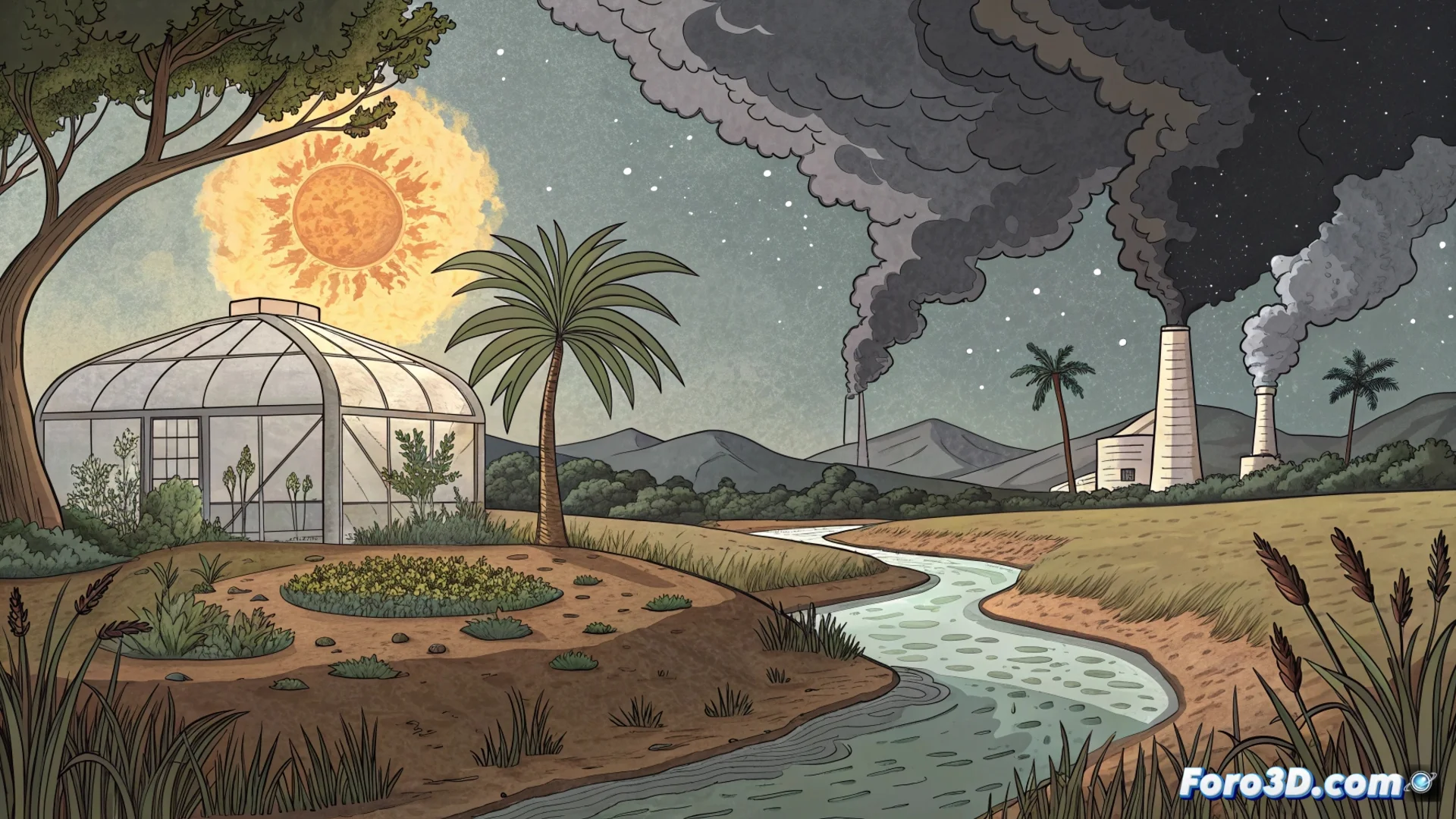
Methane Heats the Planet Faster Than Carbon Dioxide
In Earth's atmosphere, methane acts as an extremely potent greenhouse gas. Its presence is lower compared to that of carbon dioxide, but its ability to retain heat is far superior in short periods. This gas is released from natural sources and also due to human activity. Its permanence in the air is shorter, but its immediate effect on global temperature rise is intense. 🌍
A Very High Warming Power
Researchers assess how gases influence the climate using the Global Warming Potential. Over a one-hundred-year horizon, one ton of methane raises the planet's temperature approximately thirty times more than one ton of CO₂. If analyzed over a twenty-year period, this factor can increase above eighty. This highlights its crucial role in short-term warming and the urgent need to manage its emissions. 🔥
Main sources emitting methane:- Agriculture and livestock: Raising ruminant animals, such as cows, generates a substantial portion. Their digestive systems naturally produce methane.
- Energy industry: Extracting and transporting fossil fuels (oil, gas) also releases this gas into the atmosphere.
- Waste management: Landfills with organic waste and wastewater treatment contribute significantly.
Reducing these emissions offers a fast track to slow down climate change, although getting a cow to hold its breath remains a considerable technical challenge.
Impact and Urgency to Act
Methane's shorter atmospheric life contrasts with its strong initial impact. This makes it a priority target for mitigation actions that can show relatively quick effects in the fight against climate change. Controlling its emissions requires addressing key sectors like agriculture and energy. ⏳
Key areas for intervention:- Optimize practices in livestock and manure management.
- Improve detection and repair of leaks in fossil fuel infrastructure.
- Advance the capture of gas from landfills and wastewater treatment.
An Immediate Climate Challenge
In summary, methane represents a critical and urgent challenge. Its enormous warming potential in the short term underscores that reducing its emissions can be one of the most effective strategies to curb global temperature rise in the coming decades. Addressing its diverse sources is a necessary and tangible step in climate action. 🌱