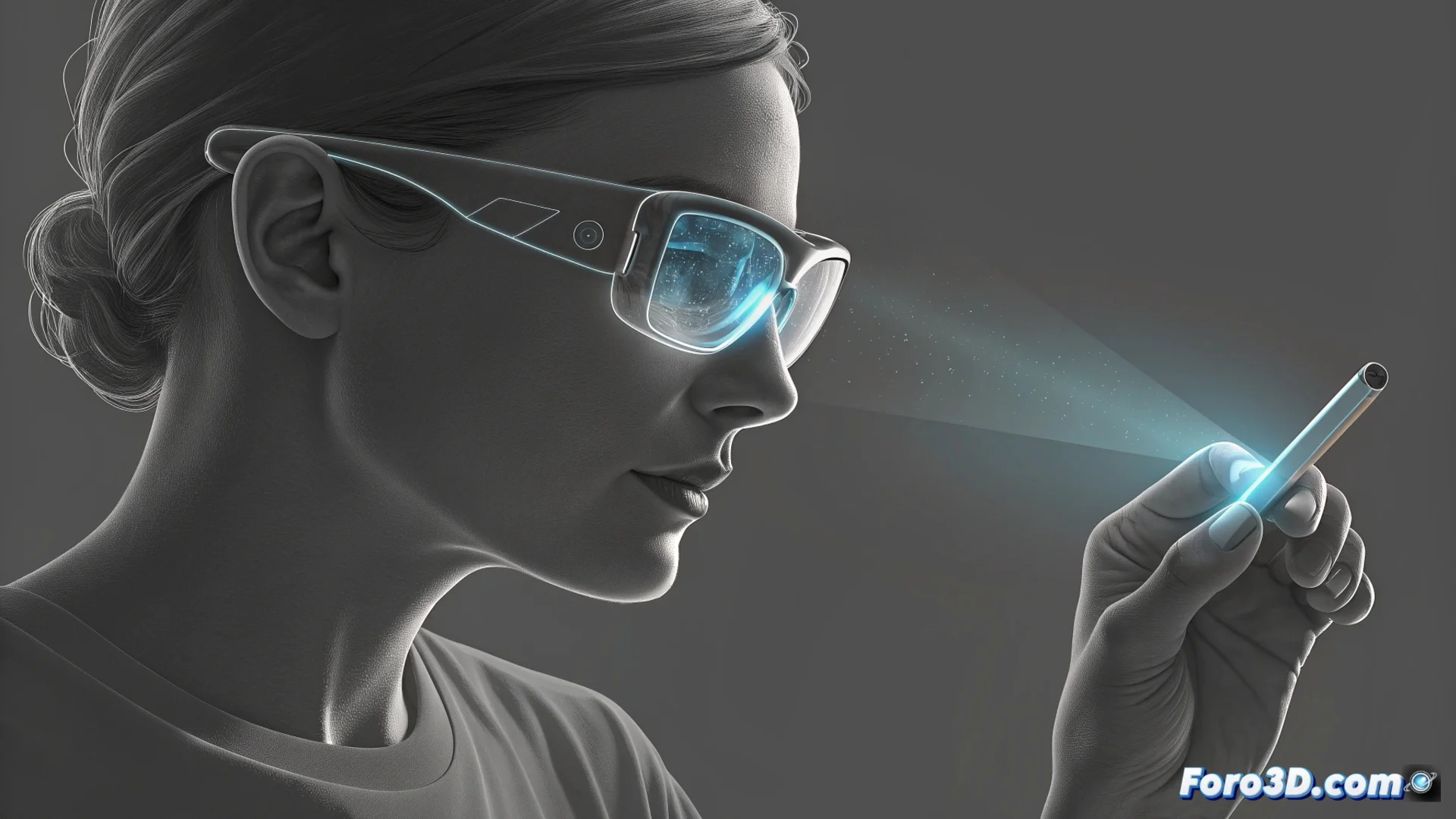
Meta Experiments with Glasses that Capture Muscle Signals
The company Meta is advancing in its research to equip its smart glasses Ray-Ban with a new capability: interpreting user movements by detecting the electrical signals from their muscles. This approach, based on electromyography (EMG), aims to create a more intuitive and private control method that does not require voice or touch 👓.
Electromyography as a Control Interface
The EMG system works by recording the electrical activity generated by muscle fibers when they contract. Sensors integrated into the temples of the glasses could capture these signals from the user's hand and arm. The idea is to translate those patterns into specific commands to handle applications or, in a more advanced prototype, to transcribe text that a person writes in the air or on a table. This represents a silent alternative to voice assistants.
Key features of EMG technology in wearables:- Detects bioelectrical signals non-invasively through sensors in contact with the skin.
- Allows creating customized and very subtle control gestures, almost imperceptible.
- Offers a layer of privacy by not requiring audio, ideal for public environments.
Electromyography promises discreet interaction, where a simple finger movement can replace a voice command or a screen touch.
Potential Use as a Discreet Teleprompter
One of the practical applications being tested is that of a personal teleprompter. The glasses would display lines of text on their integrated screen, while slight finger movements, detected by the EMG system, would allow advancing or rewinding the script. This would give speakers or presenters a tool to check notes without breaking eye contact with the audience.
Advantages and challenges of the muscular teleprompter:- Maintains the appearance of naturalness and connection with the audience.
- Eliminates the need to manipulate a physical device or divert the gaze.
- The main challenge is filtering involuntary gestures to avoid the presentation jumping erratically between slides.
The Road Ahead for the Muscle Interface
Although the technology is promising, it must refine its ability to distinguish between intentional signals and the "noise" from everyday movements. Success will depend on whether machine learning algorithms can accurately interpret the user's intention behind each electrical signal. If achieved, we could be witnessing a significant change in how we interact with wearable devices, making gesture-based control truly invisible and effective 🤖.