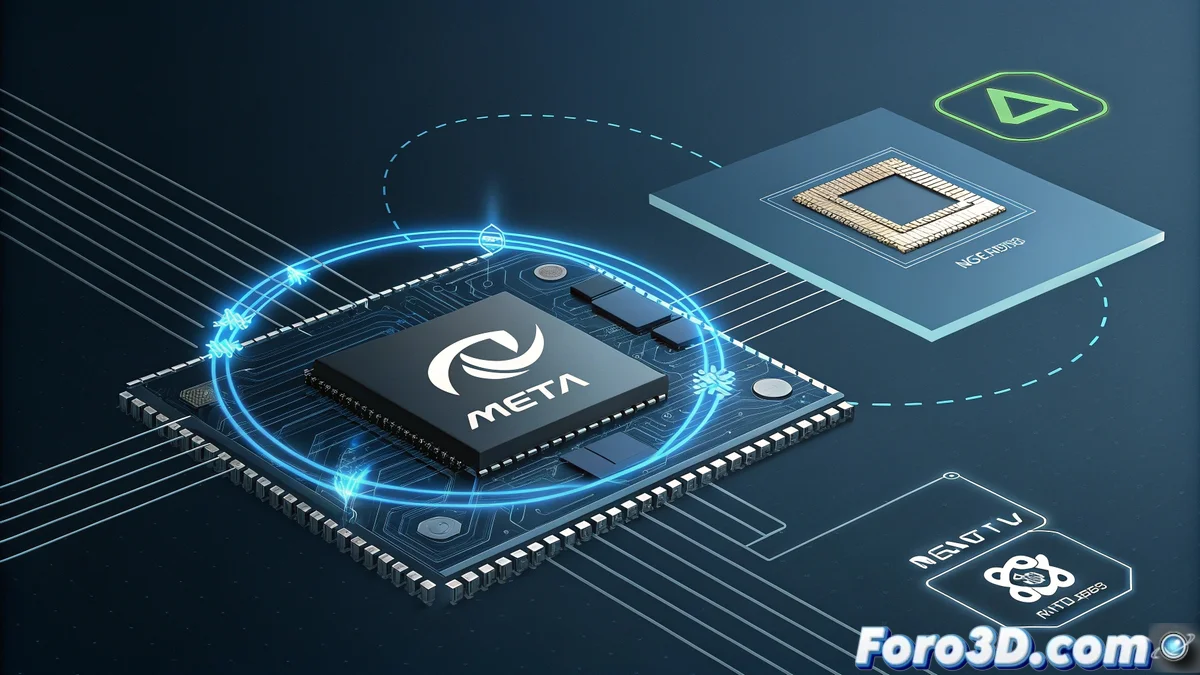
The Value of RISC-V in Meta's Strategy
The battle for technological sovereignty in artificial intelligence has just intensified with a strategic move of profound consequences. ⚡ Meta has announced the acquisition of Rivos, a startup specialized in developing high-performance processors based on the open RISC-V architecture. This open-source architecture represents the very antithesis of traditional proprietary models, offering unprecedented flexibility to customize specific hardware solutions. By integrating this technology, Meta seeks to build a computational infrastructure optimized exclusively for its particular needs in AI model training, progressively reducing its dependence on generic market solutions.
Why Reduce Dependence on Nvidia?
Nvidia's near-hegemonic dominance in the GPU market for artificial intelligence has created a situation of strategic vulnerability for tech giants that depend on these components. High prices, periodic shortages, and customization limitations have driven companies like Meta to seek alternatives that offer greater control over their technology stack. The acquisition of Rivos not only represents a potential solution to lower operational costs but also offers the possibility of designing processors that perfectly align with the specific requirements of the generative models and recommendation systems that power Meta's platforms.
RISC-V is an open-source architecture that offers great flexibility and freedom
Potential Impact on the Industry
If Meta successfully implements RISC-V-based GPUs in its data centers, the domino effect could completely reconfigure the competitive landscape of AI hardware. This success would legitimize RISC-V as a viable alternative for high-performance workloads, a territory traditionally dominated by proprietary architectures. Additionally, it would set a powerful precedent for other major tech companies currently facing similar dependence challenges on external suppliers, potentially accelerating an industry-wide transition to more open and customizable hardware solutions.
The Irony of Open Source in the Hands of a Giant
There is a fundamental paradox in Meta, a corporation notoriously closed in many aspects of its operations, adopting as its banner the open-source philosophy that characterizes RISC-V. This architecture was conceived precisely as a counterpoint to business models based on proprietary licenses and royalties, representing a community and collaborative ethos. Meta's acquisition raises fascinating questions about how a technology designed to democratize access to processor design could evolve under the control of one of the most centralized actors in the digital ecosystem.
Strategic Advantages of the RISC-V Architecture
The choice of RISC-V over established alternatives responds to specific technical and strategic considerations that align with Meta's long-term objectives.
- Extreme customization: Ability to modify the instruction set to optimize specific AI operations
- Technological independence: Freedom from external suppliers and their development cycles
- Cost reduction: Elimination of licenses and royalties associated with proprietary architectures
- Continuous adaptation: Flexibility to evolve the design as AI model requirements change
Technical and Implementation Challenges
The transition to RISC-V-based solutions is not without significant obstacles that Meta must overcome to realize the expected benefits.
- Development of software ecosystems and development tools comparable to those available for established architectures
- Optimization of performance per watt to meet the demanding energy requirements of AI data centers
- Integration with existing infrastructures without disrupting ongoing operations or degrading performance
- Attraction and retention of specialized talent in processor design in an extremely competitive market
Implications for the Artificial Intelligence Ecosystem
Meta's move could catalyze profound structural changes in how computational infrastructure for AI is conceived and deployed.
- Possible market fragmentation between proprietary solutions and those based on open standards
- Acceleration in vertical specialization of hardware according to specific use cases
- Competitive pressure on established players to open their platforms or reduce prices
- Emergence of new business models around services based on custom hardware
The Future of Corporate Technological Sovereignty
This acquisition reflects a broader trend where big tech companies seek vertical control over all components of their technology stack.
- Growing investments in internal development of specialized hardware to reduce external dependencies
- Adoption of open architectures as a strategic tool to gain negotiating leverage
- Fusion of traditional boundaries between software developers and hardware manufacturers
- Reconfiguration of value chains in the semiconductor industry around specific use cases
While Nvidia continues to dominate the GPU market, Meta demonstrates that in the artificial intelligence game, sometimes the best move is to learn to make your own chips. 🎲 Because, let's be honest, what could be more strategic than stopping depending on the same supplier as all your competitors?