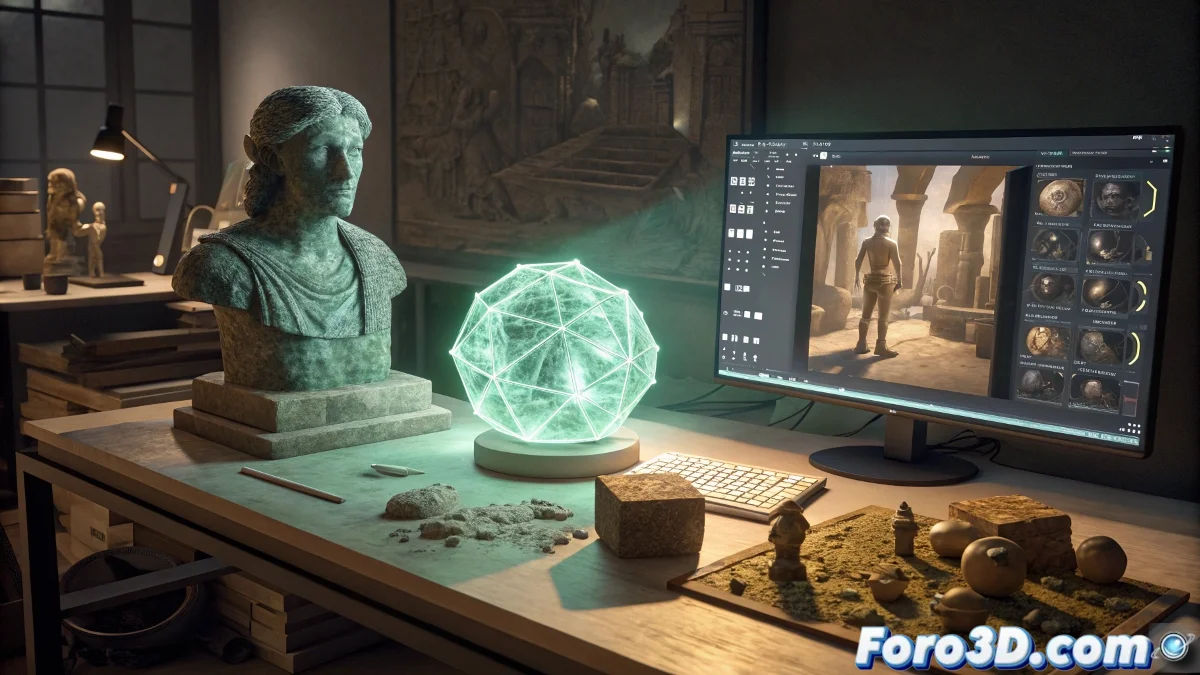
When photographs turn into 3D models
Meshroom represents a revolution in access to photogrammetry technology, offering professional-grade 3D reconstruction capabilities completely free of charge. Developed as open-source software based on the AliceVision framework, this program transforms sets of ordinary photographs into detailed, textured 3D models. What once required expensive equipment and prohibitive licenses is now available to anyone with a camera and a powerful computer.
The beauty of Meshroom lies in its visual approach to the photogrammetry process. Unlike tools that hide the process behind simplified interfaces, Meshroom displays each stage of the reconstruction pipeline through a graphical node system. This not only educates the user on how photogrammetry works but also allows unprecedented control over every process parameter, from camera calibration to final texture generation.
Democratized photogrammetry: from capturing moments to capturing reality in 3D
Nodal architecture: The heart of Meshroom
Meshroom's interface is organized around an interconnected node system that represents each stage of the reconstruction process. This visual architecture allows understanding and controlling the complete data flow, from image import to final model export. Each node performs a specific function and can be individually configured, offering flexibility that rivals expensive commercial solutions.
The typical nodal flow includes sequences like StructureFromMotion for estimating camera positions, PrepareDenseScene for aligning images, and Texturing for generating diffuse maps. Users can experiment by reorganizing nodes, adding custom processing, or even developing their own nodes using the available SDK. This procedural transparency turns Meshroom into both a production tool and an educational platform.
- Image import: loading and organization of input photographs
- Camera calibration: automatic estimation of optical parameters
- 3D reconstruction: geometry generation from image correlation
- Texturing: creation of diffuse maps from original photographs
Complete workflow with Meshroom
The process in Meshroom begins with meticulous preparation of the photograph set. The images must cover the object or scene from all possible angles, with sufficient overlap between consecutive shots, generally between 60% and 80%. Meshroom analyzes these images to identify common points and reconstruct the exact positions from which each photograph was taken.
Once the camera structure is established, the software generates a dense point cloud representing the scene's geometry. This cloud is converted into a 3D mesh using surface reconstruction algorithms, which is then textured using the original photographs to create a visually accurate model. The entire process can take from minutes for small objects to days for complex scenes, depending on the available hardware.
Each photograph is a unique viewpoint, and Meshroom unites them all into a coherent three-dimensional reality
- Image preparation: selection and organization of input photographs
- Camera estimation: calculation of positions and optical parameters
- Geometry reconstruction: generation of point cloud and 3D mesh
- Final texturing: application of colors and details from photographs
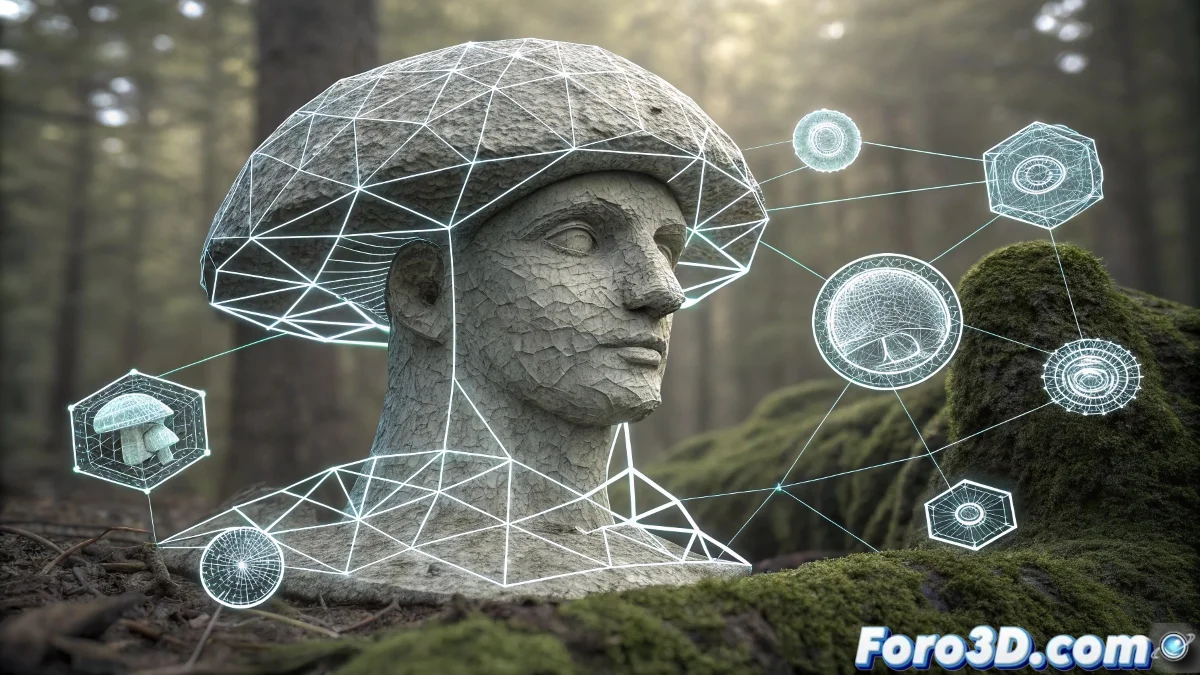
System requirements and optimization
Meshroom is designed to leverage modern hardware, with special emphasis on NVIDIA graphics cards thanks to CUDA support. Minimum requirements include 8 GB of RAM, though 16 GB or more is recommended for complex projects. GPUs with at least 4 GB of VRAM significantly accelerate the most intensive processes, such as dense point cloud generation.
To optimize performance, users can adjust parameters like processing resolution, number of keypoints per image, and texturing quality. Large projects can be divided into chunks processed separately, then combined into a final scene. Memory management is particularly important in extensive scenes, where using disk as virtual memory can prevent crashes due to lack of RAM.
Practical applications in different industries
The versatility of Meshroom opens possibilities in numerous fields. In cultural heritage, it enables digital documentation and preservation of archaeological sites and historical monuments. For audiovisual production, it facilitates the creation of 3D assets based on real locations without expensive scanning equipment. Architects can capture existing spaces to integrate them into their designs, while digital artists obtain precise 3D references from real-world objects.
In the educational realm, Meshroom serves as a teaching tool for computer vision principles and 3D reconstruction. Academic researchers use it to document biological specimens, historical artifacts, and geological formations. Even cosplay enthusiasts and makers find value in digitizing objects to replicate or modify them digitally before physical manufacturing.
- Cultural heritage: digitization of monuments and historical sites
- Audiovisual production: creation of 3D assets from real locations
- Architecture and design: capture of existing spaces for projects
- Academic research: documentation of specimens and artifacts
Integration with other 3D software
Models generated in Meshroom are exported to standard formats like OBJ, FBX, and PLY, allowing seamless integration with virtually any 3D software on the market. In Blender, models can be refined through retopology, repaired with addons like MeshLab, or optimized for different applications. For engineering and design, models can be imported into FreeCAD to extract precise measurements and perform analyses.
Compatibility with game engines like Unreal Engine and Unity allows direct use of Meshroom models in interactive experiences and virtual reality. VFX artists use the reconstructions as a base for visual effects requiring perfect integration with real footage, leveraging the geometric precision provided by photogrammetry.
Meshroom doesn't end with reconstruction; creativity begins when the model leaves the software
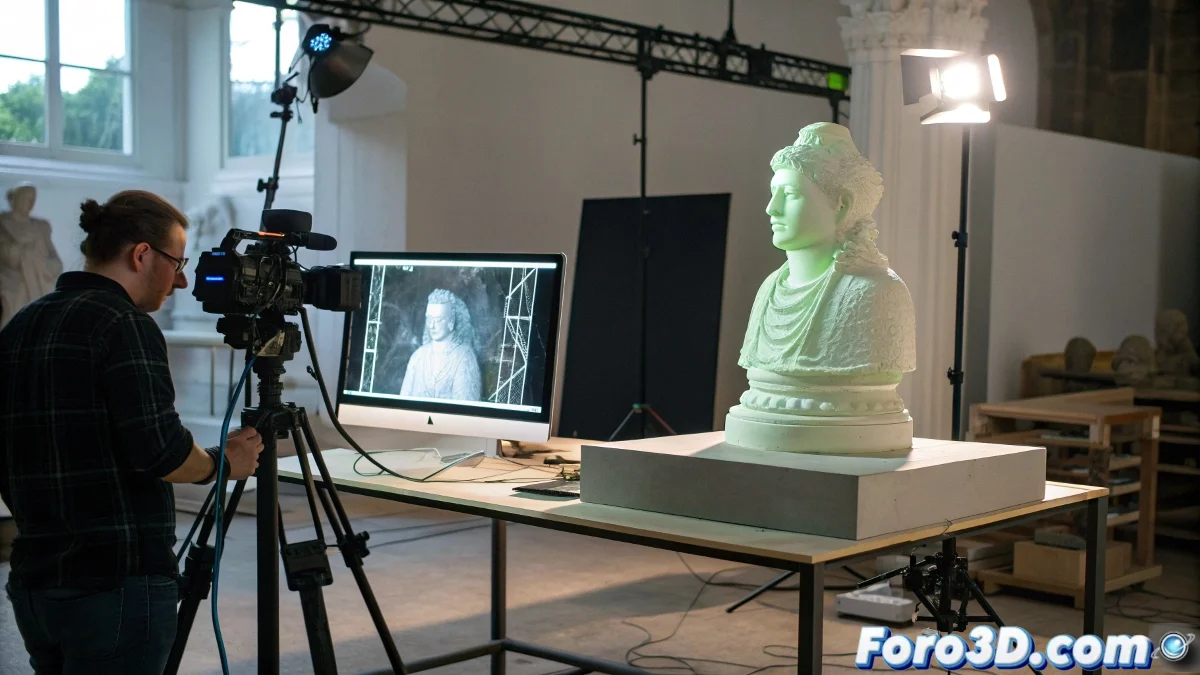
Limitations and practical considerations
Despite its power, Meshroom has limitations that users should be aware of. Reflective, transparent surfaces or those with repetitive patterns can challenge correlation algorithms. Inconsistent lighting between photographs can create artifacts in textures, and excessive movement in the scene during capture can result in ghosting or incomplete reconstructions.
Success with Meshroom largely depends on the quality of the initial photograph set. Well-lit, focused images with minimal distortion produce remarkably better results. Meticulous planning of shots, considering angles, overlap, and complete coverage, is as important as the available processing power.
- Problematic surfaces: reflective, transparent materials or repetitive patterns
- Lighting conditions: abrupt changes between photographs create artifacts
- Scene movement: moving objects result in ghost reconstructions
- Input quality: output quality depends directly on the initial photographs
Future and ongoing development
As an open-source project, Meshroom continues to evolve thanks to contributions from a global community. Recent versions have significantly improved camera estimation accuracy, processing speed, and texturing quality. Active development promises tighter integration with machine learning to handle edge cases that currently pose challenges.
The growing adoption of Meshroom in creative and academic industries ensures its continued relevance. As hardware becomes more powerful and computer vision techniques advance, Meshroom is positioned to bring professional photogrammetry to ever-wider audiences, breaking barriers between reality capture and digital creation.
Conclusion: Democratizing 3D reconstruction
Meshroom represents more than photogrammetry software; it symbolizes the democratization of technology once reserved for institutions with large budgets. By eliminating economic and technical barriers, it empowers creators, researchers, and enthusiasts to capture and work with precise 3D representations of the real world.
Whether documenting endangered heritage, creating game assets, or simply exploring photogrammetry possibilities, Meshroom provides the tools to transform photographs into bridges between the physical and digital. In a world where 3D representation becomes increasingly crucial, having free access to technology of this quality is not a luxury—it's a revolution.
In the end, Meshroom reminds us that sometimes the most powerful tool for creating virtual worlds is a simple camera, and the intelligence to unite all its perspectives 🎯
You can learn more about the topic: here