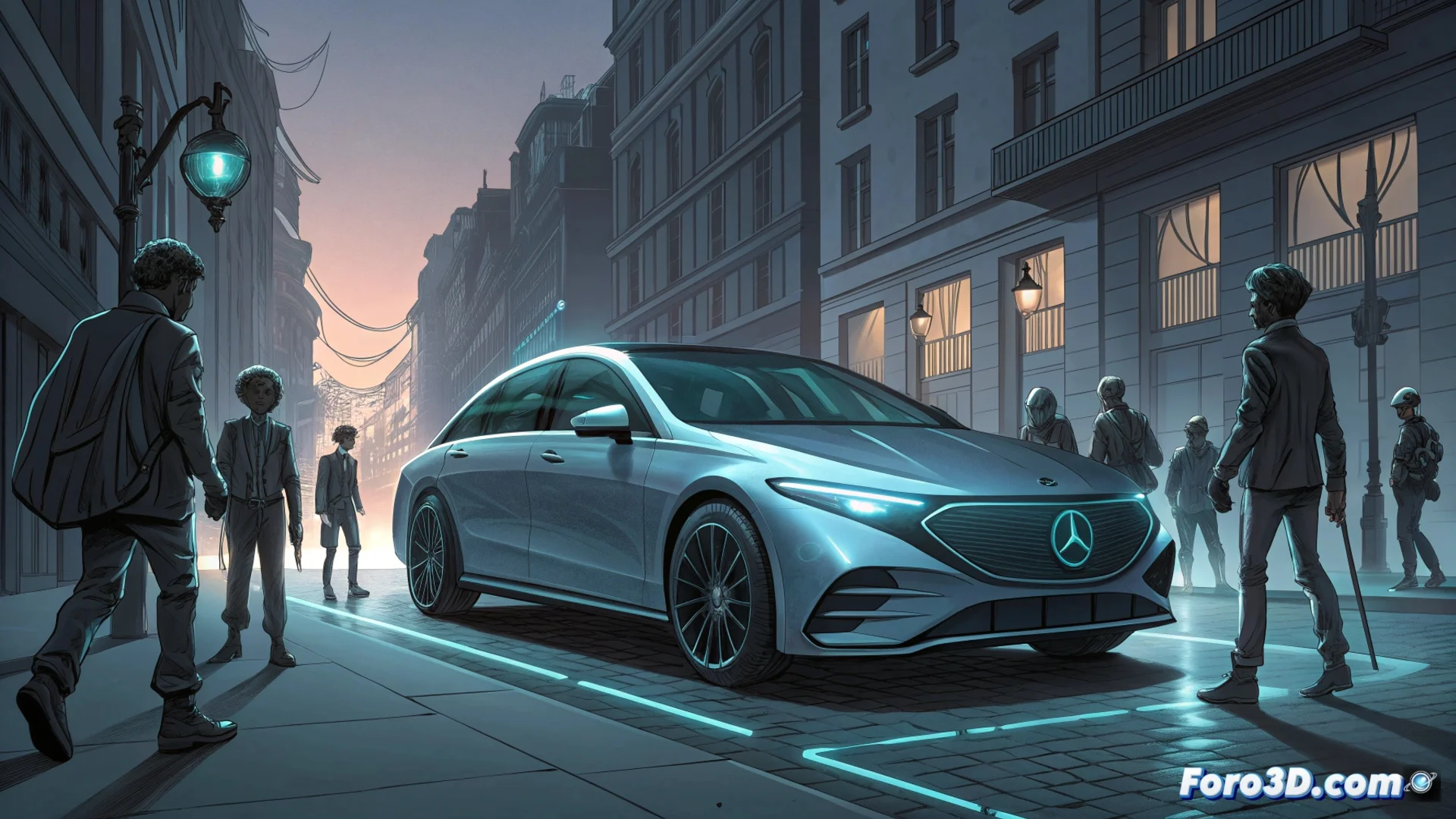
Mercedes Updates Its Electric Sedan EQS with Technical Improvements and Renewed Design
Mercedes-Benz is preparing to launch a significant update for its electric flagship, the EQS sedan. This renewal, scheduled for this year, aims to strengthen its position in a rapidly advancing premium segment, focusing on optimizing its efficiency and broadening its appeal. 🚗
Aesthetic Renewal for a More Integrated Presence
The most evident changes will focus on the exterior design. A new configuration is anticipated at the front, with a mask that more fluidly integrates the sensors for driver assistance systems. The front and rear light clusters are also expected to receive an updated lighting signature to modernize their appearance.
Main novelties in the interior:- Improvement in the quality of interior finishing materials.
- Implementation of the latest version of the MBUX infotainment system, with more powerful hardware for faster processing.
- New connectivity features and a possibly renewed user interface.
The sedan will continue using the dedicated EVA electric architecture, a platform that allows engineers to introduce key technical improvements.
Technical Advances Focused on Range and Efficiency
Taking advantage of the flexibility of the EVA platform, engineers could install battery packs with higher energy density. This technical advance could allow the EQS to exceed the 800 kilometers of range according to the WLTP homologation cycle, a notable increase.
Optimizations in the propulsion system:- Adjustments in power management to distribute energy more efficiently.
- Refinement of the driving experience to achieve smoother and more dynamic behavior.
- Possible improvements in energy recovery during braking.
The Persistent Challenge of Infrastructure
Although the update promises to significantly increase range, the article emphasizes that this does not solve a fundamental problem for the user: the availability and reliability of fast charging infrastructure on long-distance trips. The practical experience of finding an operational charger on the first try remains a critical point in electric vehicle adoption. ⚡