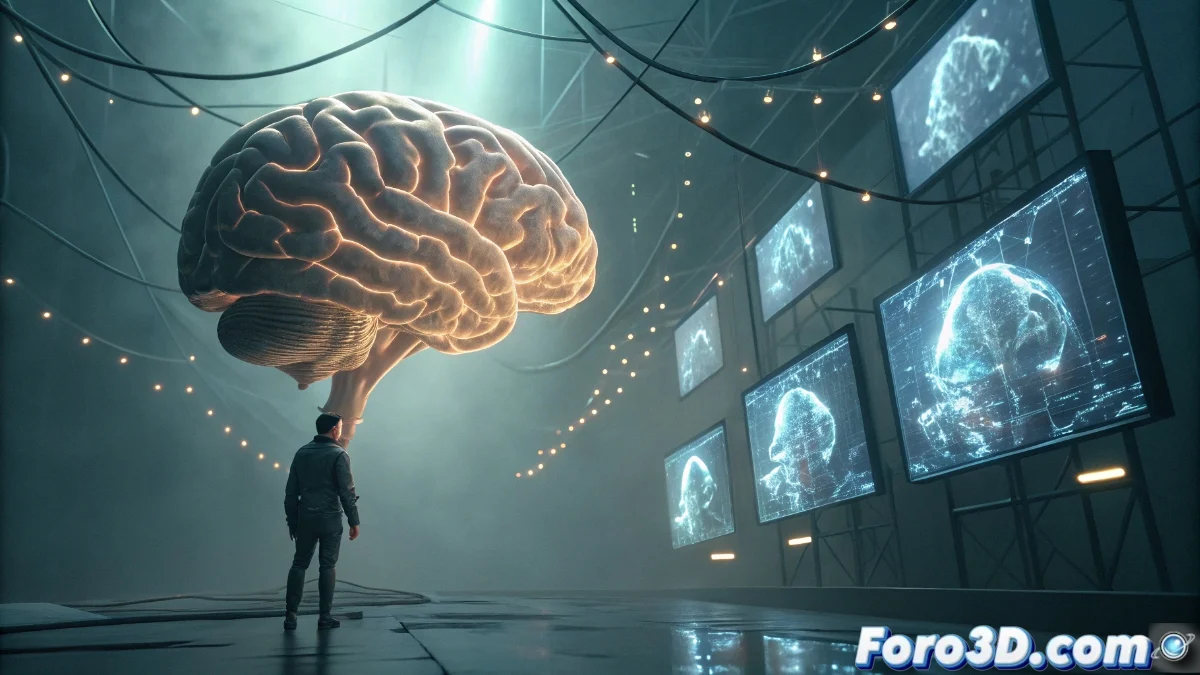
Mental Scatter and How It Affects Your Concentration Ability
Experiencing mental scatter is like trying to hold water with open hands: the more tasks you try to handle simultaneously, the less you retain from each one. This condition arises when your brain exceeds its threshold for efficient processing, generating a feeling of internal chaos that compromises your productivity and mental clarity 🧠.
The Neural Mechanisms of Divided Attention
Your prefrontal cortex, the command center for executive functions, becomes flooded by competing stimuli fighting for limited neural resources. When you activate the executive attention network to concentrate, it must constantly contain the default mode network, responsible for those moments of mental wandering we all experience.
Key Characteristics of Cognitive Saturation:- Simultaneous activation of antagonistic brain circuits competing for priority
- Difficulty maintaining a coherent train of thought for prolonged periods
- Sensation of jumping between ideas without managing to delve deeply into any of them
Your mind becomes a television channel with too many options and no specific program, constantly changing without finding satisfactory content.
Factors That Enhance Loss of Focus
Conditions such as accumulated mental fatigue, states of dehydration, and poor nutritional patterns progressively erode your concentration capacity. The modern digital environment, with its constant bombardment of notifications and stimuli, trains your brain to switch attentional focus with excessive frequency.
Elements That Intensify Scatter:- Prolonged exposure to multitasking environments that fragment attention
- Information consumption habits that promote constant jumps between content
- Adverse physiological conditions that weaken available cognitive resources
Neuroplasticity and Attentional Patterns
Research in cognitive neuroscience reveals that these modern behaviors temporarily reshape your attention circuits, increasing your susceptibility to distractions. Interestingly, while you process this information, it's likely your mind is already considering what other activity you could do, demonstrating the described phenomenon in real time. The good news is that, by understanding these mechanisms, you can develop strategies to reconquer your mental focus 💡.