A Revolutionary Advance in Medicine with 3D-Printed Implants
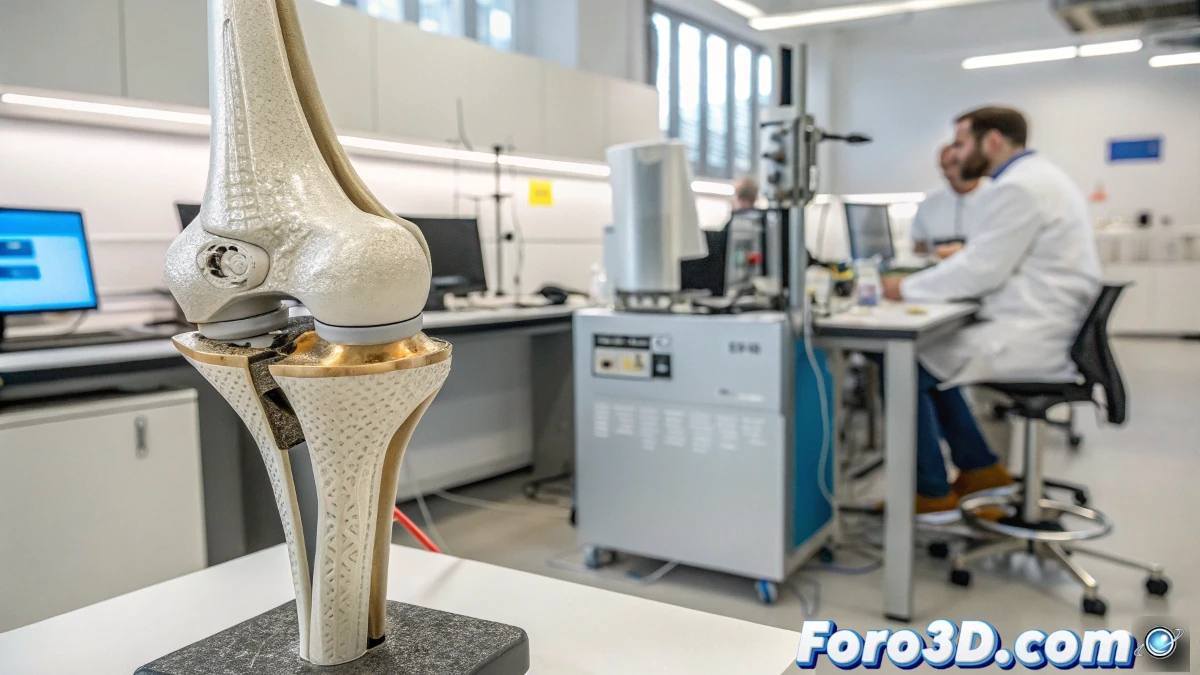
In a milestone that marks a before and after in modern medicine, Chinese regulatory authorities have approved the first knee implant manufactured using 3D printing with laser technology. Developed by Naton Biotechnology, this implant not only represents a technological leap but also a new era in the production of customized prostheses. This achievement is the result of years of research to overcome the challenges associated with manufacturing metallic implants using advanced 3D printing techniques.
The Challenges of Manufacturing Metallic Implants
One of the biggest obstacles in manufacturing metallic implants has been the inconsistency in material properties. Researchers from the Southern University of Science and Technology of China and the Beijing Tsinghua Changgung Hospital identified significant variations in the mechanical properties of cobalt-chromium-molybdenum (CoCrMo) alloys printed in 3D. These differences, which affect the strength and durability of the material, posed a risk for their use in medical applications.
An Innovative Heat Treatment
To address these issues, the research team developed a two-stage heat treatment process. First, the material is heated to 1150°C for one hour and then rapidly cooled in water. Subsequently, it is reheated to 450°C for 30 minutes. This method achieved greater uniformity in the material properties, with tensile strengths reaching 906.1 MPa and 879.2 MPa in different directions. This breakthrough ensures that implants are more reliable and safe for patients.
"This heat treatment not only improves strength but also sets a new standard in the manufacturing of customized implants."
Improvements in Strength and Durability
The study, published in the journal Materials Futures, demonstrates how optimized heat treatment can enhance the strength and uniformity of 3D-printed metallic implants. These improvements are crucial to ensure that implants can withstand the multidirectional forces they are subjected to inside the human body. Additionally, the team is exploring additional techniques, such as shot peening and ultrasonic peening, to improve wear resistance and biocompatibility of the implants.
The Future of Customized Implants
This advance not only solves technical problems but also opens new possibilities for customization of medical implants. 3D printing allows each prosthesis to be tailored to the specific needs of the patient, improving efficacy and reducing risks associated with traditional implants. With additional surface treatment techniques, researchers hope to further extend the lifespan of these devices, offering more durable and safe solutions.
A Step Toward the Medicine of the Future
The approval of this 3D-printed knee implant marks a milestone in regenerative medicine and biomedical engineering. It not only resolves critical manufacturing issues but also sets a new standard for quality and customization in medical implants. This advance is a clear example of how technology can transform healthcare, offering more effective and safe solutions for patients.
- Customization: Implants tailored to the specific needs of each patient.
- Durability: Greater strength and lifespan thanks to heat treatment.
- Safety: More uniform and reliable materials for medical applications.
In summary, this advance not only improves the quality of implants but also opens a new chapter in personalized medicine, where technology and innovation come together to offer more effective and safe solutions.