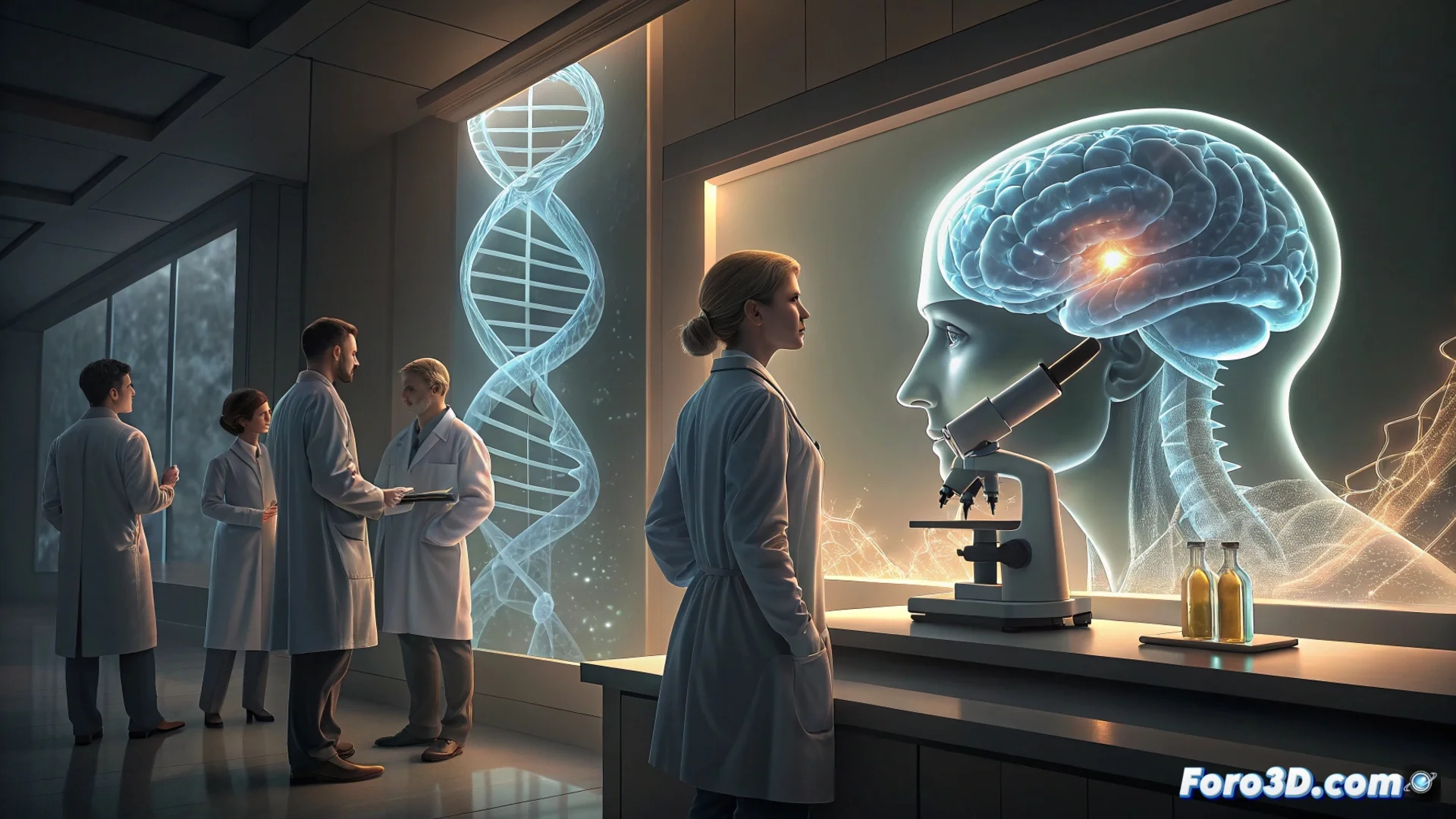
Medicine Advances Toward 2025 with Immunotherapy and Neurotechnology
Projections for the health field in 2025 cease to be futurism and become tangible reality. Medical science does not make an abrupt leap, but rather consolidates decades of research, now allowing to address complex pathologies with a notably more precise and personalized arsenal of tools. The journey still demands effort, but the course is unequivocal. 🧬
Biological Therapies that Redefine Treatment
Two pillars stand out: oncological immunotherapy and gene therapies. The first trains the patient's immune system to identify and destroy cancer cells, expanding its spectrum of efficacy. The second corrects genetic defects at their origin, proposing solutions for rare diseases that previously lacked hope. Their validation is ongoing and equitable access is a global challenge, but without a doubt they transform the paradigm of treating serious ailments.
Key Advances in Targeted Therapies:- Immunotherapy shows a broader efficacy profile against various types of cancer.
- Gene therapies succeed in correcting specific genetic defects, offering an option where there was none before.
- Both approaches represent a turning point in the medical conception of treatment.
The true achievement may be the collective patience to fund and await these results in an era that demands immediacy.
The Synergy Between Machine and Nervous System
Neurotechnology creates interfaces that restore lost motor or sensory functions. Parallely, artificial intelligence processes immense volumes of clinical data to assist in diagnosing and personalizing therapeutic plans. This convergence does not replace the professional, but rather seeks to enhance their judgment with deeper information and enable interventions with unprecedented precision. ⚙️
Areas of Technological Integration:- Devices that interact with the nervous system to recover capabilities.
- AI algorithms that analyze medical data to support diagnosis and treatment personalization.
- Tools that provide the doctor with more information to decide and execute.
A Future Built on Solid Science
These progresses toward 2025 underscore that the medical revolution is a process of accumulation. Each advance in immunotherapy, gene therapy, or neural interface is a step on a long scientific ladder. The direction points to a more predictive, personalized, and participatory medicine, where technology amplifies human capabilities to heal. The path is long, but each step consolidates the journey.