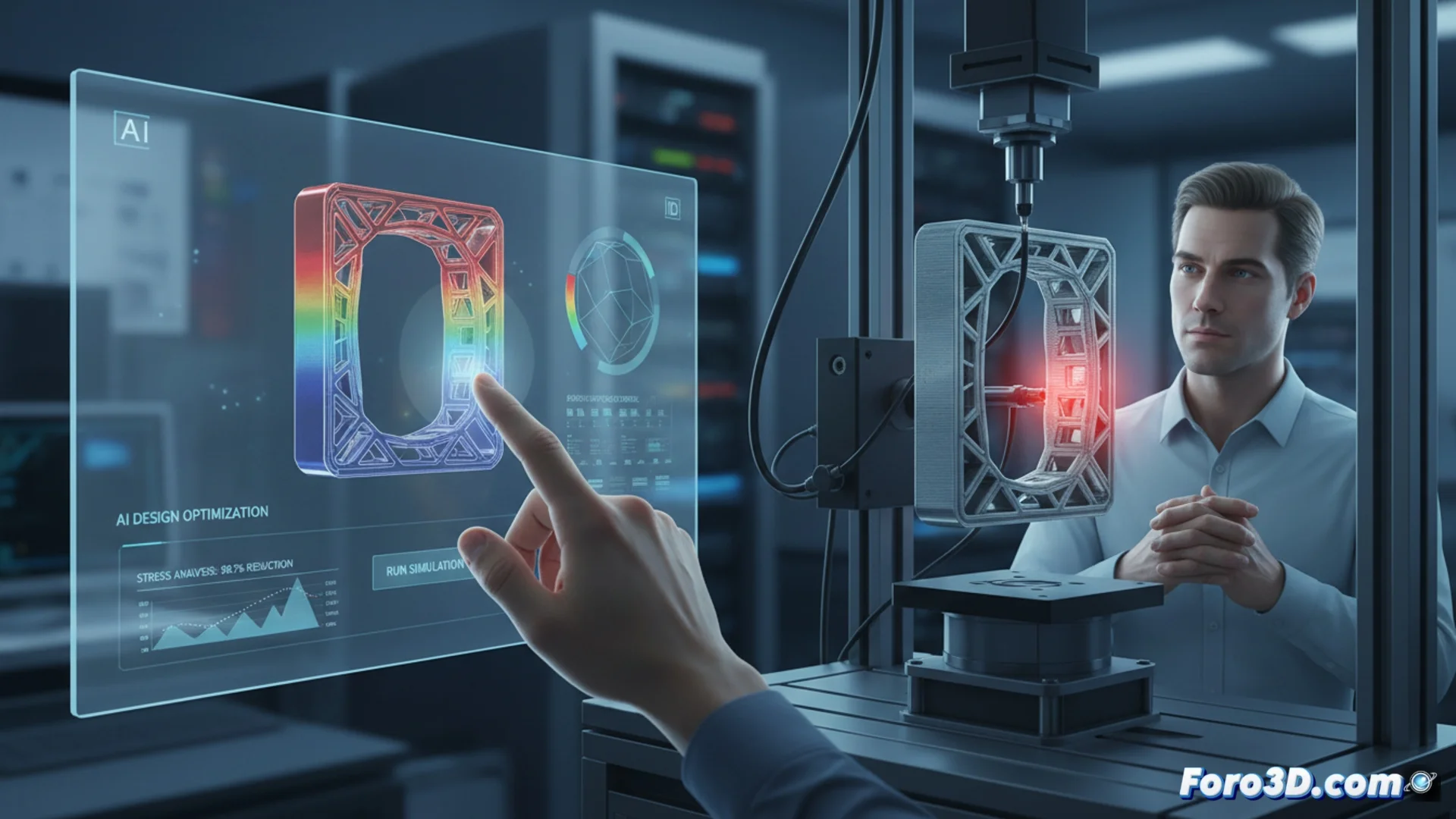
MechStyle: AI that designs functional 3D models with physical simulation
A team from the MIT has unveiled MechStyle, a new generative artificial intelligence tool that transforms text descriptions or images into three-dimensional models ready for manufacturing. What sets it apart is its ability to integrate real-time physical simulation, ensuring that objects are not only visually appealing but also mechanically robust. 🛠️
A process that fuses form and function
The system operates in two main phases. First, it interprets the user's request and generates an initial geometry that matches the aesthetic vision. Then, it performs a finite element analysis to simulate how that design behaves under stress, identifying potential failure points. With that data, the AI iteratively refines the shape, strategically adding material to critical areas while preserving the originally requested appearance.
Key advantages over previous methods:- Structurally solid designs: Unlike tools that only modify the surface and can weaken the part, MechStyle produces objects capable of withstanding loads and practical use.
- Automatic optimization: The system handles the complex engineering of reinforcement, a process that normally requires specialized knowledge.
- Manufacturing-ready: The results are directly suitable for techniques like 3D printing, eliminating the need for extensive manual revisions.
The AI finally understands that a collapsing candle holder is, at best, a very decorative paperweight.
Practical applications in customized manufacturing
This technology democratizes the design of functional parts. Users, without being engineering experts, can create accessories, tools, or replacement components that are truly useful. The AI takes care of ensuring mechanical integrity, allowing the designer to focus on creativity and personalization.
Possible uses for MechStyle:- Create customized tools that adapt to specific ergonomic needs and withstand the necessary force.
- Design replacement components for devices, optimized to be more resistant than the original.
- Develop accessories and decorative objects that do not sacrifice stability for aesthetics.
The future of AI-assisted design
MechStyle marks a turning point by closing the gap between generative design and real physical viability. It does not limit itself to proposing shapes, but certifies their functionality through simulation. This brings personalized and on-demand digital manufacturing closer to a wider audience, where creativity and practical utility can coexist from the first sketch. 🚀