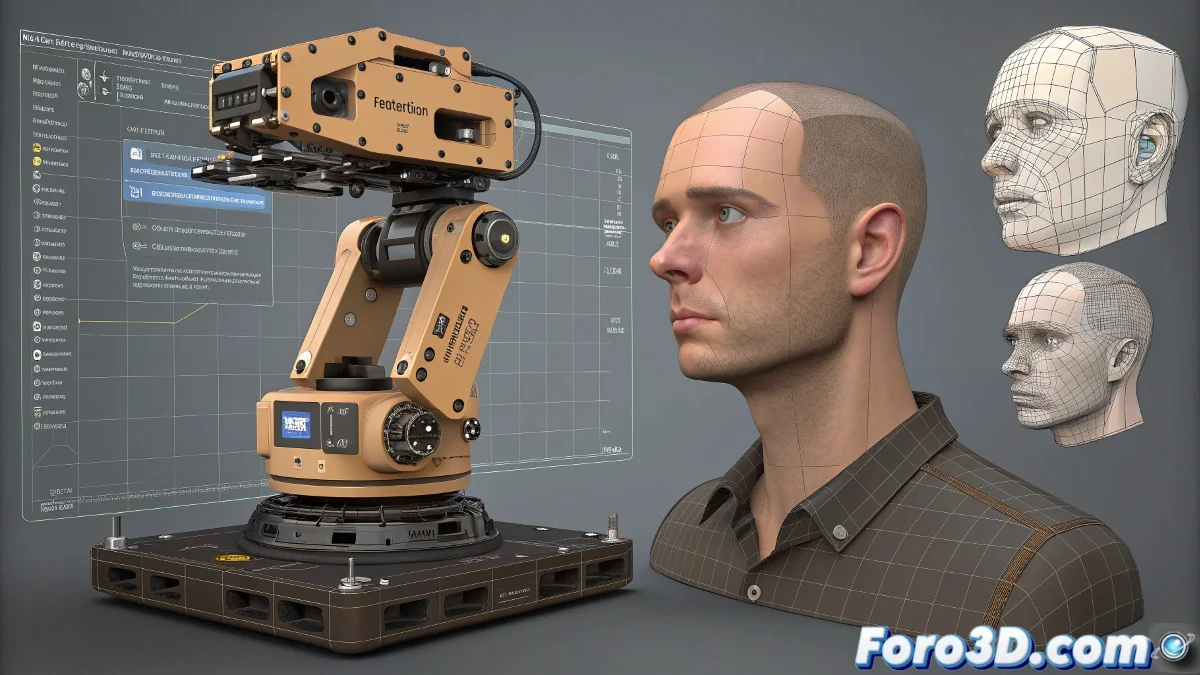
The Revolution of Intelligent Automated Rigging
TSM2 and TFM represent the sweet spot between efficient automation and artistic control in character rigging 🚀. These tools transform processes that normally take hours – sometimes days – into minutes, while maintaining enough flexibility for custom adjustments and artistic refinement.
TSM2: The Architect of the Body System
The Setup Machine 2 acts as a digital architect that designs and builds the complete skeletal system based on your initial specifications.
- Biped base customization: Adjustment of proportions and initial scale
- Automatic controller generation: Creation of NURBS curves and intuitive shapes
- Configurable IK/FK systems: Complete setup with automatic switching
- Extensible bones: Stretchable bones for flexible limbs
- Custom attributes: Custom attributes for advanced control
TSM2 is like having a rigging assistant that never sleeps and always follows instructions.
TFM: The Sculptor of Facial Expressions
The Face Machine specializes in the complex task of creating expressive and intuitive facial systems.
- Automatic landmark detection: Detection of key facial features
- Expression controllers: Sliders and controls for basic emotions
- Phoneme system: Setup for automatic lip sync
- Facial deformations: Blend shapes and deformation controls
- Eye rig system: Advanced controllers for gaze and blinking
Optimized Workflow with TSM2/TFM
Integrating these tools into your pipeline requires a specific approach to maximize their benefits.
- Model preparation: Cleaning and organization before automation
- Initial setup: Adjustment of base parameters according to project needs
- Automatic generation: Execution of automation systems
- Review and adjustment: Verification and refinement of the generated rig
- Customization: Add specific elements beyond automation
Key Advantages for Real Production
Implementing TSM2/TFM offers tangible benefits in real production environments.
- Consistency across characters: Standardized rigs for multiple characters
- Time reduction: From days to hours on complex rig setups
- Error reduction: Fewer human errors in repetitive setup
- Automatic documentation: Pre-documented systems for animators
- Training acceleration: Faster learning curve for new animators
Limitations and Important Considerations
Although powerful, these tools have limitations that are crucial to understand.
- Generic rigs: May require customization for specific needs
- Learning curve: Requires understanding their particular workflows
- Software compatibility: Tied to specific versions of 3ds Max
- Customization limits: May not support ultra-specialized techniques
Combination with Manual Techniques
The most effective use often combines automation with expert manual touch.
- Automatic base with manual refinement: Use TSM2/TFM as a starting point
- Custom controllers: Add specific controllers beyond what's generated
- Advanced systems: Implement specialized systems manually
- Custom optimization: Adjust performance for specific needs
The Future of Tool-Assisted Rigging
TSM2/TFM represent the trend toward tools that augment – not replace – the technical artist's expertise.
And when the automatically generated rig needs adjustments that defy logic, you can always argue that you're pioneering new standards of digital biomechanics 🤖. After all, in the world of rigging, sometimes smart shortcuts become best practices.