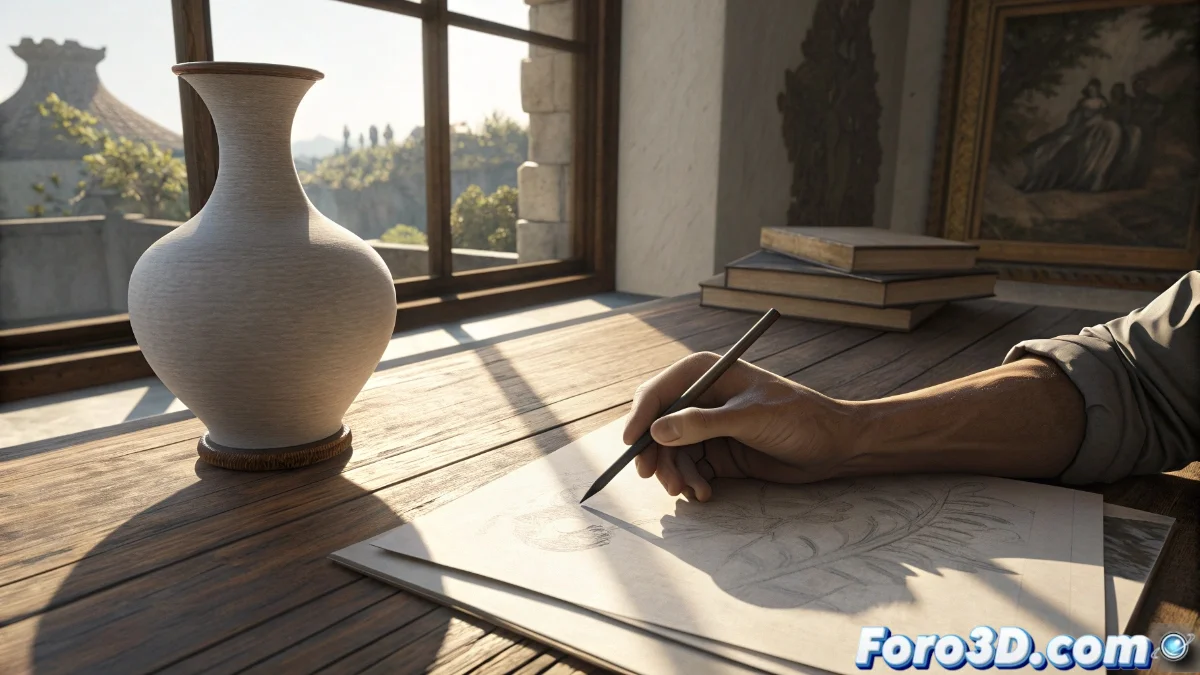
Mastering the Negative Space Technique in Drawing
Discovering negative space can radically change your artistic approach, transforming how you interpret shapes and visual structures. Instead of focusing on the main subject, this methodology invites you to observe the empty spaces surrounding it, developing an extraordinary sensitivity to balance and dimensions. 🎨
Revolutionizing Visual Perception
Negative space comprises those apparently empty areas that frame the main element of your composition. Many novice artists make the mistake of focusing exclusively on the object, generating distortions in perspective and scale. By redirecting attention to these contextual gaps, your brain analyzes the information more objectively, producing more accurate lines and better understanding the interrelationships between components. This approach is particularly valuable for working with intricate silhouettes and optimizing the overall design.
Key benefits of this approach:- Significant improvement in the precision of proportions and spatial relationships
- Development of a more analytical gaze and less subject to visual preconceptions
- Ability to resolve complex compositions through the study of empty spaces
The real challenge does not always lie in drawing what is visible, but in remembering that empty spaces have shape and intentionality, just like those gaps we leave in existence and that, paradoxically, give meaning to everything else.
Practical Implementation Step by Step
To incorporate this technique into your creative routine, initially select objects with well-defined contours and meticulously examine the adjacent spaces. Begin by outlining these voids as if they were autonomous shapes, then join them to reveal the main subject. Start with simple practices like representing a table or potted plant, progressively increasing the complexity of the motifs. The conscious repetition of this procedure trains your vision to appreciate both what is present and what is absent, cultivating a fundamental skill in any artistic discipline.
Recommended exercises for practice:- Draw the spaces around common furniture like chairs or tables
- Study negative shapes in still life compositions
- Practice with everyday objects that present interesting silhouettes
Transforming Your Artistic Gaze
Mastering negative space is not just a drawing technique, but a visual philosophy that reeducates your perception. This approach allows you to overcome mental limitations about how things "should" look, facilitating more authentic and dimensionally coherent creations. Constant practice develops an intuitive understanding of composition, where every void actively contributes to the whole, reminding us that in art -as in life- sometimes what we omit defines with equal force what we show. ✨