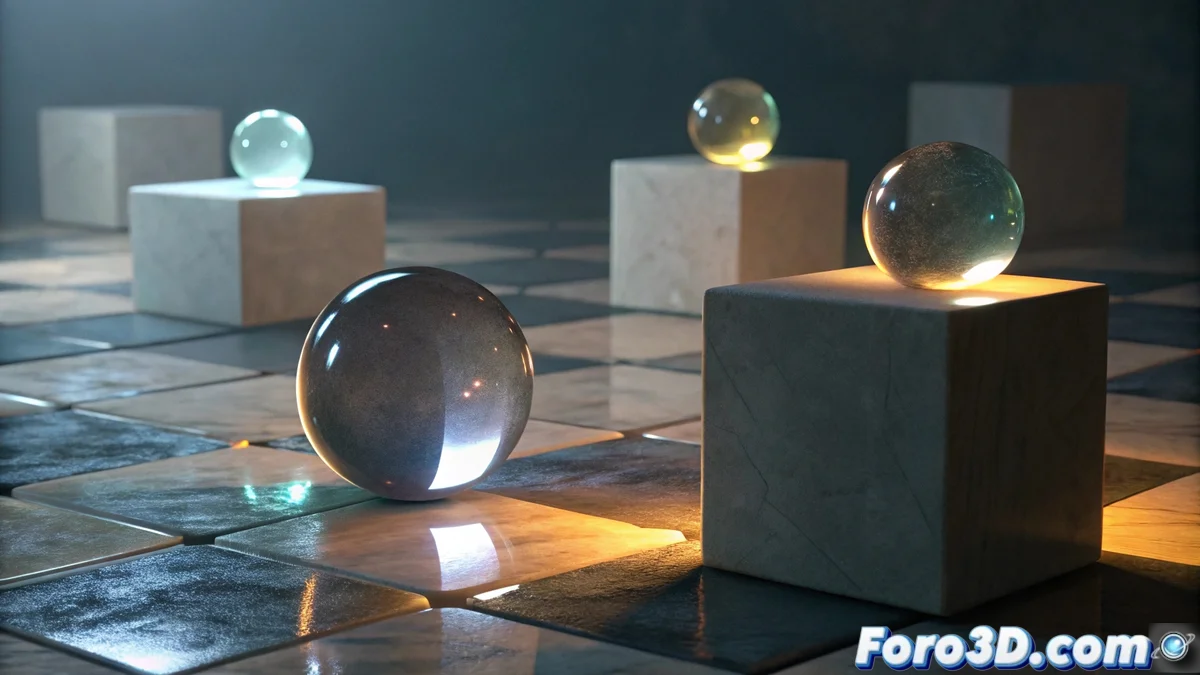
Mastering Reflected Light for Realistic Drawings
Realism in drawing crucially depends on understanding how light interacts with different surfaces, especially when light bounces between objects generate secondary reflections and highlights. This advanced technique not only gives three-dimensional depth to your creations but also establishes credible spatial relationships between all elements of your composition. 🔦
Understanding the Fundamentals of Reflected Lighting
Reflected light occurs when light rays hit a surface and bounce to nearby objects, illuminating areas that would normally remain in shadow. To capture this phenomenon artistically, it is essential to understand that secondary light always has lower intensity than the main source and frequently adopts characteristic tones from the surfaces acting as reflectors. Practicing with basic shapes like spheres and cubes under various lighting conditions will allow you to recognize how different materials and textures modify light behavior. 🎨
Key characteristics of reflected light:- Reduced intensity compared to the main light source
- Tones influenced by the color of the reflective surfaces
- Ability to illuminate areas that would be completely in shadow
Mastery of this technique can become so absorbing that you end up analyzing reflections in your morning coffee more than enjoying its flavor, wondering if the milk creates better highlights than the foam.
Practical Techniques for Implementing Reflections in Your Works
To incorporate effective reflections and highlights in your drawings, start by clearly identifying your main light source and then determine which surfaces can function as natural reflectors. In digital media, use semi-transparent color layers, while in traditional techniques employ graphite pencils with different hardness grades to build these effects gradually. Pay special attention to the edges of reflections, which are usually more diffuse than those of primary shadows, and experiment with contrast between bright and matte areas to generate a convincing illusion of depth. ✏️
Steps for successful application:- Establish the direction and intensity of the main light source
- Identify reflective surfaces and their light bounce capacity
- Use gradual shading techniques to simulate decreasing intensities
Observation and Application from the Real World
Detailed observation of how light behaves in real environments will allow you to identify lighting patterns that you can then transfer to your drawings with greater precision. Studying how light interacts with different materials, textures, and colors in everyday situations develops your intuitive understanding of lighting phenomena, enabling you to recreate them artistically with authenticity and realism. Constant practice with simple objects under various lighting conditions forms the foundation for mastering this essential technique in creating visually convincing works. 🌟