Mastering Proportions in Drawing: The Key to Visual Realism
Learning artistic drawing requires mastering proportions before executing definitive strokes. This fundamental methodology consists of meticulously analyzing the dimensional relationships between the various components of your subject through systematic visual measurements. You carefully observe how each element interconnects with the others in terms of scale, location, and angles, generating an invisible structure that will guide your creation toward aesthetic balance and perceptual coherence. 📐
The Art of Visual Measurement
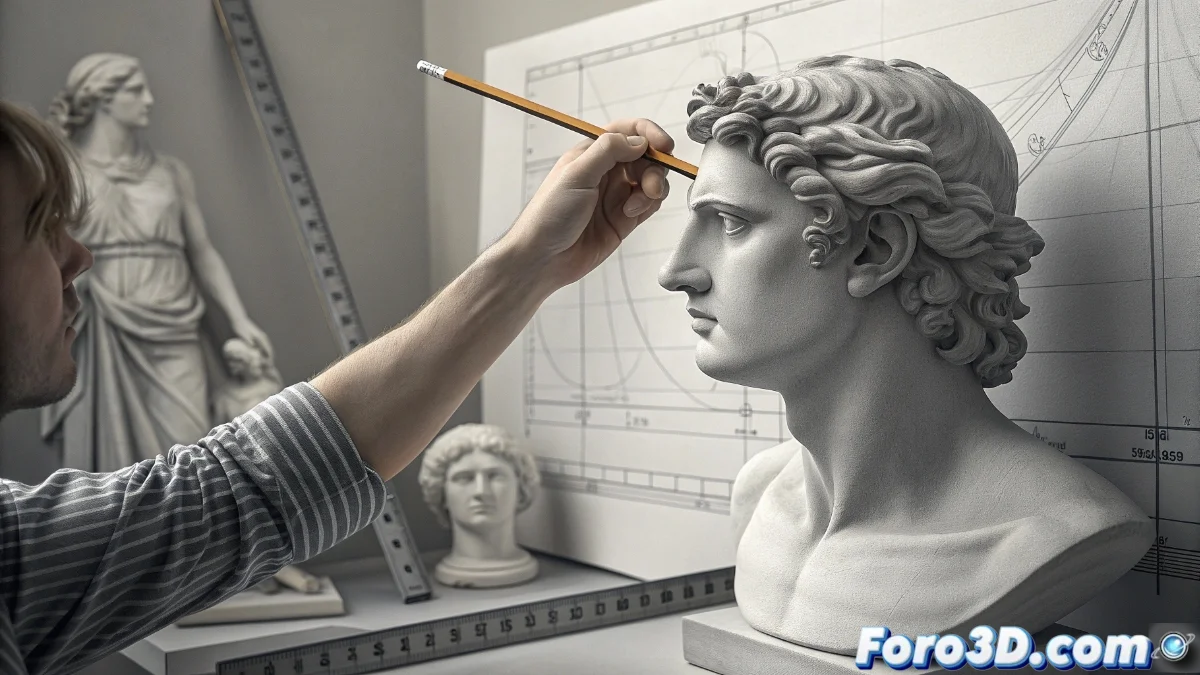
You begin the process by fully extending your arm while holding the pencil, closing one eye to maintain a constant perspective. You use the tip of the pencil as a reference to quantify the height or width of a specific feature, then transfer that comparative measurement to other areas of the model. For example, you can establish that the head equals three heads within the torso, or that the distance between the eyes corresponds exactly to the width of one eye. This proportional relationships system allows you to set exact references before consolidating permanent lines. ✏️
Essential Measurement Steps:- Full arm extension while holding the pencil as a measuring instrument
- Systematic comparison between different elements of the subject
- Establishment of mathematical relationships between components
The correct proportion transforms a simple sketch into a credible representation of reality.
Universal Application to Various Subjects
This proportional methodology works with equal effectiveness on human figures, animals, architectural structures, or inanimate objects. When representing a face, you first determine the cranio-mandibular relationship, then position the eyes exactly in the middle of the head, not in the upper region as beginners often assume. In architecture, you compare the height of windows with doors, or the thickness of columns with the intermediate spaces. The fundamental key lies in persistently seeking the dimensional connections between components, always avoiding analyzing isolated parts without considering their integration within the overall whole. 🎨
Practical Application Examples:- Human figure: relationships between head, neck, torso, and limbs
- Architecture: proportions between windows, doors, and structural elements
- Animals: balances between head, body, legs, and tail
Consequences of Proportional Errors
Always remember that an incorrect measurement of proportions can result in portraits where the nose seems to aspire to facial independence or hands that resemble boxing gloves, demonstrating how tangible reality often resists collaborating with our initial perception. The constant practice of these techniques will allow you to develop a critical eye capable of capturing the dimensional essence of any subject with precision and visual harmony. 👁️