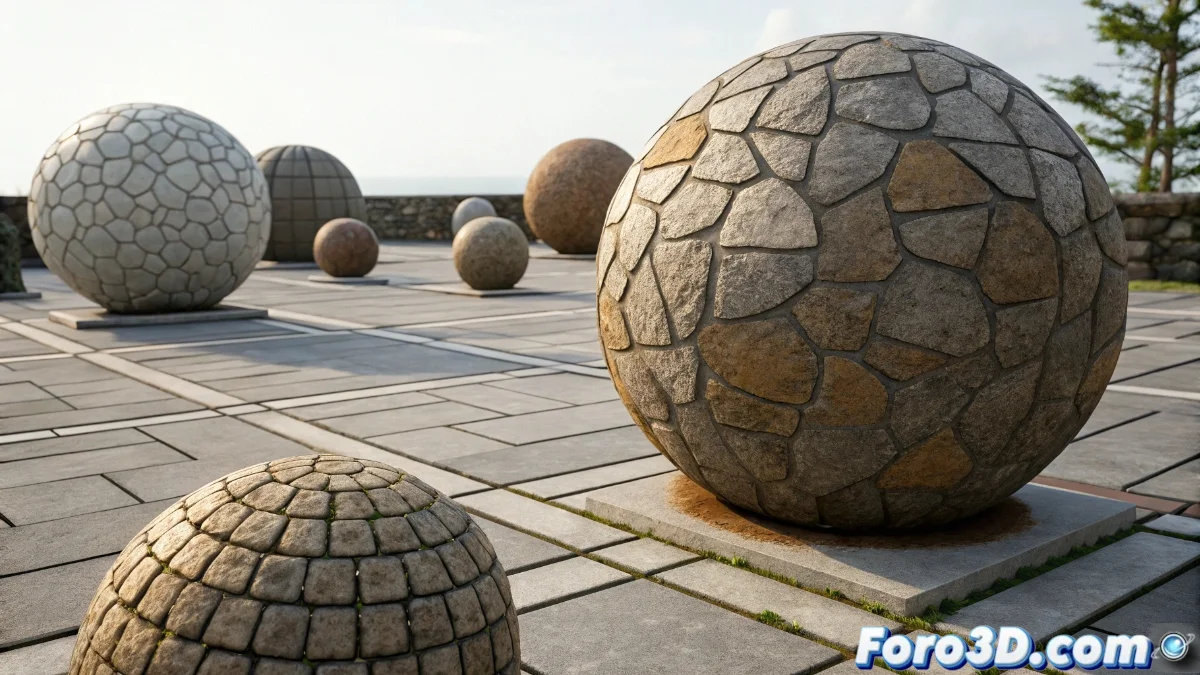
Mastering Procedural Noise Nodes in Unreal Engine 5
The Unreal Engine 5 graphics engine incorporates an advanced procedural noise nodes system that allows generating completely dynamic textures with controlled variations. These elements are fundamental for creating organic patterns that mimic natural materials like rocks, wood, or cloud formations, all without relying on external image files. 🎨
Essential Noise Nodes Setup
Within the Unreal Engine 5 material editor, artists find multiple procedural noise options in the functions section. The main Noise node offers selection between algorithms like Perlin, Simplex, and Voronoi, each with unique characteristics for different types of patterns. Critical parameters include frequency, which defines the pattern size, octaves, which add progressive levels of detail, and lacunarity, which controls how these levels are combined. These values can be linked to dynamic material parameters to achieve real-time variations during execution. 🔧
Fundamental parameters to adjust:- Frequency: Controls the scale and size of the generated patterns
- Octaves: Adds additional layers of detail for greater complexity
- Persistence: Determines the relative influence of each octave on the final result
True mastery in procedural materials comes when, after hours of meticulous adjustments, the final result unsettlingly resembles your first discarded attempt at the start of the project.
Advanced Random Variation Techniques
To implement controlled random variation in textures, developers combine texture coordinate nodes with multiple layers of noise functions. By overlaying different noise configurations and blending them through fusion operations, unique results are achieved for each material instance. This methodology is particularly valuable for generating procedural terrains, diverse vegetation, or wear effects on surfaces, completely eliminating the monotonous repetition characteristic of traditional image-based textures. 🌿
Practical applications of procedural noise:- Procedural terrains: Creation of natural landscapes with authentic variation
- Varied foliage: Generation of vegetation with unique and organic patterns
- Wear effects: Simulation of natural deterioration on materials and surfaces
Final Considerations on the Procedural Workflow
Developing materials using procedural noise nodes represents a powerful approach to creating dynamic textures in Unreal Engine 5. The ability to adjust parameters like scale, octaves, and lacunarity provides precise control over the final result, while combining different algorithms and blending techniques allows reaching extraordinary levels of organic variation. This method not only optimizes the workflow by eliminating dependence on external textures but also opens unlimited creative possibilities for artists and developers. 💫