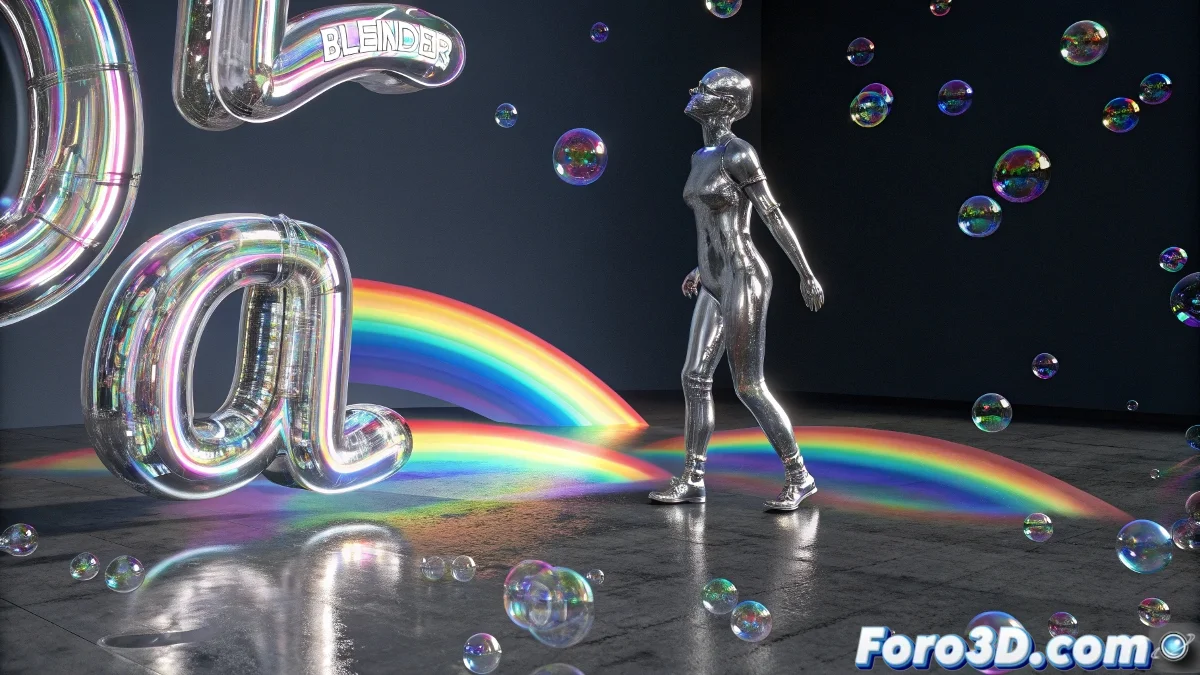
When the Future Shines Brighter Than Your 4K Renders
2025 will be remembered as the year digital design put on its sunglasses 🕶️. Liquid chromes, psychedelic reflections, and surfaces that shift like oil on water are dominating visual trends, turning every render into a statement of futuristic style.
The Perfect Glitter Addict's Toolkit
- Ultra-reflective HDRIs: Environment maps that would make a mirror cry
- Custom Shaders: Nodes that blend reflection, refraction, and dispersion
- Aggressive Post-Production: Controlled chromatic aberration and nuclear glow
- Strategic Geometry: Curved surfaces to maximize reflections
"A good futuristic material isn't seen, it's experienced" - murmurs the 3D artist while adjusting their shader's IOR for the tenth time.
Techniques for Hypnotizing Materials
| Effect | Key Setting | Render Engine |
|---|---|---|
| Liquid Chrome | Roughness 0.01 + Extreme Fresnel | Cycles/Redshift |
| Iridescent Hologram | Thin Film interference | Octane/V-Ray |
| Distorted Metal | Noise bump + Anisotropy | Arnold/Corona |
Workflow to Shine Without Burning Retinas
- Model with emphasis on curved surfaces and sharp edges
- Set up complex shaders using interference nodes
- Render with high sampling to avoid noise in reflections
- Post-process to intensify optical effects
- Publish and wait for someone to ask "is this a photo?"
Inspiration That Redefines "Too Bright"
- Branding: Visual identities for luxury tech brands
- Packaging: Special effects on premium products
- UI/UX: Sci-fi movie interfaces applied to real apps
- Digital Art: NFTs that play with light perception
The Futuristic Designer's Paradox
The more we try to recreate materials from the future, the more we rely on current technology limited by the physical laws of the present. The irony: those hyper-shiny renders that seem to defy reality... we make them on computers that overheat while rendering them. 🔥
So go ahead: make that metal shine, make that hologram blinding, and make those reflections hurt. Because in tomorrow's design, if you don't have to look away... you're not making it bright enough.