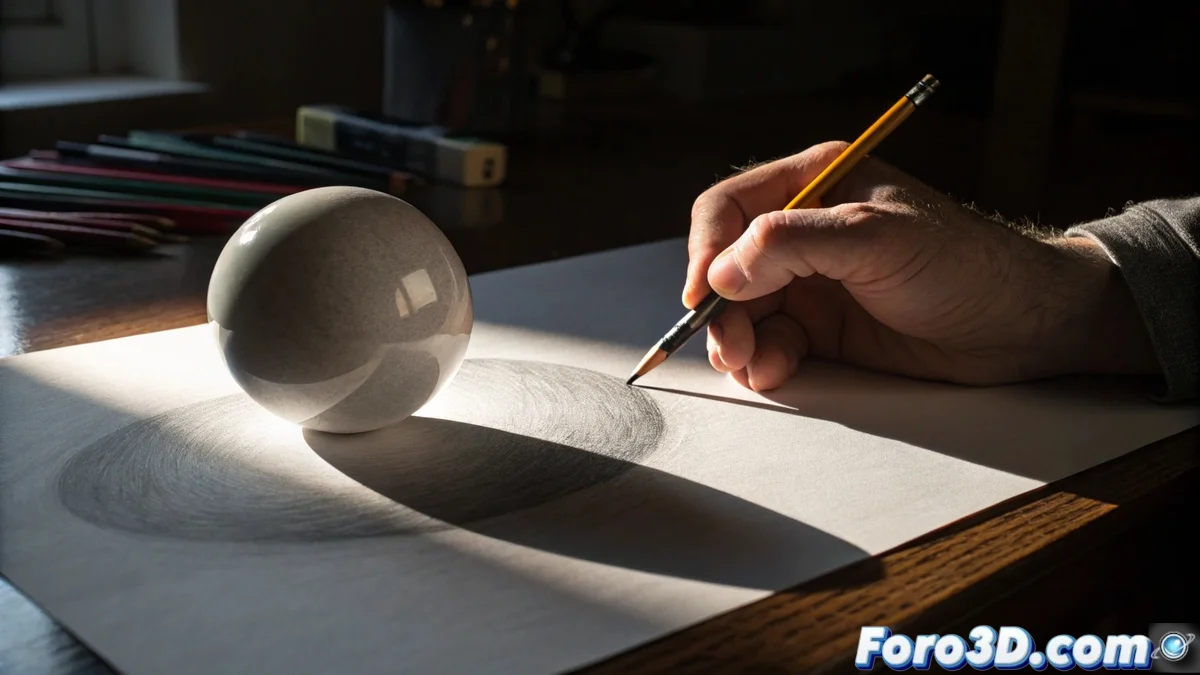
Mastering Light and Shadow for Realistic Illustrations
Understanding how light interacts with objects is the fundamental basis for creating illustrations that convey realism and depth. This understanding allows for precise placement of illuminated areas and shadow zones, providing that visual contrast that transforms two-dimensional shapes into convincing volumetric representations ✨.
Analysis of Natural and Artificial Light Sources
The first step is to carefully study how different types of light affect objects in your environment. Observe how the direction and intensity modify cast shadows and areas of maximum brightness. Identify the essential components of any illuminated scene:
Key Elements of Lighting:- Direct light - areas that receive full illumination
- Penumbra - smooth transition between light and shadow
- Form shadow - areas not reached by the light source
- Cast shadow - silhouette that the object generates on surfaces
Light not only illuminates, but completely defines what we see and how we interpret the shapes and textures of the objects around us.
Progressive Development of Tonal Values
Implement gradual exercises that start with basic shapes like spheres and cubes, progressively advancing to complex organic structures. Work with value scales that harmoniously transition from the lightest areas to the darkest, using both photographic and real-life references to understand how light defines planes, edges, and curves 🎨.
Recommended Mediums and Techniques:- Graphite pencil - ideal for mastering subtle gradations
- Charcoal - perfect for marked contrasts
- Digital techniques - allow corrections and experimentation
Transforming Visual Perception
Remember that even the most experienced artists started drawing shadows that looked like accidental smudges. The key is understanding that light shapes perception and that mastering its behavior is what ultimately separates flat illustrations from those that breathe three-dimensionality and realism. Consistent practice will allow you to internalize these concepts until they become a second artistic nature 🌟.