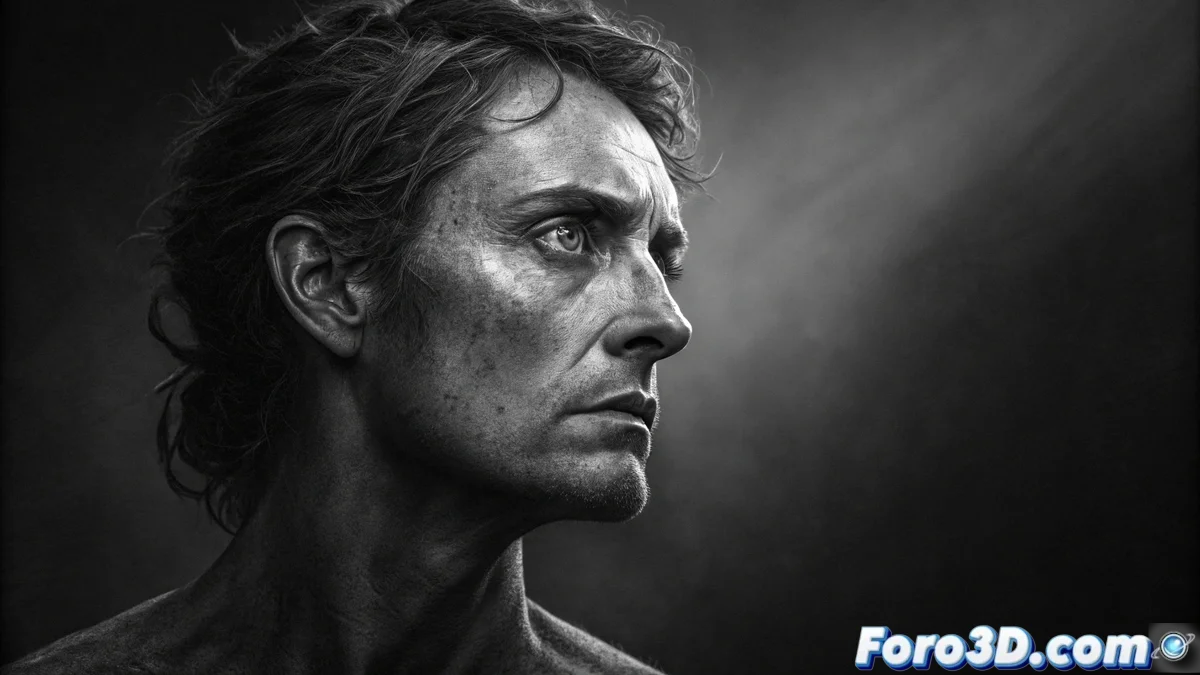
Mastering High-Contrast Black and White Photography
This editing style aims to generate a defined and powerful visual impact. The tone curves are manipulated intensely to suppress most intermediate grays, producing pure whites and deep blacks. The result is an image that feels graphic and full of drama, where light and shadow build the composition entirely. 🎭
Processing an Image to Achieve Extreme Contrast
The core of this technique lies in using the curves tool within editing software. The curve is adjusted so that shadows drop to absolute black and highlights rise to pure white, thus radically compressing the midtones. To control this effect, it is common to use luminosity masks and apply adjustments selectively, protecting crucial details. The dodging and burning technique is fundamental for lightening or darkening specific areas and directing the viewer's attention. The key is to handle the transition between light and shadow so that the image maintains its legibility.
Key Tools and Techniques:- Tone Curves: Adjust aggressively to eliminate intermediate grays.
- Luminosity Masks: Apply changes locally and protect details.
- Dodging and Burning: Guide the gaze by lightening or darkening precise areas.
The paradox of this style: to achieve such pure and extreme black and white, you often need to start with a perfectly exposed color photograph full of nuances, which you then sacrifice on the altar of contrast.
Ideal Scenarios for Applying High Contrast
This approach works best in scenes that already have strong directional lighting, such as side light from the sun at dawn or dusk, which naturally creates defined shadows. It is excellent in portraits to accentuate facial features and capture intense expressions. In architectural photography, it serves to highlight lines, volumes, and geometric structures. It also shines in urban landscapes and street photography, where abstract forms are the main element. 🌆
Where It Works Best:- Expressive Portraits: To highlight skin texture and gaze intensity.
- Architecture and Lines: To emphasize building geometry and structure.
- Urban Scenes: To transform everyday elements into graphic compositions.
Limitations and Final Considerations
It is not a universal style. In scenes with a very wide dynamic range and many important details in the shadows, applying this process can cause critical information to be lost and the image to become confusing. Success depends on starting with a well-exposed shot and understanding that tonal range is being traded for graphic strength. The ultimate goal is to create an image where shapes, lines, and textures stand out with unmistakable visual power. ⚫⚪