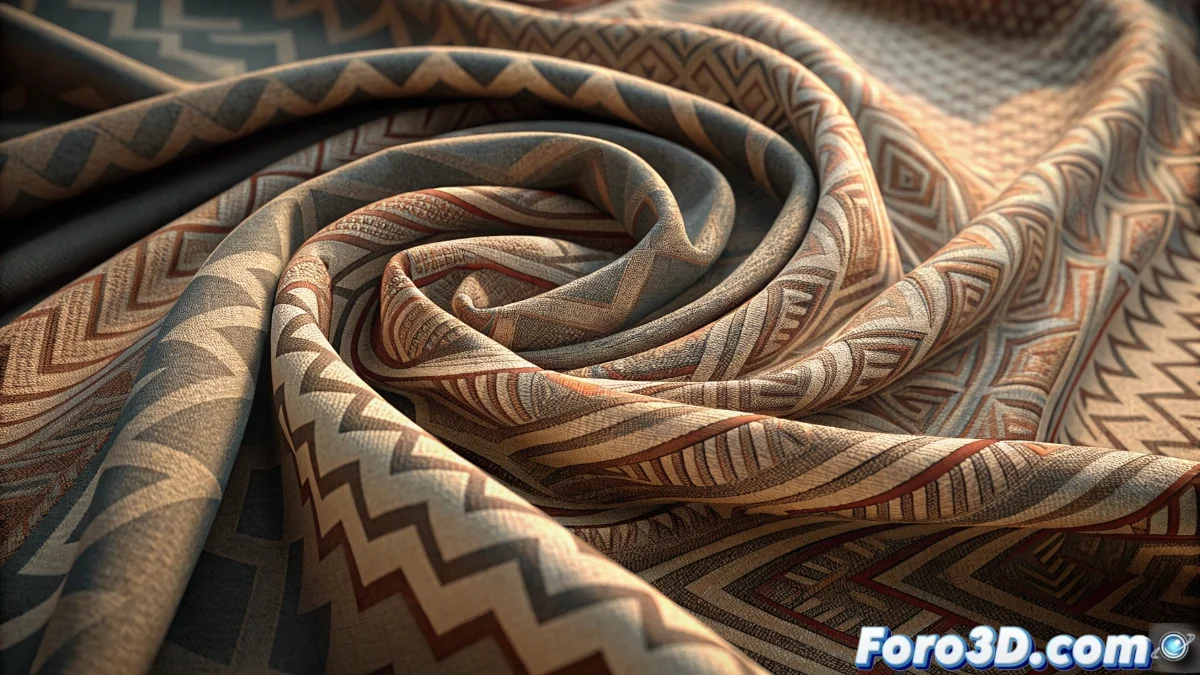
Mastering Folds in Clothing for Realistic Illustrations
Representing folds in clothing is a crucial aspect for infusing realism and volume into your characters, as the fabric adapts to body shapes and generates distinctive patterns according to the material and tension applied. Understanding these elements will allow you to accurately capture how the fabric unfolds with movement, bringing naturalness to your creations 🎨.
Fundamental Types of Folds and Their Characteristics
There are three main categories of folds that every artist must master: tubular, spiral, and zigzag. Each one has unique attributes that adapt to various situations in clothing, influencing how the fabric falls and fits during action. Studying these variations will help you avoid rigid representations and emphasize fluidity in your illustrations.
Details of each type of fold:- Tubular folds: They form when the fabric falls freely from a point of attachment, creating cylindrical or conical silhouettes that taper downward; ideal for skirts or loose sleeves.
- Spiral folds: They arise when the fabric wraps around cylindrical surfaces like arms or legs, generating a repetitive torsion pattern that follows the curvature.
- Zigzag folds: Characteristic of flexion zones like elbows or knees, where the fabric compresses forming alternating sharp angles between crests and valleys.
Constant practice transforms chaos into elegance, so keep trying until those fabrics come to life on your paper.
Applying Folds in Dynamic Situations
Integrating these folds into your drawings requires observing real fabrics in varied contexts, such as a wrinkled shirt or a curtain waving in the wind. Making quick sketches will allow you to internalize the patterns and simplify basic shapes before adding complexity, avoiding saturating the image with superfluous lines. Additionally, considering how different fabrics—like lightweight silk versus heavy cotton—affect fold formation will enrich your work.
Practical tips for improvement:- Analyze how gravity influences the fall of fabrics, creating a sense of weight and movement in loose garments.
- Experiment with light direction to mark shadows and highlights that define volume in tubular and spiral folds.
- Practice capturing body dynamism in active poses, where zigzag and spiral folds evolve with movement.
Developing Skill and Patience in Drawing Folds
At the beginning, folds often appear messy or unnatural, but perseverance is key to refining them. Even experienced artists started with clothing that looked rigid, and it is through repetition that mastery of fabric elegance is achieved. Remember: observe, simplify, and practice are the pillars for your illustrations to convey authenticity and life ✨.