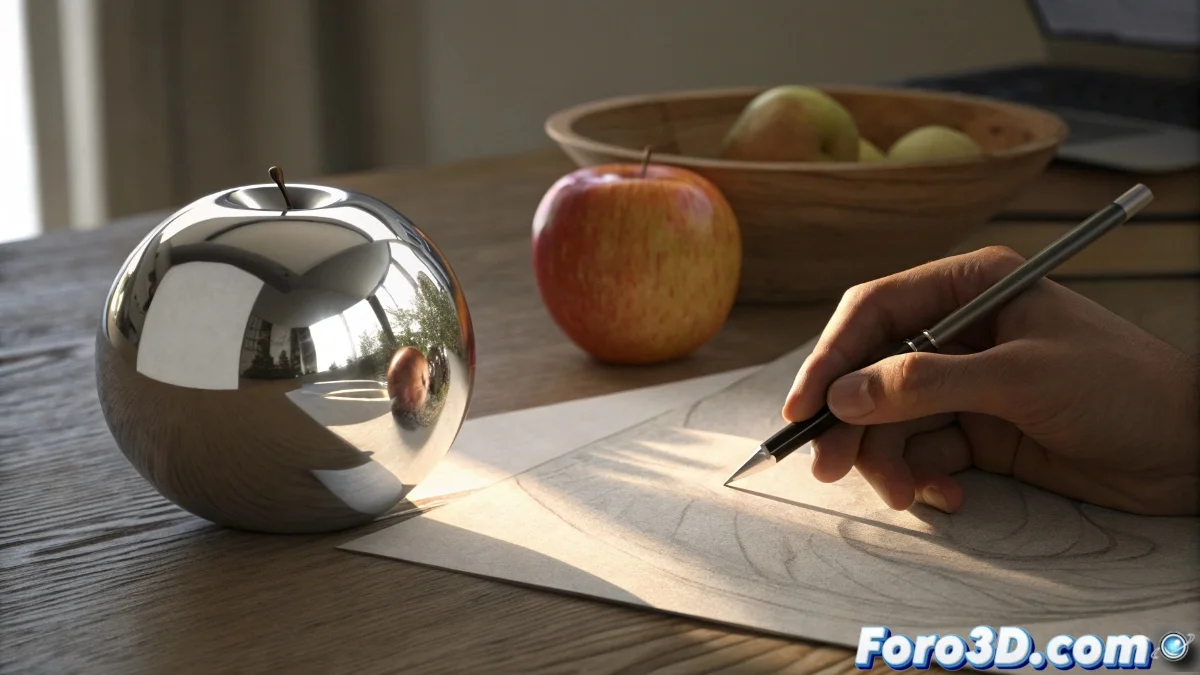
Mastering Distorted Reflections in Realistic Illustration
This artistic methodology is based on meticulously analyzing the behavior of light when interacting with various materials and the transformations that reflected images undergo. By examining reflective surfaces such as glass, liquids, or metal alloys, you can train your visual perception to identify the distortions and structures they produce. Experimenting with these elements allows you to understand optical principles and refine your ability to authentically represent surfaces and dimensions in your graphic creations. 🔍
Preparations and Essential Elements
To get started, choose a reflective surface that interests you, such as a polished aluminum container or a sheet of stagnant water. Place a basic object in front of it and analyze how its reflection is altered. Use a soft-lead mechanical pencil and high-grammage cardstock to sketch what you observe, focusing on the distorted silhouettes and variations in light intensity. It is practical to have measuring instruments or templates to calculate spatial relationships, although the crucial factor lies in maintaining sustained attention during the observation process.
Essential materials to begin:- Various reflective surfaces (mirrors, polished metals, water)
- Quality drawing instruments (pencils of different hardnesses)
- Appropriate support (medium-high grammage paper for sketches)
True learning begins when we observe the world through its natural distortions
Observation Methodology and Progressive Training
Start with short practice sessions of 15-25 minutes where you quickly outline the reflections without obsessing over perfectionism. Focus on capturing the essential nature of the distortion, such as how straight lines take on curvatures or how chromatic nuances blend. As you gain fluency, increase the level of difficulty by using more complex surfaces, such as textured glass or moving liquids. Compare your productions with the real scene to identify areas for improvement and adjust your approach based on these discoveries. Methodical repetition is the fundamental pillar for assimilating these patterns and transferring them to more elaborate compositions.
Phases of the learning process:- Initial session: Quick capture of basic distorted shapes
- Intermediate stage: Analysis of tonal transitions and chromatic blends
- Advanced level: Incorporation of complex reflective surfaces
Final Considerations for Artists
Remember that if in the initial stages your representations of reflections resemble elementary sketches more than polished works, do not abandon the process; even established masters began their journey by reinterpreting reality through reflective surfaces. Patience and persistence in this discipline will allow you to develop a unique gaze to capture the world in its multiple reflections. ✨