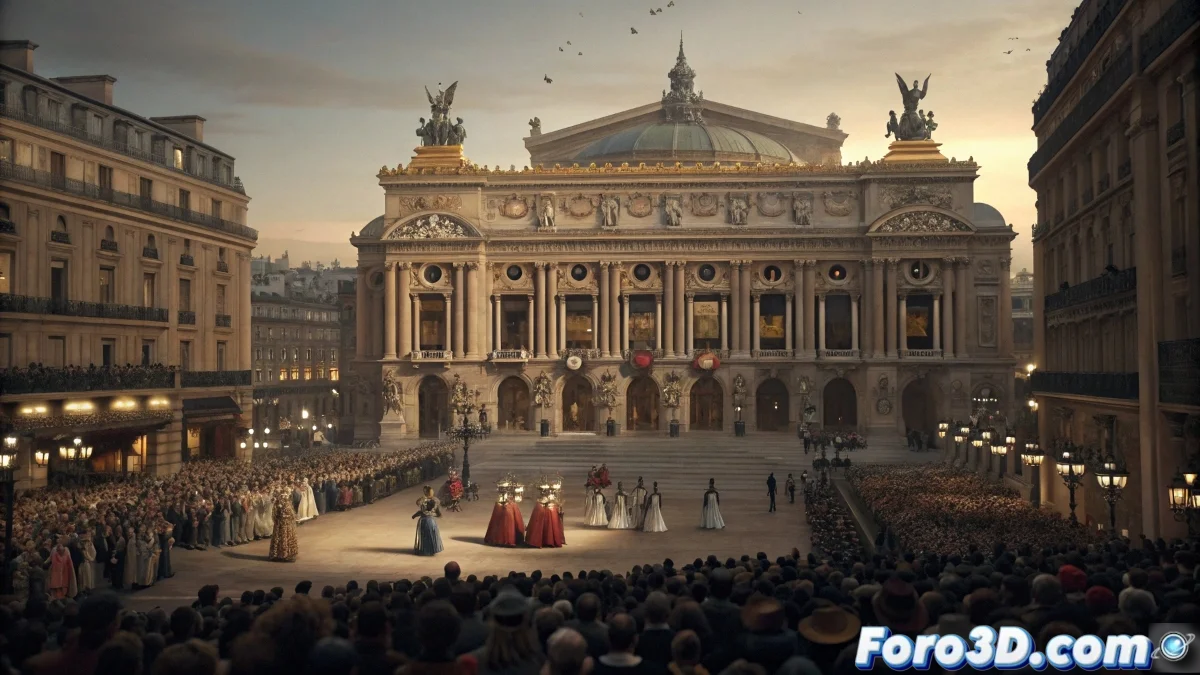
When VFX sing in perfect harmony with opera
The movie Maria demonstrates that visual effects can be as subtle as an operatic pianissimo. 🎭 The studio PFX has created a piece of invisible VFX that transports the viewer to the golden age of opera without anyone noticing the trick. Using Budapest as a digital canvas, they transformed it into 1970s Paris with a masterful combination of matte painting, 3D modeling, and simulated crowds. The result is so believable that even Verdi would have signed off on those virtual sets.
Techniques that make history (without telling it)
The technical challenge included:
- Digital crowds: Thousands of extras generated with Houdini to fill operatic theaters
- Urban transformation: Removal of modern elements and addition of historical architecture
- Perfect integration: Compositions that blend the real and the virtual without visible seams
The art of hiding the art
This project is a master class in narrative VFX:
- Zero flashy digital explosions
- Textured modeling with historical precision
- Standard software (Maya, Nuke) used with an artistic approach
"The best visual effects are like the best opera singers: they make the difficult seem natural"
A final note with humor
Thinking about it, perhaps the divos of the past wouldn't understand our VFX... but Paganini surely would have sold his soul for a renderer like Redshift. 😈 After all, both opera and visual effects share the same goal: create magic that moves. Except now, instead of theatrical machinery, we use render farms. Long live art... and the Ctrl+Z key! 💻🎶