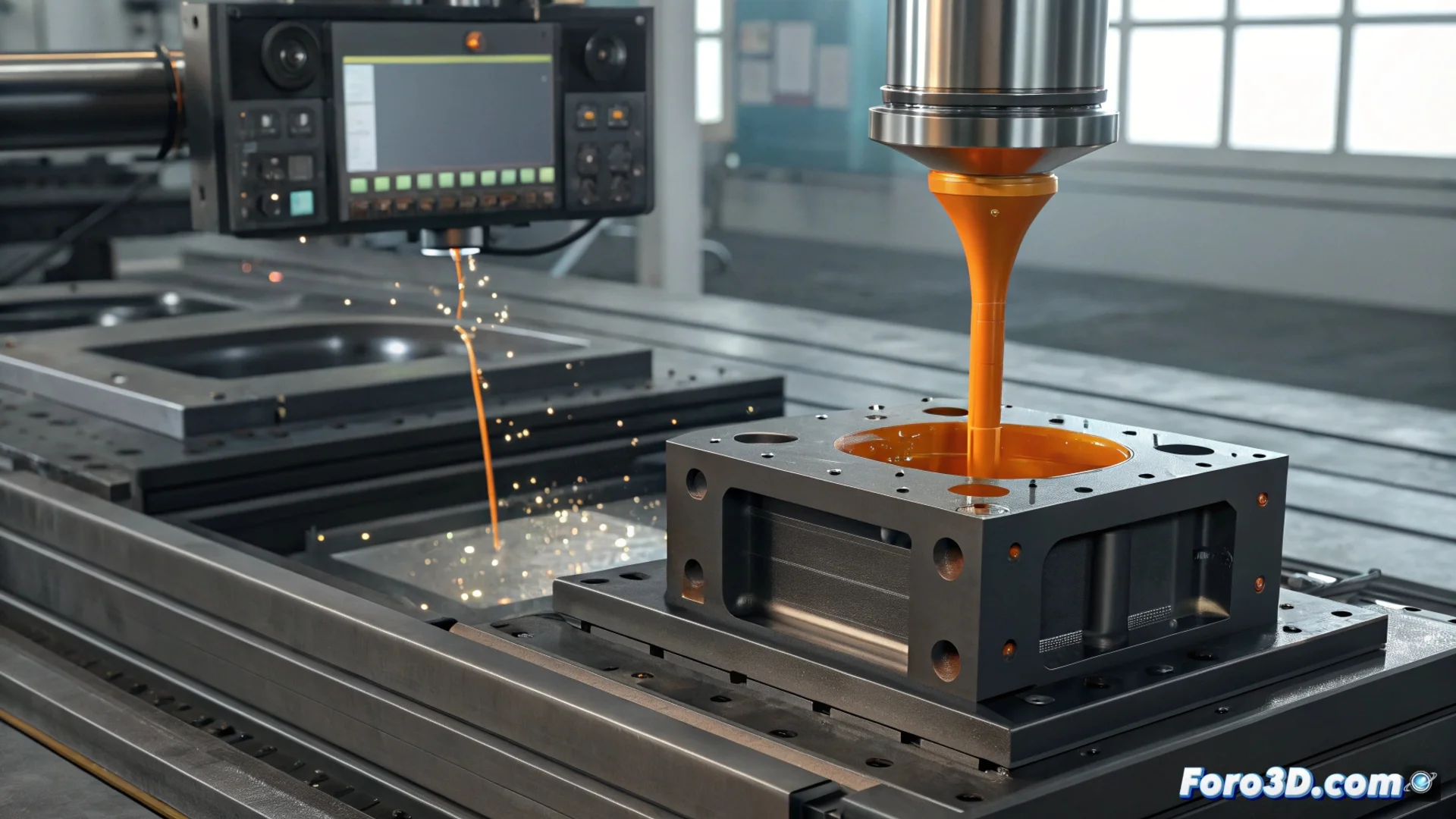
Manufacturing Molds with 3D Printing for Injecting Plastic in Short Runs
Using additive manufacturing to create injection molds is a practical alternative for small or medium-sized batches, although it has certain limitations. This method enables obtaining molds quickly and with a moderate initial investment, making it perfect for testing a design, making pre-production parts, or manufacturing a few hundred units. However, molds made with 3D printers, especially those made of polymer, typically withstand fewer cycles when facing the rigorous conditions of an industrial injection machine. 🏭
The Technology and Material Determine How Long the Mold Lasts
How long a mold lasts depends largely on the printing technology and the raw material chosen. Molds printed with common resins or photopolymers can deteriorate quickly due to repeated heat and pressure. To overcome this limit, resins that withstand high temperatures or composite materials with ceramic reinforcement are used. 3D printing with metal, through processes like DMLS or SLM, produces notably stronger stainless steel or aluminum molds that can withstand several thousand cycles. Some companies, like Nano Dimension with its DragonFly platform, integrate electronic circuits directly into the mold to monitor its condition, a strategy aimed at increasing its reliability and operational life.
Factors Influencing Durability:- Printing Technology: Metal laser sintering (DMLS/SLM) offers greater robustness than stereolithography (SLA) with resins.
- Base Material: Metal alloys, ceramic composites, or high-temperature resins define the thermal and mechanical limit.
- Integrated Monitoring: Sensors or circuits inside the mold allow real-time evaluation of its wear.
Balancing the need for speed and flexibility with durability and cost per piece requirements is the main challenge.
The Specific Application Determines If It's Feasible to Use It
Deciding to use a printed mold requires analyzing the plastic to be injected, how complex the part geometry is, and the total number of units required. For thermoplastics with a low melting point and runs under 500 pieces, a printed polymer mold can be the fastest and cheapest option. For longer runs or technical materials, a printed metal mold is more appropriate, although its price approaches that of a traditional steel mold made with a milling machine. The key point lies in weighing urgency and adaptability against the necessary resistance and final cost per component. 🔧
Recommended Use Contexts:- Validate a Design or Prototype: Ideal for functional tests and adjustments before investing in a definitive mold.
- Produce Short or Customized Runs: Perfect for batches between 50 and 500 units, where the economy of conventional molds is not viable.
- Manufacture Parts with Intricate Geometries: 3D printing allows conformal cooling channels or surface textures that are difficult to machine.
Strategic Perspective of the Ephemeral Mold
In a business approach where a different part needs to be manufactured each time, the short lifespan of the printed mold could be considered a deliberate feature and not a defect. This perspective shifts the paradigm, viewing controlled obsolescence as a design element that favors flexibility and reduces physical mold inventories. Therefore, evaluating this technology not only involves comparing cycle numbers, but understanding how it aligns with an agile and adaptable manufacturing strategy. 🤔