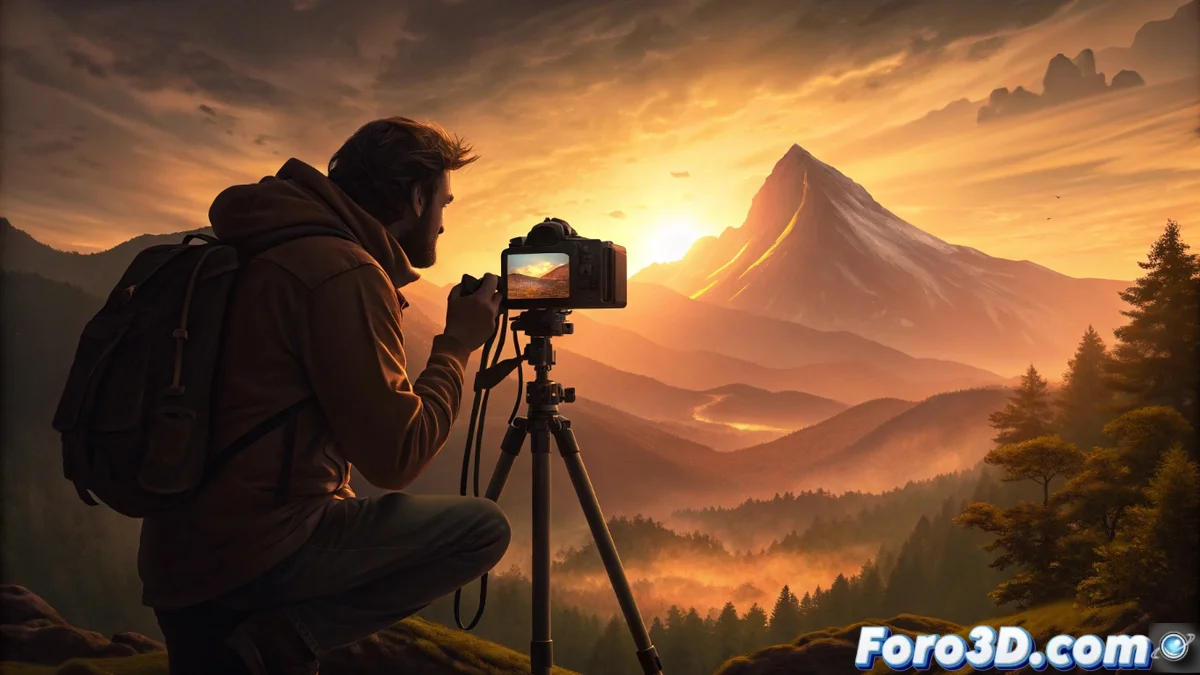
Manual Bracketing to Expand Dynamic Range in Photography
Many cameras feature a Pro mode that enables a powerful technique: manual bracketing. This method goes beyond the built-in automatic HDR, offering the photographer absolute control over the final result. It is the key to capturing scenes with extreme contrasts that a single shot cannot resolve. 📸
Fundamentals of Multiple Exposure Technique
The process begins by taking a series of photographs of the same frame, but with different exposure values. It is not about taking different photos, but capturing the same composition with light variations. To ensure the frame is identical in all shots, the use of a sturdy tripod is essential. This stability is the foundation for a perfect subsequent fusion.
The typical exposure sequence includes:- An underexposed shot to preserve detail in the brightest areas, such as a sky with clouds.
- A shot with normal exposure according to the camera's meter, serving as a middle reference.
- An overexposed shot to recover information hidden in deep shadows.
Manual bracketing provides the control that automatic algorithms restrict, allowing decisions on the number of shots and the step separation between them.
Fusing and Processing the Captured Shots
The individual images are not the final product. Their true potential is unleashed by combining them on a computer using specialized software. Programs like Adobe Lightroom, Photoshop, or Aurora HDR are designed to align and blend the different exposures into a single image file. This composite file contains an expanded dynamic range, integrating light and shadow information from all original shots.
Advantages of processing oneself:- Avoids visual artifacts, unnatural colors, and excessive flattening often generated by camera automatic HDR modes.
- The photographer has total control to adjust contrast, saturation, and light balance in the fused image.
- Allows rescuing details in both clipped highlights and blocked shadows that the sensor could not capture in a single shot.
Practical Applications and Final Considerations
This technique is fundamental in high-contrast scenes. It is ideal for landscapes where a very bright sky contrasts with shaded terrain, or for interiors with windows revealing a bright exterior. However, the main challenge is the absolute immobility of the subject during the shooting sequence. Scenes with moving pets or active children are not candidates, unless captured in a moment of total stillness, such as when sleeping. Mastering manual bracketing opens a world of creative possibilities, allowing the production of images that faithfully reflect what the human eye perceives, surpassing the technical limitations of the hardware. 🏞️