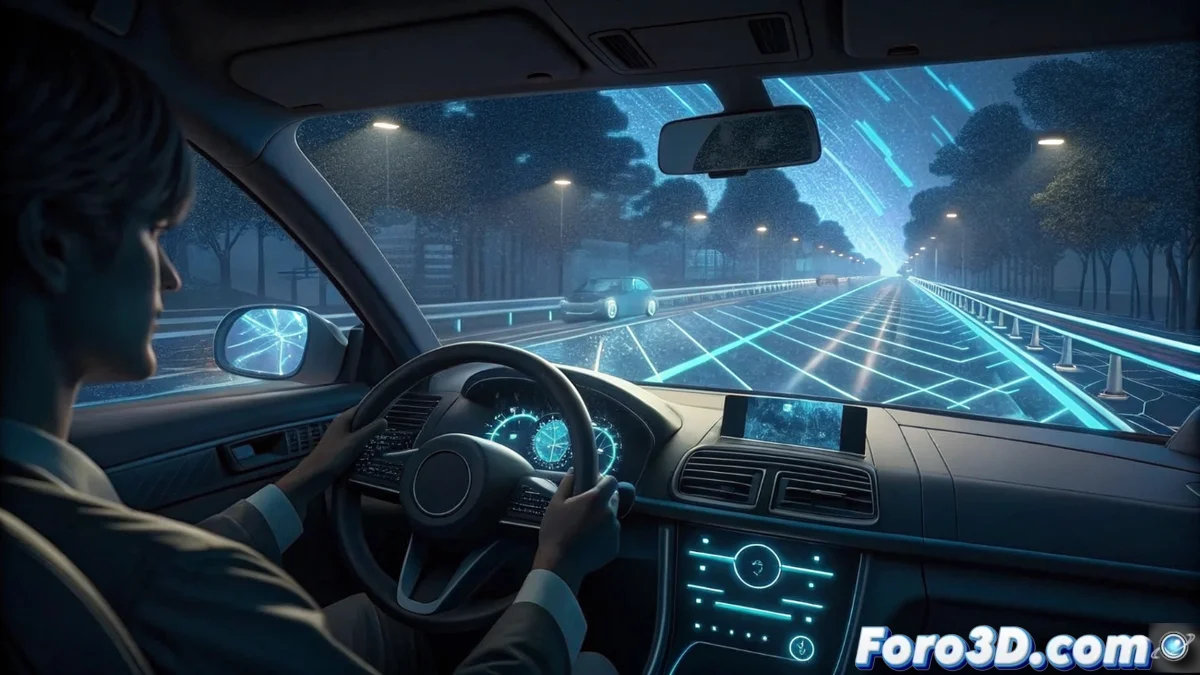
Mandatory Assisted Driving: Imposed Safety or Loss of Control?
Upon getting into a new vehicle, we encounter a digital co-pilot that has already taken its seat. It is not an option, but a regulatory reality. Systems such as the lane keeping assistant, the adaptive cruise control, or the autonomous emergency braking start with the engine, ready to monitor and, at times, correct our actions. This layer of automation, reactivated after every trip, redefines the traditional dynamic between the human and the machine at the wheel. 🚗⚙️
The Switch That Doesn't Exist: Forced Reactivation
The core of the current discussion is not the technology itself, but its irrevocable nature. Although we can press a button to temporarily silence these aids, a permanent shutdown is not on the menu. After turning off the engine, the configuration returns to the factory state: everything activated. This design decision, driven by safety regulations, places algorithmic intervention above personal choice. Manufacturers wield compelling data on accident reduction, but many drivers feel that their judgment and agency are being progressively marginalized.
Main systems you can't "turn off" permanently:- Lane Keeping Assistant (LKA): Applies a slight torque to the steering wheel to correct the trajectory if it detects an unintentional lane departure.
- Intelligent Speed Assistance (ISA): Automatically adjusts speed using sign recognition and mapping data.
- Autonomous Emergency Braking (AEB): Acts independently of the driver in the face of an imminent obstacle, sometimes due to false positives.
"Imposed protection could, in the long run, atrophy critical driving skills or generate a false sense of security."
The Delicate Balance: Statistics vs. Expertise
This scenario opens a philosophical and practical debate in the automotive world. On one hand, the figures support the effectiveness of these systems in mitigating collisions due to distraction or human error. On the other, there is concern that supervised driving degrades our reaction and judgment capabilities in limit situations where the algorithm may fail. The driver's role evolves toward that of an alert supervisor, who must anticipate and understand the vehicle's sometimes surprising decisions.
Consequences of constant partial automation:- Desaccustoming: Reliance on aids can erode reflexes and manual handling skills in curves or adverse conditions.
- Distrust: Sudden system reactions, such as braking for shadows or corrections on roads with poorly painted markings, generate stress and lack of trust.
- Responsibility Dilemma: The line blurs on who is ultimately responsible in an incident: the "supervisor" driver or the acting software.
Living with a Co-Pilot That Doesn't Get Tired
The new era of driving is no longer just about mastering a vehicle, but managing a mandatory collaboration with the onboard intelligence. So, the next time your car performs an unexpected maneuver, remember that it is not a manufacturing defect. It is the result of a probabilistic calculation designed to protect you, a safety feature that, according to regulations, is better that you cannot permanently reject. The road has become a space of shared control, where the final word is not always ours. 🤖🛣️