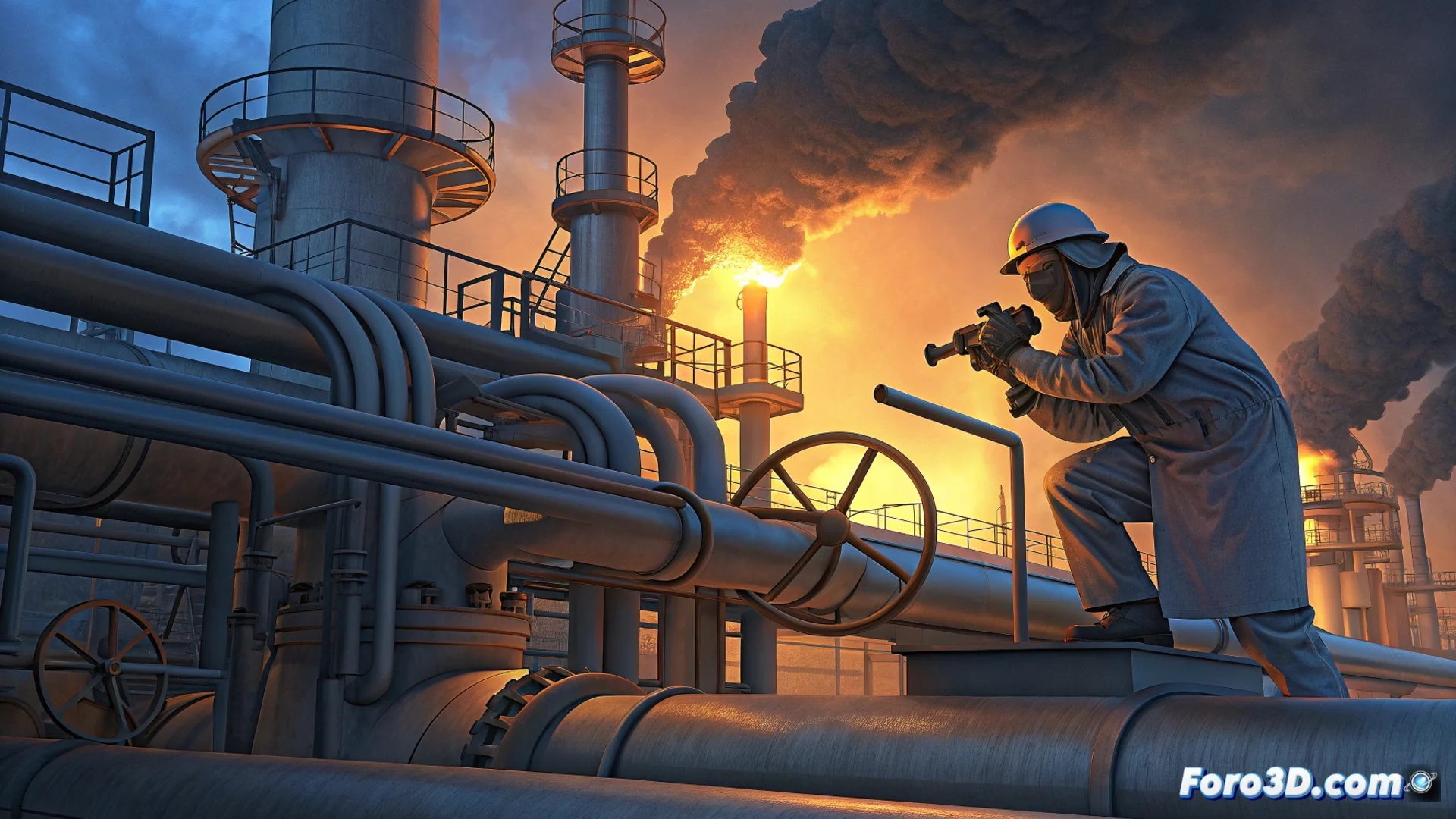
Maintaining Pipeline Integrity in a Refinery is Crucial
In an oil or gas processing plant, a leak, a broken pipe, or a failed valve can trigger massive losses. The basic rule is clear: act quickly, repair precisely, and avoid shutting down the plant. However, in a place where corrosion, high pressure, and hazardous compounds are always present, applying this simple rule faces very complex obstacles. The main focus must be preventing problems from arising, rather than just fixing them afterward, by deploying mechanisms that monitor equipment conditions continuously and proactively. 🛢️⚙️
Continuous Monitoring Detects Potential Failures in Advance
Traditional manual inspection approaches are no longer sufficient. Today, advanced technologies such as ultrasound detectors, heat-capturing cameras, and robotic vehicles that move inside pipelines are implemented. These devices obtain real-time information on metal thickness, temperature, or abnormal vibrations. By analyzing this data, work teams can predict where a component might break and plan its repair without interrupting operations, improving safety and productivity.
Key Advantages of Proactive Monitoring:- Allows scheduling maintenance during low-activity periods, avoiding costly shutdowns.
- Reduces the risk of serious incidents by identifying weak points before they fail.
- Extends asset lifespan by intelligently managing wear.
It seems the pipeline decided to take a break right when it was needed most.
Repairing a Leak in Extreme Conditions Requires Specialized Techniques
When a leak is confirmed, the sealing method must be fast and permanent. Procedures such as hot welding, which requires specific authorizations and controlled atmospheres, or installing emergency clamping braces are applied. Compounds for patching or replacing a pipeline section must withstand the circulating fluid, system pressure, and corrosive environment. A failure in this step not only causes the problem to return but can significantly worsen it.
Critical Materials and Methods for Repairing:- Alloys and coatings designed to resist chemical attacks and high pressure.
- Clamping procedures that allow secure temporary sealing while preparing a permanent solution.
- Strict safety protocols for personnel intervening in hazardous areas.
The Central Philosophy: Always Anticipate Rather Than React
Ultimately, the greatest danger in these environments is not always the physical leak, but the false sense of control that leads to relying only on emergency responses. The winning strategy consists of integrating automated surveillance systems that transform data into preventive actions. This does not eliminate the need for repairs, but shifts the paradigm toward management where risks are managed continuously, ensuring production does not stop and that personnel and facility safety is the top priority. 🔧📊