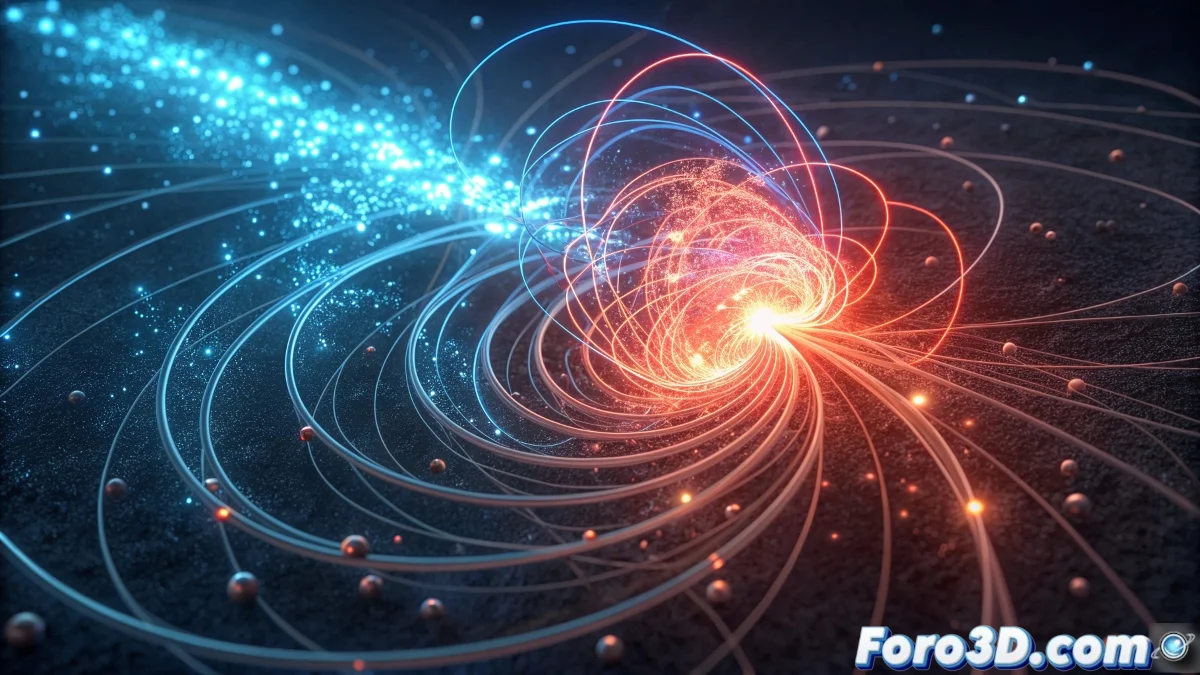
Magnetic Field Simulation in Blender with Force Fields and Nodal Geometry
Although Blender lacks a native system specifically for magnetic fields, we can recreate their behavior through the strategic use of force fields and advanced nodal geometry techniques. Vortex and turbulence fields offer particularly convincing results for representing these invisible forces that govern the movement of particles and objects. 🧲
Essential Setup for Magnetic Force Fields
To start the magnetic simulation, access the Add / Force Field menu and select the Magnetic option in the Field Properties panel. This specialized field simulates attraction and repulsion behaviors on particles and rigid bodies with applied physics. The key parameters include:
Fundamental Parameters:- Strength and Influence: Controls magnetic intensity and range of effect
- Field Shapes: Point, Plane or Surface for different influence patterns
- Absorption: Determines if objects stop upon reaching the field epicenter
The real magic happens when combining multiple fields with opposing configurations to create dynamic balances
Integration with Advanced Particle Systems
Magnetic fields are exceptionally useful when working with particle systems to generate organic and natural patterns. By assigning different physical weights to particles in the Physics panel, you can create variable responses to magnetic stimuli:
Implementation Techniques:- Selective Attraction: Particles with greater mass respond more intensely
- Opposing Poles: Fields with contrary forces simulate bipolar behavior
- Complex Patterns: Multiple fields generate spiral and orbital formations
Nodal Geometry for Custom Magnetic Systems
Nodal geometry opens unlimited possibilities for creating magnetic systems that transcend the limitations of traditional fields. Using the Field to Proximity node combined with Vector Math operations, you can design attraction patterns based on distance, orientation, and custom attributes:
Advantages of the Nodal Approach:- Precise Vector Control: Manipulate direction and intensity at every point on the mesh
- Independence from Traditional Fields: Create unique magnetic behaviors
- Integration with Attributes: Connect with other nodal geometry systems
At the end of the day, these virtual magnets are more predictable and controllable than their real-world counterparts, allowing us to create perfect magnetic simulations without the frustrating unexpected twists of fridge magnets. ⚡