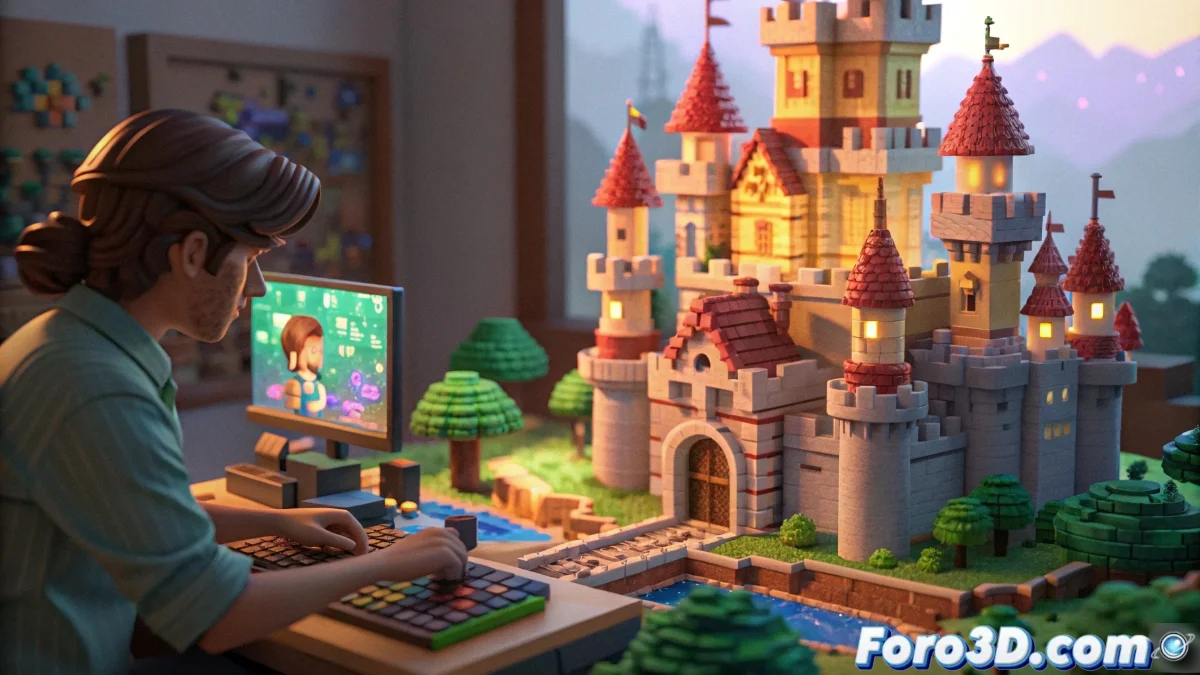
MagicaVoxel vs. Paid Tools: Practicality or Perfection?
In the universe of voxel modeling, MagicaVoxel emerges as a free and accessible option that captivates with its intuitive interface and instant rendering capabilities 🎨. Perfect for artists looking to materialize ideas quickly without technical complications, although when compared to professional solutions, questions arise about its limits.
Technical Limitations in the MagicaVoxel Ecosystem
Despite its simple visual approach, this tool lacks advanced features like fine sculpting or retopology, which restricts the level of detail achievable. Additionally, handling extensive scenes with millions of voxels can compromise performance, and the absence of animation options limits its integration into professional pipelines 🚧.
Critical Aspects of MagicaVoxel:- Lack of professional smoothing tools and advanced retopology
- Performance difficulties in high-density voxel scenes
- Absence of animation modules or optimized export for game engines
Creation speed takes precedence over technical control, ideal for personal projects but insufficient for high-end productions
Competitive Advantages of Specialized Software
Alternatives like Qubicle, Maya, or 3ds Max offer precise control over models, allowing optimization for game engines, advanced animation, and compatibility with professional production environments. These tools facilitate scalable workflows, although they require financial investment and learning time 📈.
Key Benefits of Paid Solutions:- Precision in modeling and professional sculpting tools
- Robust integration into production pipelines and game engines
- High-level animation and smoothing functionalities
Final Reflection: Balance Between Accessibility and Capabilities
MagicaVoxel is ideal for quick prototypes and basic projects where immediacy is crucial, while paid software meets demands for quality and technical control. The final choice will depend on whether you prioritize immediate practicality or seek perfection in every voxel 🧩.