When Molecular Bakery Becomes Medical Hope
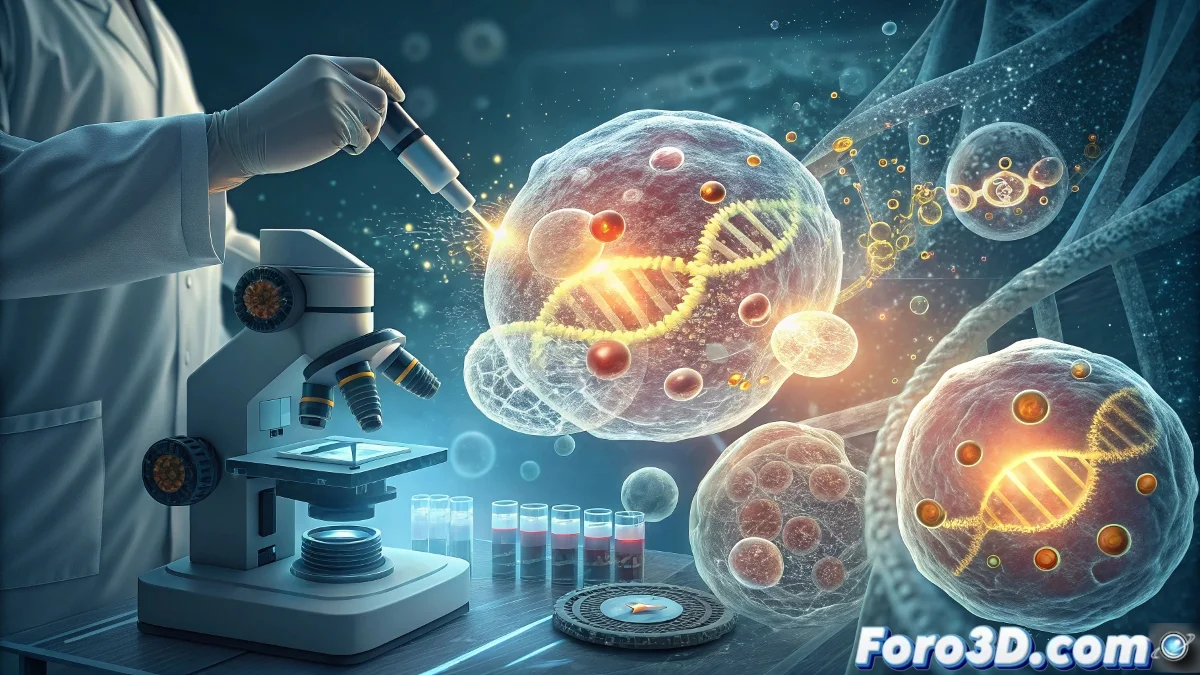
Madrilenian scientists have achieved what seems straight out of a science fiction novel: they have humanized yeasts to fight autoimmune diseases. These small organisms, normally associated with making bread or beer, have been genetically modified to carry key human genes in the study of pathologies like lupus, rheumatoid arthritis, and multiple sclerosis. 🧫 The irony is delicious: the same organism that gives us the baguette could now give us the key to understanding why the immune system sometimes decides we are the enemy. In Blender, this microscopic revolution finds its visual expression, transforming abstract scientific concepts into images that everyone can understand.
The Trick Lies in the Simplicity of Yeasts
Yeasts are like smartphones in the cellular world: small, efficient, and tremendously versatile. Researchers have leveraged the fact that they share much of their basic cellular machinery with humans, but are infinitely easier and cheaper to culture than human cells or animal models. 🔬 By inserting specific human genes related to autoimmunity, they have essentially created living mini-laboratories where they can study disease processes without the ethical and logistical complications of other models. It's the scientific equivalent of learning to pilot a plane first in a simulator rather than in a real Boeing.
Concrete medical applications of this research:- Study of protein interactions in lupus erythematosus
- Identification of therapeutic targets in rheumatoid arthritis
- Analysis of inflammatory mechanisms in multiple sclerosis
- Development of personalized therapies based on genetic profiles
Blender Recreation Making the Invisible Visible
Visualizing this research in Blender requires a balance between scientific precision and communicative clarity. Yeasts cannot look like simple balls; they must convey the complexity of their genetic transformation. 🎨 The inserted human genes need to stand out visually without being caricatured, showing how these modifications turn a simple organism into a sophisticated research tool. Every visual element must serve to educate as much as to impress, making accessible research that could save lives.
Practical Guide from the Macro World to the Micro Universe
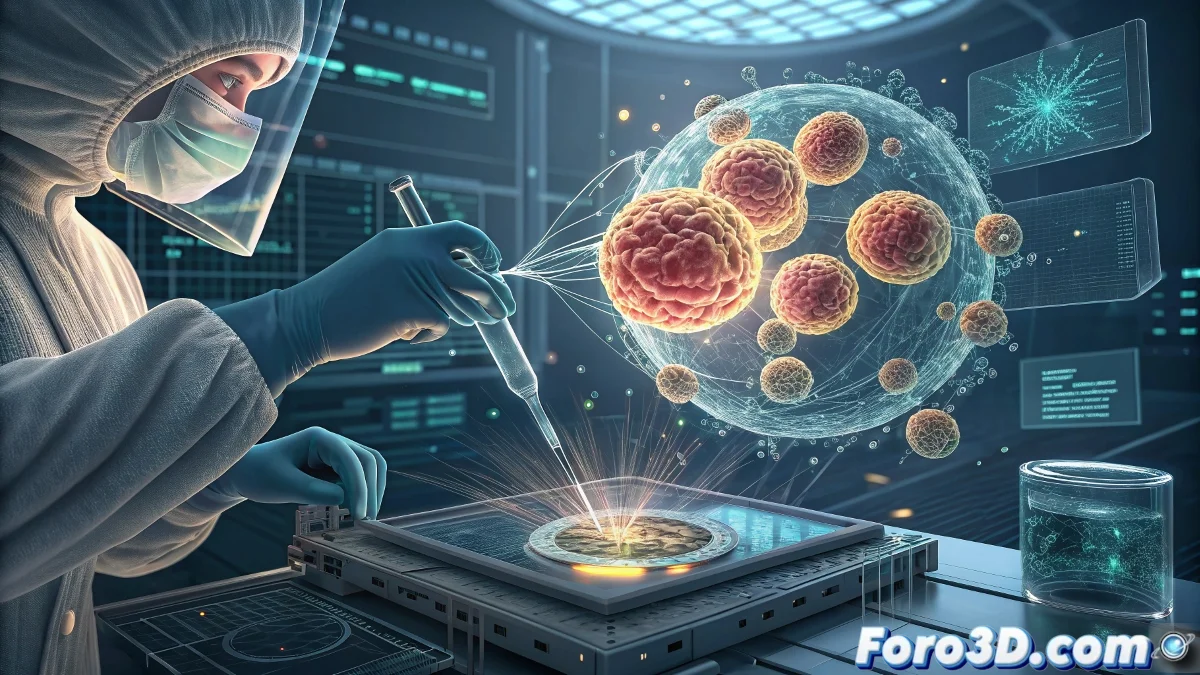
The process in Blender begins with setting a scale that immediately communicates we are in the microscopic realm. Modeling the yeasts must reflect their organic nature while maintaining visual clarity. 🦠 Representing human genes requires special attention: they must be recognizable as genetic structures but naturally integrated into the cellular context. Materials and lighting work together to create that virtual laboratory atmosphere where science becomes art.
Essential Workflow in Blender:- Modeling yeasts with organic but clean geometry
- Creating genetic structures with curves and particles
- Developing materials that simulate real cellular properties
- Setting up lighting that evokes advanced microscopy
Materials and Textures for Visual Science
The materials in this recreation do much more than define appearances; they communicate biological functions. The semi-transparency of the yeasts suggests permeability and internal activity, while humanized genes with controlled emission stand out like molecular beacons. 🔍 The use of subsurface scattering simulates how light interacts with real biological material, creating that organic quality that differentiates a scientific representation from an abstract illustration. Every material adjustment must reflect a real biological property, even if stylized for visual clarity.
Animation Bringing Static Research to Life
Animation in this visualization transforms abstract concepts into comprehensible processes. The subtle movement of the yeasts communicates metabolic activity, while the dynamics of genes and proteins illustrate the disease mechanisms under study. 💫 The use of modifiers like Wave to simulate DNA chain movement adds that organic realism that makes the visualization credible without needing complex physical simulations. The pace must be slow and reflective, allowing the viewer to process the complexity of what they are seeing.
Advanced Techniques for Scientific Visualization:- Controlled emission shaders for genetic markers
- Particle systems to represent molecular interactions
- Non-linear animation for credible organic movements
- Depth of field to direct attention in complex scenes
Potential Impact Beyond the Laboratory
This research with humanized yeasts represents a paradigm shift in how we approach autoimmune diseases. By accelerating the preclinical discovery phase, it could reduce years in the development of new treatments. ⏳ For patients with conditions like lupus or rheumatoid arthritis, where therapeutic options are often limited and with significant side effects, this approach could mean more specific, more effective treatments with fewer adverse reactions. It's the kind of research that not only advances science but improves concrete lives.
Sometimes the most promising medical advances don't come from complex organisms, but from learning to use the simple to understand the complex
Conclusion: When the Humble Yeast Becomes a Medical Heroine
The humanized yeasts developed in Madrid demonstrate that scientific innovation often comes from looking at the ordinary with extraordinary eyes. This research not only offers new hopes for millions of people with autoimmune diseases but sets a precedent for how we can use simple organisms to solve complex human problems. 🏥 Recreating this breakthrough in Blender is not just a technical exercise, but an opportunity to visually celebrate how Spanish science is contributing to global medicine. After all, in a world of supercomputers and advanced technology, sometimes the solution lies in the organism we've been using to make bread for thousands of years. 😄