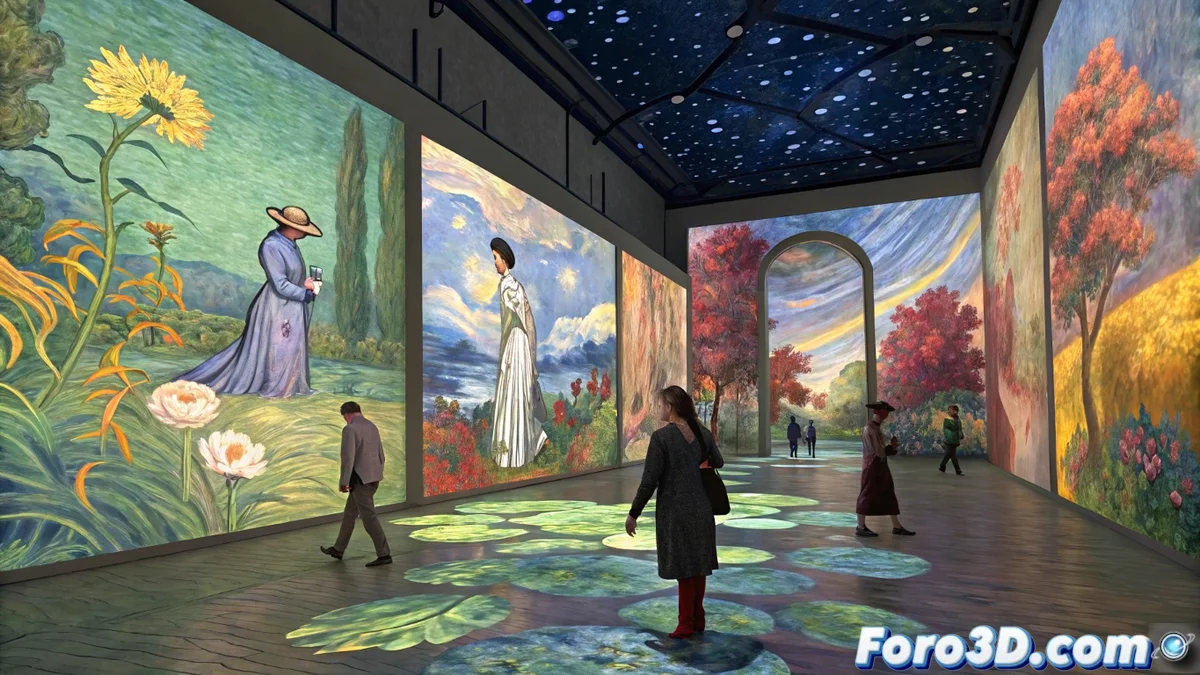
Madrid Exhibition Fuses Classical Art with Immersive Virtual Reality
The Spanish capital hosts a museographic proposal that reinterprets masterpieces through interactive digital environments. Until January 6, the canvases of great masters cease to be static to immerse the viewer in their dynamic essence. 🎨
Technology Applied to the Artistic Experience
The core of the exhibition lies in the use of advanced 3D rendering techniques and computer animation. Specialized shaders and compute processes are employed to accurately simulate the behavior of light, color, and movement, transforming flat paintings into enveloping scenes.
Key Technical Elements:- Real-time Rendering: Allows immediate public interaction with the animated works.
- Material and Light Simulation: Shaders recreate the brushstrokes and original chromatic vibration.
- VR Integration: Virtual reality glasses offer a 360-degree immersion in the paintings.
This exhibition does not seek to replace the original work, but to create a sensory bridge between the contemporary viewer and the historical artistic intention.
Digital Reinterpretation of Iconic Artists
The selection spans from Impressionism to geometric abstraction. The digitized works are not mere copies, but recreations that analyze and amplify the fundamental compositional elements of each artist.
Artists and Their Digital Transformation:- Claude Monet: His aquatic landscapes gain fluidity, with water and light in constant motion.
- Paul Gauguin: The intense tones and Tahitian scenes acquire an almost tactile depth.
- Vasili Kandinsky: Abstract forms decompose and recompose in space, exploring their internal rhythm.
A New Dialogue Between Art and Technology
This initiative poses a shift in museological perception. Beyond passive observation, it proposes an active educational and emotional experience. The fusion of classical art and virtual reality generates debate on the preservation, interpretation, and accessibility of cultural heritage in the digital era. 🖼️➡️👓