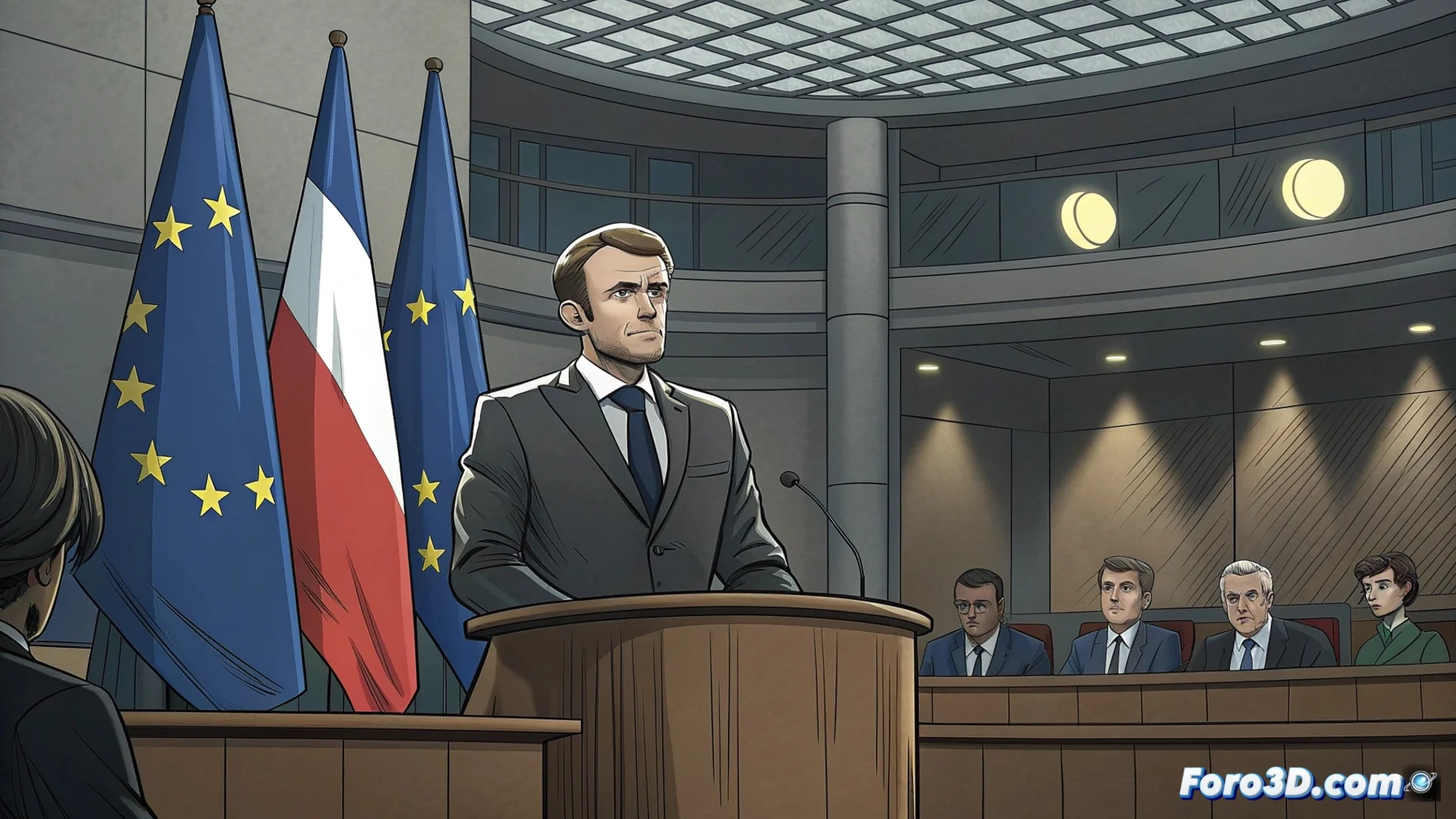
Macron urges activation of EU anti-coercion mechanism against possible US tariffs
The French leader, Emmanuel Macron, stated that he will formally request that the European Union activate its anti-coercion instrument if the US administration decides to impose tariffs on imports without justification. This community tool exists precisely to counter when nations outside the bloc attempt to pressure it with aggressive economic measures. The announcement comes amid the possibility that the Donald Trump government will impose additional tariffs, a scenario framed within the current trade tensions related to Greenland. 🛡️
The European Union organizes a unified defense
Macron is not acting alone; he is coordinating this initiative with other European leaders and maintaining constant dialogues to forge a common stance. The central objective is to collectively confront what they describe as unacceptable tariff threats. However, for this legal mechanism to be applied, it is essential to secure the support of all member states. This is a procedure that the community bloc has never used, introducing an element of uncertainty into the proposed strategy.
Key points of the European strategy:- Macron seeks consensus among European partners for a coordinated response.
- The instrument requires the unanimous support of the twenty-seven countries to be activated.
- The EU is preparing to defend itself against external economic pressures with its own tool.
European trade diplomacy is about to unveil its ultimate weapon, just when some thought it only served to decorate treaties.
An unprecedented resource that tests unity
The possible launch of this instrument represents a decisive moment in the EU's trade policy. It evidences the bloc's determination to protect itself with its own legal tools, but it also highlights the challenge of getting the twenty-seven countries to agree to act in unison. The process to deploy this measure is intricate and requires strong internal cohesion, something that is not always easy to achieve in such a diverse European Union.
Challenges to implementing the mechanism:- The process to activate it is complex and requires a detailed legal evaluation.
- Achieving internal unity among the twenty-seven member states is the main obstacle.
- It marks a shift in direction in how the EU responds to trade coercions.
A turning point in trade policy
It seems that European trade diplomacy is preparing to use its most powerful resource for the first time. This move sends a clear message about the EU's willingness to firmly and jointly defend its economic interests. The situation tests the bloc's ability to maintain a common position against external pressures, setting a crucial precedent for the future of its international trade relations. 🌍