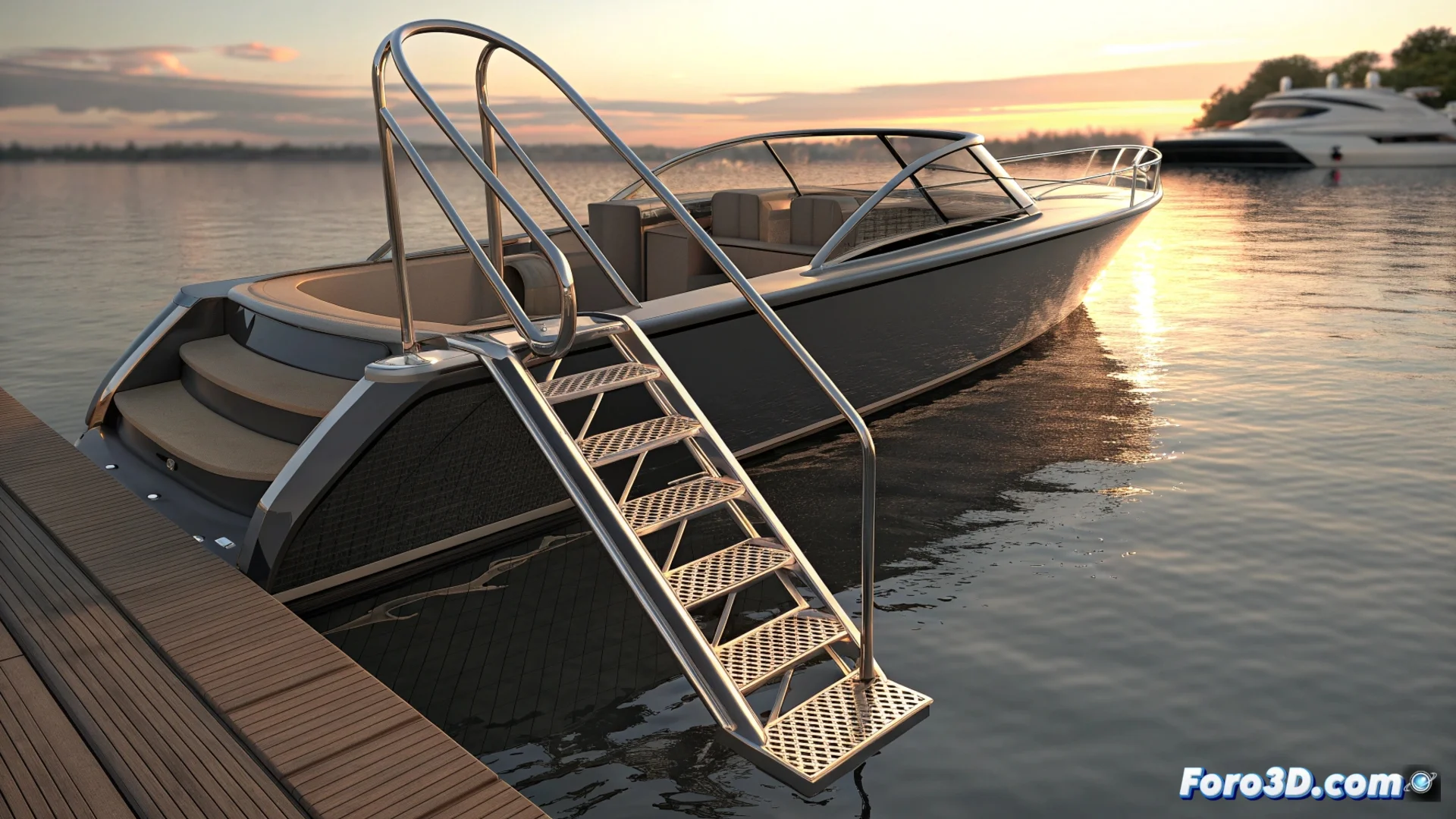
Luxury Nautics Integrates a 3D-Printed Bathing Ladder for the Mona Speedboat
The premium nautical sector adopts additive manufacturing to produce custom components. A standout example is the shipyard Frauscher Shipyard, which has incorporated a fully 3D-printed foldable bathing ladder into its eight-meter speedboat Mona. This case illustrates the application of advanced technology in industries where design, weight, and strength are decisive parameters. 🚤
Optimizing Weight with Complex Geometries
The ladder is manufactured in stainless steel, ensuring durability against marine corrosion. Its design features organic and intricate shapes that are difficult to achieve with conventional manufacturing techniques. This approach allows optimization of the amount of material used, resulting in a remarkably lightweight structure that does not sacrifice robustness. 3D metal printing builds the component layer by layer from a digital file.
Key Advantages of the Printed Component:- Weight Reduction: The optimized geometry minimizes material without compromising structural function.
- Design Freedom: Complex shapes can be created that would be uneconomical with milling or molding.
- Environmental Resistance: Stainless steel ensures a long service life in adverse marine conditions.
The ladder for the Mona serves as a tangible example of how additive manufacturing can customize elements in nautical applications.
Customizing and Producing on Demand in the Nautical Sector
This project reflects a growing trend: using 3D printing to manufacture unique parts or very short runs in yachts and speedboats. The technology facilitates adapting each component to the specific needs of a vessel, opening the door to customizing other interior or technical elements. On-demand production helps reduce inventories and allows for more agile design iterations.
Impact of Additive Manufacturing on the Industry:- Extreme Customization: Each piece is designed and manufactured for a specific boat.
- Logistical Efficiency: Only what is needed is produced, eliminating excess stock.
- Development Speed: Design, testing, and modification cycles are significantly accelerated.
A Future with Custom Components
The integration of this ladder into the Mona is not just an aesthetic detail; it is a statement of technological capabilities. Now, when boarding the bathroom, the crew interacts with one of the most advanced pieces on the vessel. This case sets a precedent for other shipyards to explore how metal 3D printing can address design, weight, and customization challenges in high-performance nautical applications. ⚓