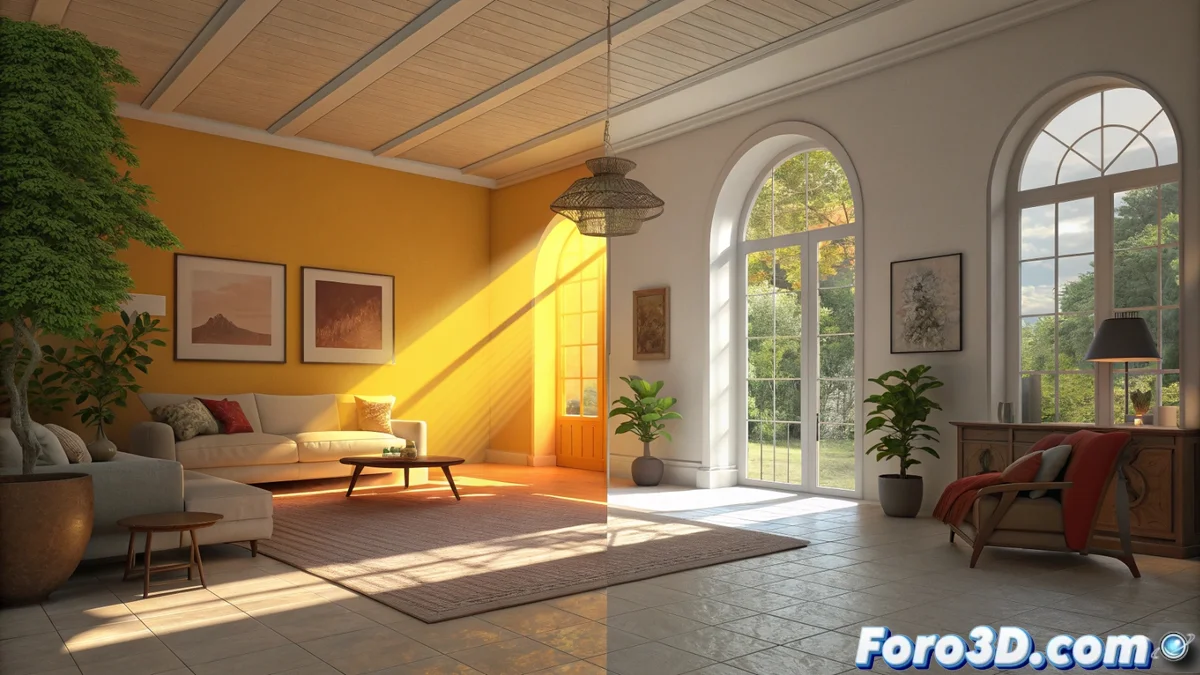
Lumion vs Twinmotion: Lighting Philosophies for Architecture
When visualizing architectural projects, choosing the right tool makes all the difference. Lumion and Twinmotion represent two distinct paths for lighting 3D scenes, each with a unique technical philosophy that affects the workflow and final result. 🏗️
Lumion: Speed and Artistic Expression
Lumion's engine is designed to process light immediately. Its approach prioritizes allowing the user to quickly adjust the scene's atmosphere, offering more intuitive and artistic control over the visual result. It does not rigorously simulate global light physics, but compensates for this limitation with a wide range of effects and preconfigured presets.
Key Features of Lumion:- Processes lighting in seconds, optimized for instantly attractive images.
- Offers simple controls to modify intensity, color, and direction of light sources like the sun and sky.
- Has an extensive library of atmospheric effects that make it easy to create a specific mood without complex technical parameters.
Lumion gives you the power to turn a daytime scene into a dramatic sunset in just a few clicks, prioritizing emotion over exact physical simulation.
Twinmotion: Real-Time Physical Precision
Based on Unreal Engine, Twinmotion calculates dynamic global illumination with a more physically accurate approximation. Its Lumen system simulates how light bounces off surfaces, interacts with materials, and fills the space, generating soft shadows and indirect reflections coherently and automatically.
Defining Aspects of Twinmotion:- Calculates global illumination in real time, showing instant changes when modifying the time of day or light sources.
- Generates effects like ambient occlusion and light bounces automatically, being more faithful to real light behavior, especially in interiors.
- Requires a more powerful computer to perform these complex calculations in real time.
Choice Based on the Project and Client
Both engines allow creating static images and interactive walkthroughs, but the choice depends on the needs. While Lumion is ideal for iterating quickly and presenting atmosphere variants with an artistic focus, Twinmotion shines when real-time lighting accuracy verification of a space is needed. The anecdote of the render artist adjusting light for hours only for the client to ask for "more sunny" reflects a common challenge where Lumion's agility can be an advantage, while Twinmotion's precision adds veracity. The key is knowing which philosophy best aligns with the project's goals and the client's expectations. ⚖️