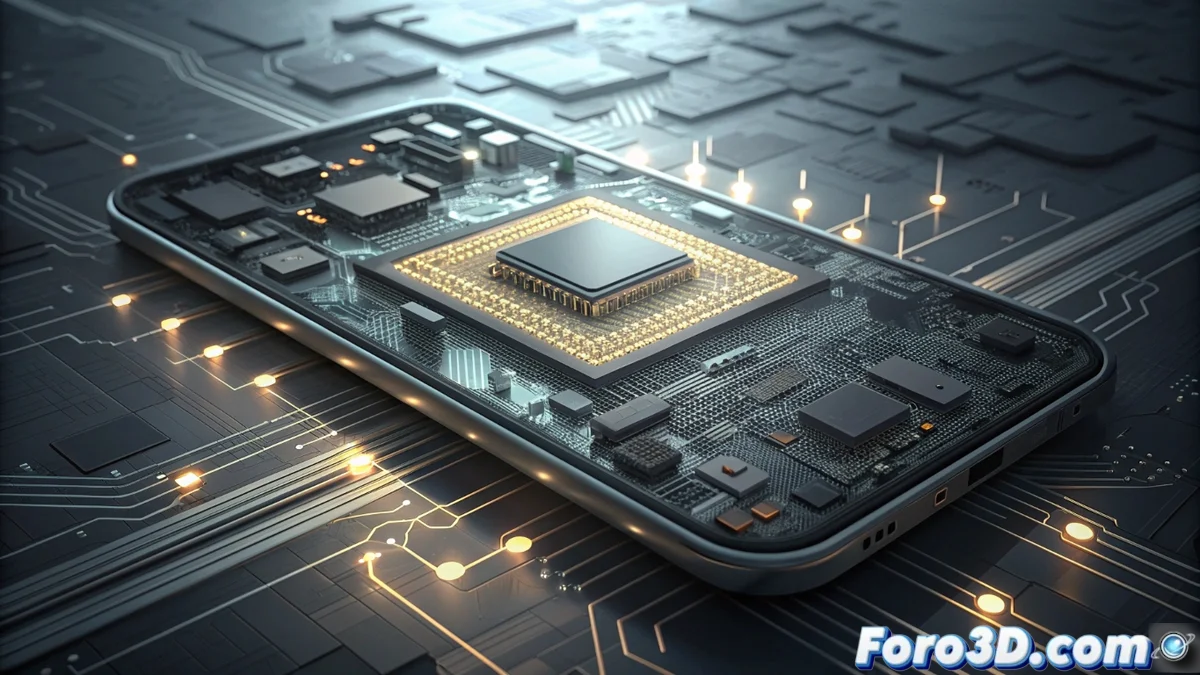
LPDDR5X: the evolution of memory for mobile devices
The LPDDR5X technology marks a step forward in the development of memory for portable devices, acting as an enhanced version of the standard LPDDR5. Its main goal is to boost performance in devices like high-end smartphones and ultrathin laptops, where the balance between power and efficiency is crucial. 🚀
Technical features and performance improvements
This iteration introduces significantly higher transfer speeds, reaching rates exceeding 7,500 MT/s. Most notably, it achieves this performance increase while maintaining, and even reducing, the total power consumption. This advancement allows devices to offer greater battery autonomy without compromising processing capacity for everyday or complex applications.
Main advantages of LPDDR5X:- Reduced heat: Generates less temperature during operation, contributing to system stability.
- Data flow optimization: Enables smoother user experiences, especially in multitasking or with demanding applications.
- Easy integration: As a natural evolution, it adapts seamlessly to modern hardware ecosystems.
The adoption of LPDDR5X suggests a future where energy efficiency and high performance become the standard for mobility.
Market implementation and use cases
In practice, LPDDR5X memory is already integrated into the latest systems on chip (SoC) from leading manufacturers like Qualcomm and Apple. Its capacity is essential for driving advanced technological innovations, such as immersive augmented reality experiences and high-fidelity portable gaming. Its implementation optimizes battery life even in intensive usage scenarios.
Key current and future applications:- Latest-generation mobile processors for smartphones and tablets.
- Ultrathin laptops that prioritize autonomy and performance.
- Devices for mobile gaming and mixed reality experiences.
Impact and final reflection
The ongoing adoption of LPDDR5X in the market facilitates the development of more compact yet more powerful gadgets. While it promises longer battery life, paradoxically, in a hyperconnected world, this efficiency could lead users to extend their screen time, delaying the need to recharge the device. 🔋