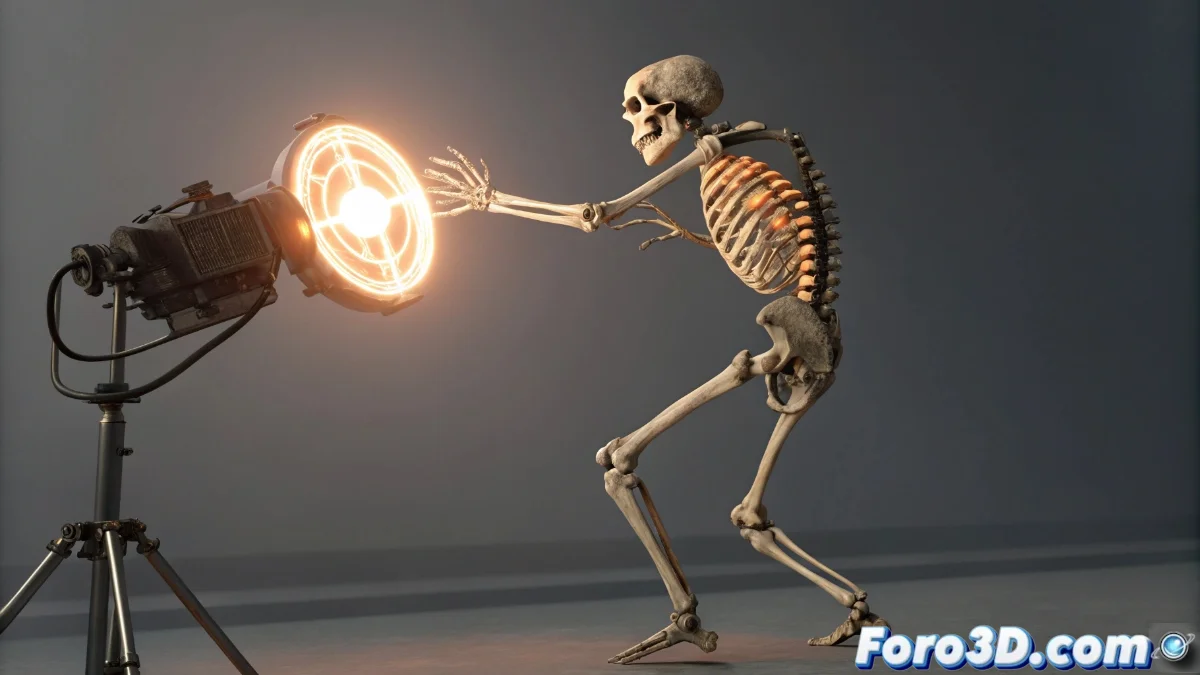
Look At Control in Unreal Engine 5: Complete Guide to Automatic Bone Orientation
The Look At Control in Unreal Engine 5 represents a revolution in character animation, allowing skeleton bones to automatically orient towards specific targets without manual intervention. This technology is essential for creating believable interactions where virtual creatures need to naturally follow environmental elements 🎯.
Essential Look At System Setup
To implement this functionality, a Control Rig must be previously configured on the skeleton. Within the animation graph, the specialized Look At node is added and connected to the bone requiring directional control, such as cervical vertebrae or skull. Subsequently, the tracking target is defined, which can be another bone component, an actor in the scene, or even dynamically calculated vectors.
Key configuration parameters:- Main rotation axis: Defines the base direction of joint movement
- Angular limits: Restrict the range of motion to avoid unnatural postures
- Smooth interpolation: Ensures fluid transitions between positions during execution
Visual tracking automation via Look At Control eliminates the need for frame-by-frame animation, radically optimizing production workflows.
Practical Applications in Project Development
This tool demonstrates its maximum potential in scenarios where immersion depends on believable reactions to external stimuli. In action video games, it allows antagonists to visually follow the player during approach, while in narrative experiences it enables characters to respond to significant script events 🎮.
Highlighted advantages in real production:- Reduction in animation times through logic-based movement automation
- Integration with other Control Rig nodes to create complex joint behaviors
- Native engine optimization that maintains smooth performance even in scenes with high element density
Impact on Animated Workflow
Implementing the Look At Control system transforms traditional animation processes, allowing developers to focus on artistic direction while the technology handles the technical aspects of eye and directional tracking. This approach not only accelerates production but also significantly enriches the expressive quality of virtual characters, bringing them closer to the biomechanical realism demanded by contemporary projects ✨.