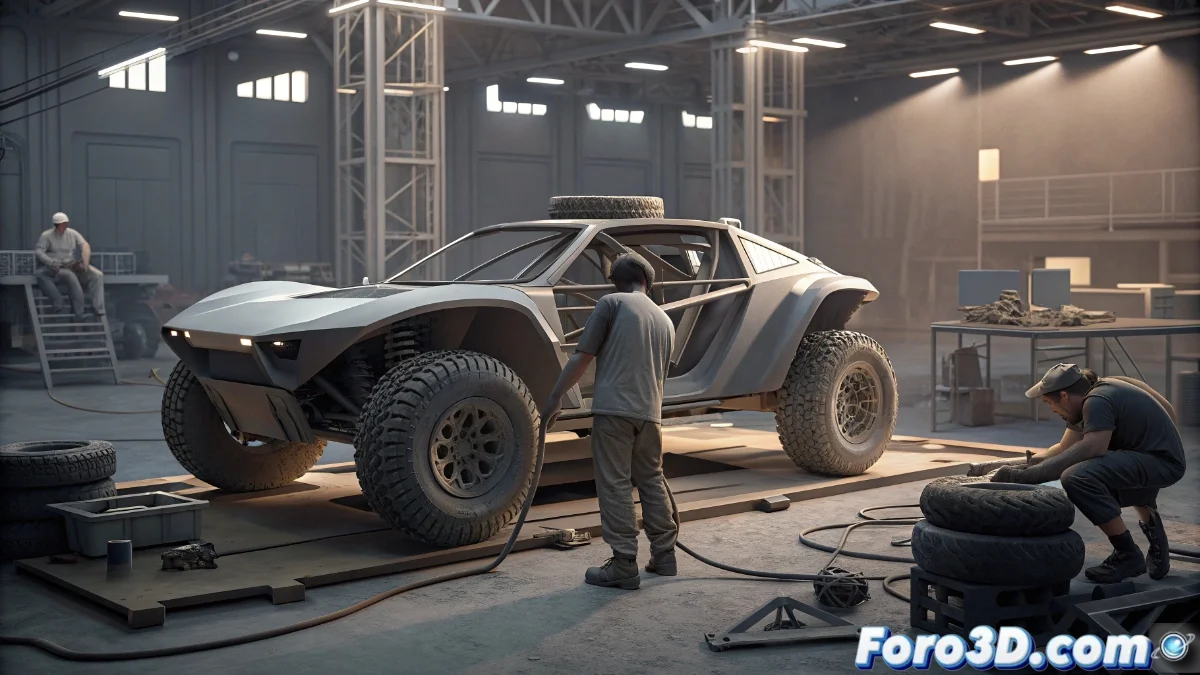
Local Motors and 3D Printing: Molds for Innovative Automotive Manufacturing
The company Local Motors, known for its autonomous vehicle Olli, has implemented a revolutionary approach in the manufacturing of its Rally Fighter model through the strategic use of 3D printing to create production tools instead of final parts. This methodology represents a paradigm shift in how additive technologies can enhance traditional manufacturing processes 🚗.
Manufacturing Strategy with 3D-Printed Molds
Instead of using 3D printing directly for vehicle components, Local Motors leveraged this technology to produce large-format molds and specialized tooling necessary for manufacturing fiberglass body panels. This approach allowed its micro-factories to manufacture exterior components more quickly and at reduced costs, demonstrating the industrial versatility of additive technologies beyond direct part creation 🔧.
Key Advantages of 3D-Printed Molds:- Significant reduction in costs and timelines for fiberglass component development
- Rapid adaptability to specific market demands without massive investments
- Facilitation of traditional manufacturing processes through advanced tools
"3D printing molds prevents micro-factories from ending up printing excuses for not being able to produce" - Local Motors Philosophy
Transformative Impact on the Automotive Industry
This methodology not only optimizes small-scale production, but also drives manufacturing decentralization, allowing smaller facilities to compete effectively with established large manufacturers. The ability to produce locally on demand transforms traditional logistics models and opens new possibilities for highly customized vehicles that were previously not economically viable 📊.
Benefits for Micro-Factories:- Minimization of inventories and logistics costs through local production
- Improved competitiveness against traditional large-scale manufacturers
- Possibility of creating specialized vehicles with lower initial investment
Future of Decentralized Automotive Manufacturing
The Local Motors case with the Rally Fighter sets an important precedent for the evolution of the automotive industry, where 3D printing of tools is consolidated as a technological bridge toward more accessible and sustainable manufacturing methods. This strategic approach demonstrates that the true potential of additive technologies may lie in their ability to enhance existing processes rather than completely replacing them 🔮.