Liquid Lens Technology Transforms Focus in Cameras
A new paradigm in optics is replacing gears and motors with electricity and fluid. The liquid lens is a component that allows adjusting the focus point in imaging devices in a radically different way. Instead of moving groups of crystals, it modifies the curvature of a drop of conductive liquid, which alters its optical power in milliseconds. This method eliminates the noise and wear associated with mechanical systems 🌀.
It Works with Electrowetting, Not Gears
The physical principle governing this technology is called electrowetting. It is based on changing how a conductive liquid behaves on an electrified surface. By applying a controlled voltage, the molecules of the fluid redistribute, modifying the surface tension and, consequently, the shape of the drop's meniscus. This shape change, from concave to convex or vice versa, is what varies the focal length of the lens. The control is entirely electric and direct, dispensing with any complex mechanism of screws or stepper motors.
Key Features of the System:- Ultra-Fast Response: The focus change occurs in milliseconds, as it only involves moving molecules of a fluid.
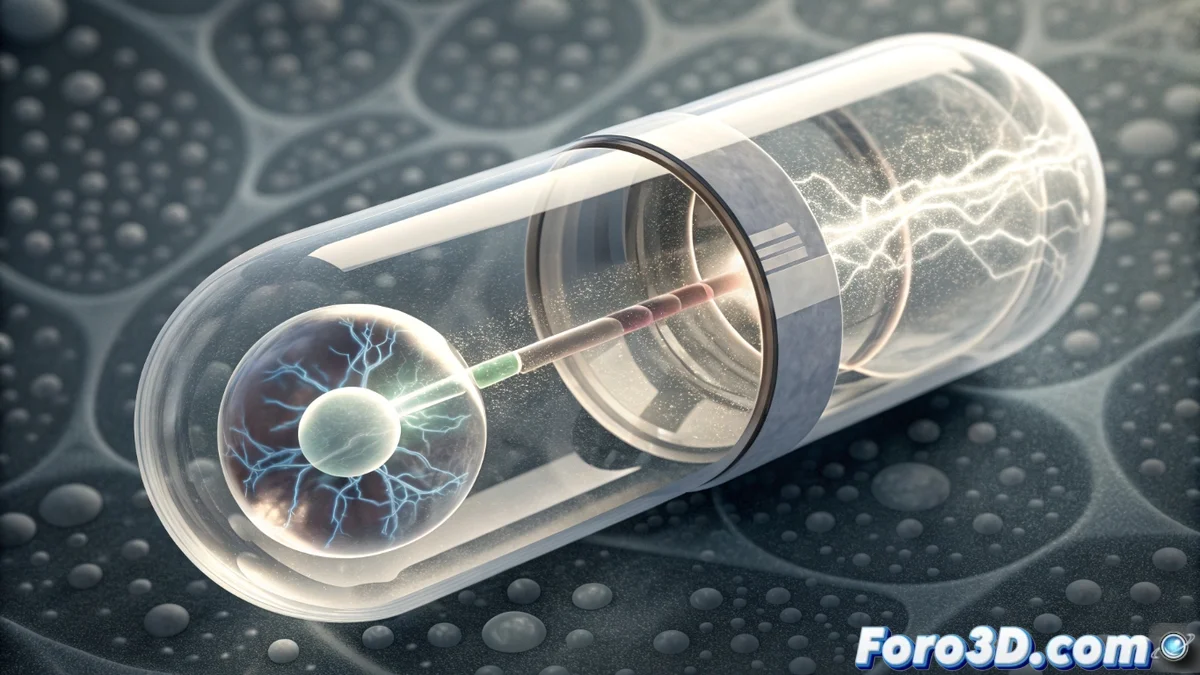
- Simple Architecture: Its basic construction consists of a sealed chamber with liquid, a flexible membrane, and electrodes.
- High Precision: Adjustment via electrical signal allows repeating the same focus point with exactness time and again.
What we all want is for our camera to focus faster than our ability to decide what to photograph, leaving all those fleeting moments perfectly sharp.
Practical Advantages That Make a Difference
The implications of this technology are profound for multiple industries. By eliminating friction between solid parts, the lens experiences virtually no wear, extraordinarily extending its lifespan. Additionally, not requiring a powerful motor, its energy consumption is very low. Its compact profile is ideal for integration into reduced spaces.
Main Areas of Application:- Industrial Reading: Barcode scanners that need to focus at different distances instantly.
- Mobile Photography: It would allow smartphone cameras to focus at the speed of a DSLR.
- Medical Devices: Endoscopes and imaging systems that require fast and precise focus in tiny spaces.
A Future with Instant Focus
The liquid lens represents a leap toward more robust, silent, and efficient optics. Its ability to focus almost instantly solves a historical bottleneck in image capture. As its production is miniaturized and made cheaper, we will see it not only in industrial equipment but in everyday consumer devices, redefining what we expect from a camera when using it 🎯.