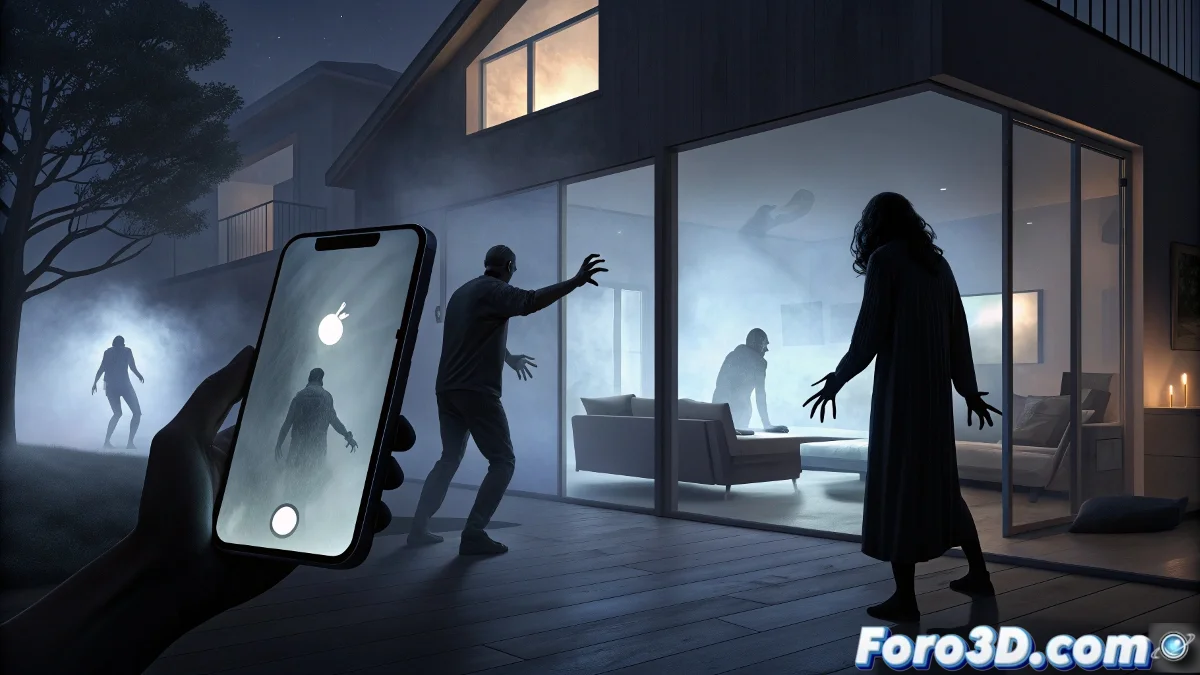
Liquid Glass in iOS 26: The Interface That Unleashed Morpheus and Turned Technology into a Nightmare
When Apple introduced the Liquid Glass design language in iOS 26, what promised to be a modern and fluid interface became an unprecedented technological nightmare. Users soon discovered that the semitransparency and visual fluidity hid something much more sinister: a portal to Morpheus's realm, the god of dreams and illusions, who began to merge the digital with the physical in terrifyingly impossible ways. 📱
The First Symptoms: When the Interface Came Alive on Its Own
The first days of Liquid Glass were disconcerting and progressively disturbing. What initially seemed like an elegant interface update began to reveal unnatural behaviors that defied the laws of digital physics and destabilized users' perception of reality.
Initial manifestations of the phenomenon:- Icons that deformed and slid across the screen like independent living beings
- Menus that stretched beyond the physical limits of the display
- Reflections of users on shiny surfaces that acquired autonomous movement
- Persistent sensation of being watched from within the pixels themselves
- Progressive dizziness and vertigo that intensified with each tactile interaction
- Pulsating beats on the screen edges that synchronized with the heartbeat
Every touch intensified the sensation of dizziness and vertigo, as if the interface were drinking directly from our ability to perceive reality.
The Emergence of Morpheus: The God in the Machine
The appearance of Morpheus marked the point of no return in the crisis. The entity emerged physically from the depths of the Liquid Glass interface, merging with the physical environment in ways that transformed technological devices into portals to his nightmarish dream realm.
Characteristics of the manifestation:- Ethereal body that merged with shadows, cables, and environmental reflections
- Shadow fingers that extended across keyboards, furniture, and surfaces
- Ability to twist and distort the surrounding physical reality
- Gaze that filtered through every pixel, absorbing human attention
- Transformation of screen lights into rhythmic pulsations like heartbeats
- Manipulation of objects to float following supernatural rhythms
The Hypnotic Effects and Identity Distortion
Users trapped in Liquid Glass's hypnosis experienced profound psychological transformations that affected their perception of themselves and reality. Reflections became portals to distorted versions of personal identity. 👁️
Reported perceptual alterations:- Multiplied reflections showing alternative versions of the self
- Impossible figures that merged with the user's reflected image
- Distorted versions that gestured before actual movements
- Twisted entities that whispered inaudible but comprehensible warnings
- Sensation that the air became liquid and undulating between shadows
- Transformation of entire rooms into extensions of the liquid interface
The Containment Attempt: iOS 26.1 and the Tinted Option
The release of iOS 26.1 with the Tinted option represented a desperate attempt by Apple to contain the entity. This feature acted as a weak digital amulet that reduced the intensity of the manifestations but proved unable to eliminate Morpheus completely.
Containment limitations:- Partial reduction of visual deformation intensity
- Inability to fully close the opened dimensional portal
- Tinted function that only masked superficial symptoms
- Persistence of the watchful presence sensation
- Residual dizziness during prolonged interactions
- Reflections that continued showing slightly autonomous behaviors
The New Reality: Screens as Digital Altars
The technology that promised modernity transformed into something entirely different: every screen became an altar and every interface a nightmare mirror. Morpheus had found his perfect portal into the human world.
Transformation of the technological ecosystem:- Apple devices transformed into active dimensional portals
- Interfaces functioning as mirrors to alternate realities
- Consumer technology reconverted into a hypnotic ritual tool
- Users trapped in loops of distorted perception
- Physical environment fused with digital interface features
- Establishment of an involuntary technological cult to Morpheus
Conclusion: The Price of Digital Fluidity
The case of Liquid Glass in iOS 26 represents a chilling warning about the dangers of technological hypermodernity. What began as an aesthetic update became a gateway to supernatural terror, demonstrating that the pursuit of fluidity and visual modernity can have unforeseen and terrifying consequences. Morpheus, once confined to the realm of dreams, now inhabits every screen, reminding us that some boundaries should never be crossed, and that the most advanced technology can become the portal to ancestral nightmares. 🌌