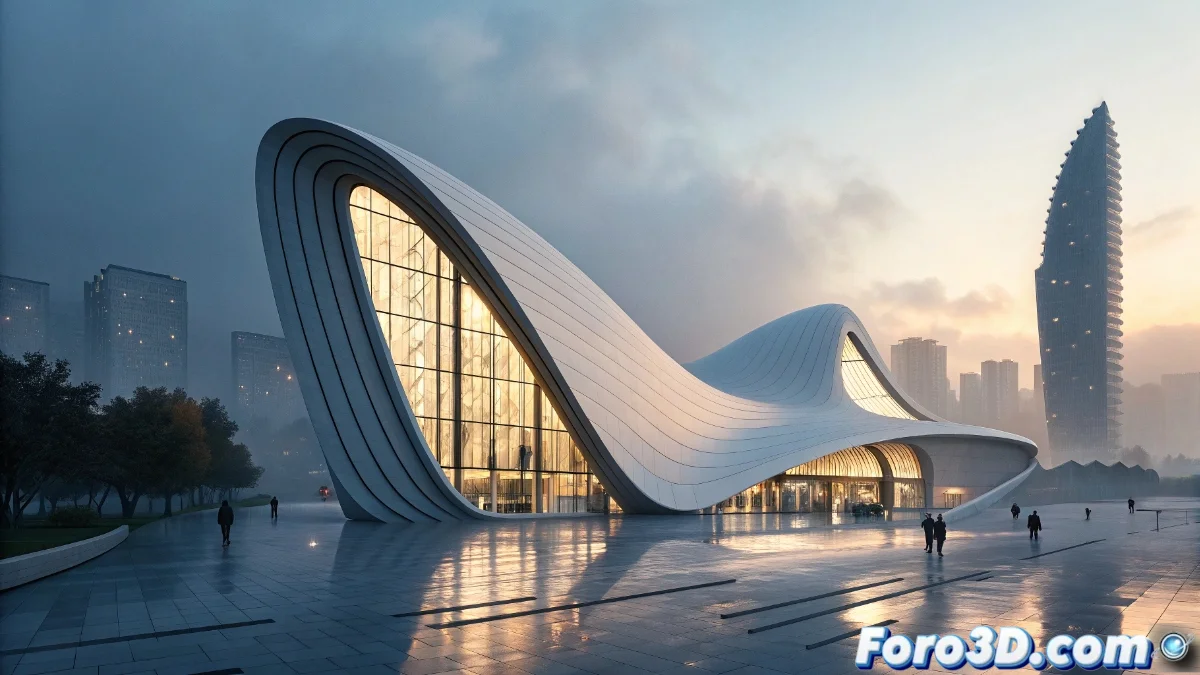
Liquid Architecture: When Buildings Come to Life
Liquid architecture constitutes a transformative paradigm in contemporary architectural design, where structures acquire capabilities for continuous transformation inspired by the behavior of natural fluids. This methodology integrates programmable materials and mechatronic systems to create built environments that intelligently respond to climatic variations, occupancy demands, or preconfigured modifications. 🏗️
Enabling Technologies and Essential Components
The materialization of these dynamic structures critically depends on shape-memory alloys, electroactive polymers, and composites sensitive to external stimuli. These elements synchronize with hydropneumatic actuators that generate fluid and precise movements, emulating the natural kinetics of water. Control systems with artificial intelligence process real-time information from sensor networks, modifying the architectural configuration to optimize energy consumption or respond to specific events.
Key Technological Components:- Multiparametric environmental sensors that monitor temperature, humidity, and occupancy
- High-precision pneumatic actuators for organic and silent movements
- Electroactive polymers that change their volume and shape in response to electrical stimuli
Liquid architecture is not just about buildings that move, but about spaces that breathe and evolve with their inhabitants
Practical Implementations and Landmark Cases
Concrete applications include adaptive roofs that modulate their surface according to crowd density, or residential facades that self-regulate their opacity and permeability to wind. Cutting-edge projects demonstrate bridges that automatically redistribute their loads during extreme weather phenomena, and interior spaces that reconfigure themselves for different social uses without human intervention.
Application Examples:- Exhibition pavilions with tensoactive membranes that expand and contract
- Bioclimatic facades that optimize thermal insulation based on external conditions
- Multifunctional spaces with mobile partitions that create personalized environments
Impact and Future Perspectives
This architectural approach challenges traditional concepts of permanence and structural rigidity, establishing a continuous dialogue between the built environment and its users. Resource optimization is maximized through constant adaptability, while generating unique sensory experiences where the boundaries between the static and the dynamic progressively blur. Liquid architecture thus represents the materialization of built environments as sensitive ecosystems that interact symbiotically with their occupants and the environment. 🌊