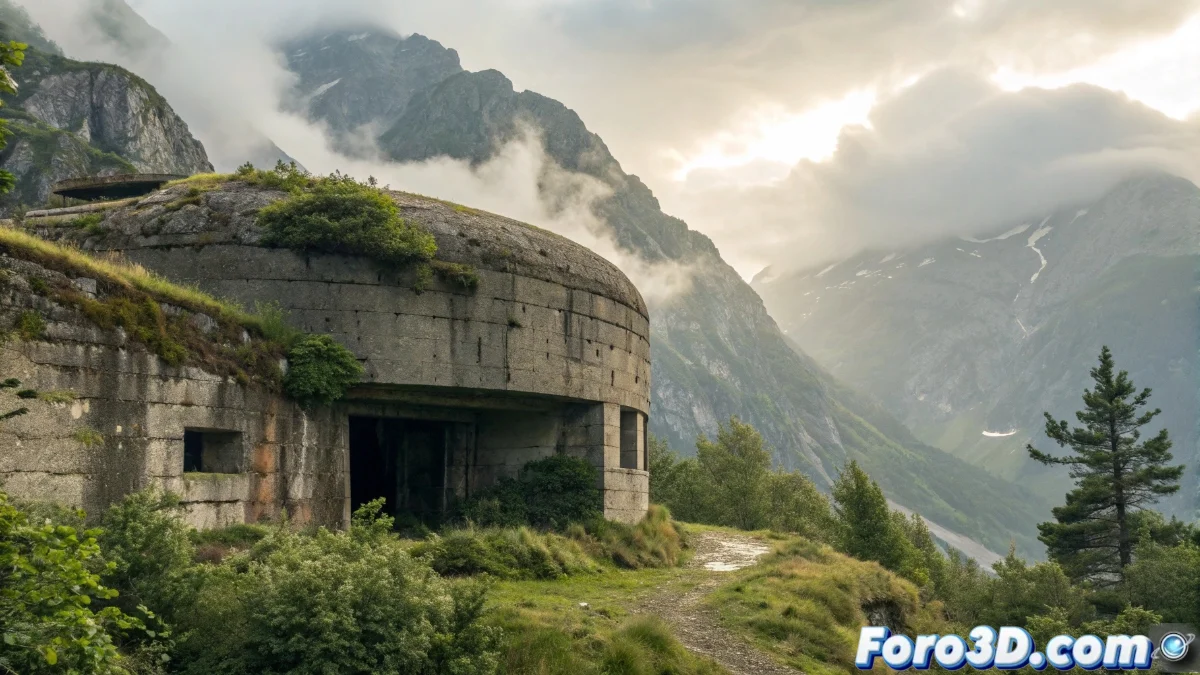
The P Line: the gigantic forgotten fortification of Francoism
Between 1944 and 1957, the Franco regime built one of the most colossal and secret military projects in contemporary Spanish history: the P Line, a defensive barrier that ran 500 kilometers along the Pyrenean mountain range 🏔️. This imposing infrastructure was born out of the persistent fear of a possible invasion by the Allies after World War II, although the attack never materialized.
A pharaonic work in the midst of nature
The magnitude of this construction is overwhelming when discovering its more than 10,000 military structures scattered among hard-to-access valleys and mountains. The army engineers meticulously selected each emplacement to create interlocking fields of fire that covered all border passes, from the Basque Country to Catalonia 🗺️.
Main construction features:- Employment of thousands of workers, including political prisoners of the regime
- Use of techniques and materials of the time, mainly thick reinforced concrete
- Specific design to withstand impacts from conventional artillery
This imposing defensive line, designed to stop entire armies, today only serves as shelter for flocks of sheep and as a tourist curiosity
The decline of an obsolete fortification
The rapid development of aviation and new military technologies during the 1950s turned the P Line into a completely outdated defense even before its completion. Jet aircraft and precision bombs would have easily overcome these static positions, rendering the entire defensive complex useless 💥.
Factors that contributed to its obsolescence:- Technological advances in military aviation during the postwar period
- New military strategies that overcame static defenses
- Changes in the international geopolitical situation
Historical legacy in the Pyrenean landscape
The Spanish army progressively abandoned the maintenance of the facilities during the 1960s, allowing nature to slowly reclaim these spaces 🌿. Today they remain as silent testimonies of a conflict that never happened, while hikers and history lovers discover these curious structures semi-hidden among the vegetation. It is paradoxical that this colossal defensive work consumed vast resources for a purpose that was never fulfilled, now transforming into historical heritage and a tourist curiosity.