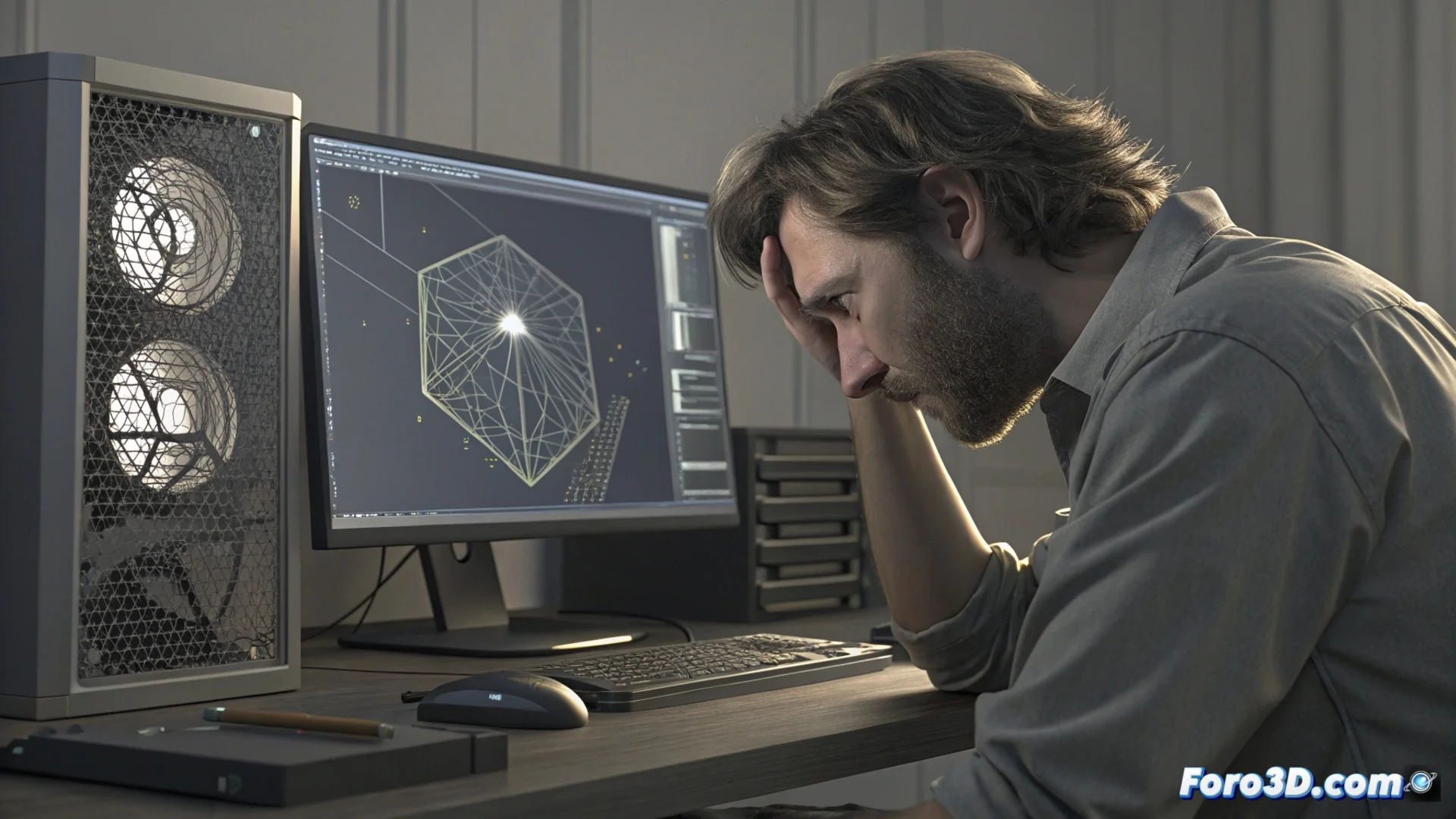
Limitations of a Setup with Integrated Graphics for 3D Creation
For those dedicated to 3D modeling, rendering, or animating, a system based on integrated graphics like those in the Ryzen 7 5700G imposes significant barriers. The absence of a discrete graphics card hampers performance in tasks that require GPU power. 🚧
Graphics Power Falls Short
Not having a dedicated GPU directly affects processing complex scenes. Technologies like NVIDIA CUDA or ray tracing are not available, limiting exploration of engines like Unreal Engine or Unity and working in virtual reality environments. The capacity to simulate advanced physics is also reduced.
Main Shortcomings:- Inability to use GPU acceleration for efficient rendering.
- Severe limitations for running complex physical simulations.
- Barrier to developing or testing augmented reality projects.
It's like trying to sculpt marble with a toy hammer: the idea exists, but the tool isn't right.
Memory and Storage Space
The 32 GB of RAM can handle moderately scaled projects, but scenes with a lot of geometry or using multiple apps at once create bottlenecks. The 1 TB SSD fills up quickly with projects, high-resolution textures, cache files, and the applications themselves, forcing constant space management. 💾
Critical System Points:- RAM may be insufficient for dense scenes or intensive multitasking.
- Storage runs out quickly, requiring deletion or use of external drives.
- Active resource management consumes valuable work time.
Software Restrictions
Including Windows 11 Home instead of the Pro version limits key functions for a professional workflow. Full virtualization for testing software in isolated environments or remote management with corporate tools is not possible. This setup is viable for learning, basic modeling, or testing simple ideas, but not for efficiently producing professional content. ⚙️