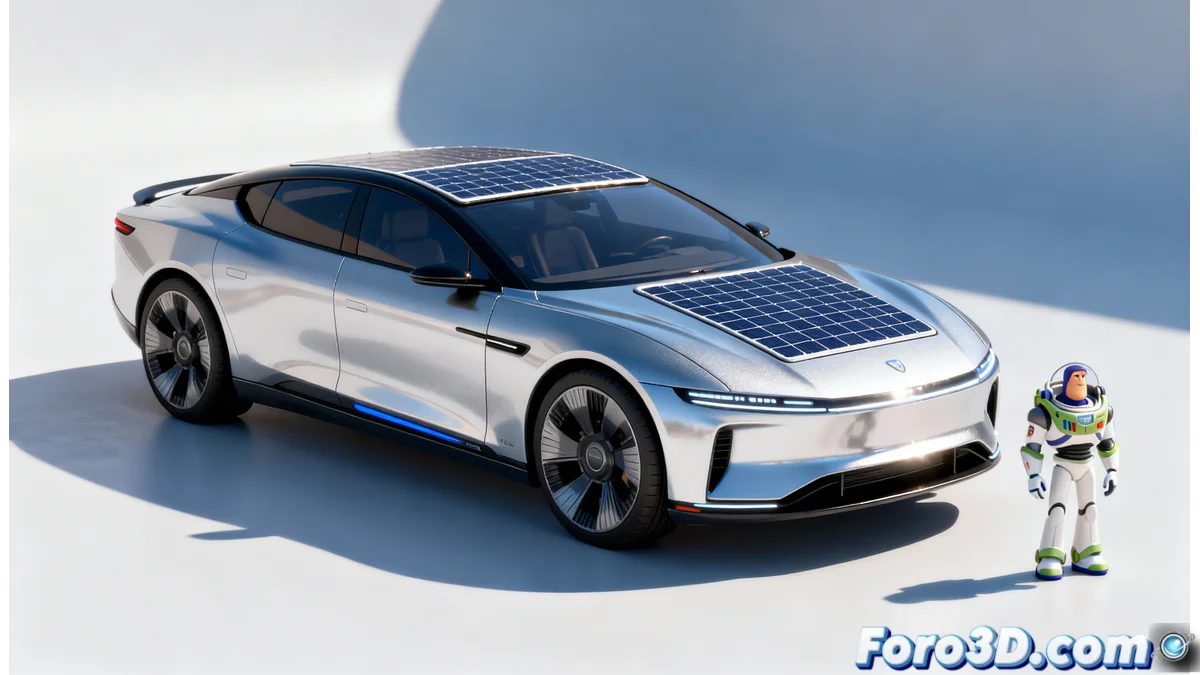
Lightyear 0: the first solar car with integral additive manufacturing
The automotive industry is experiencing a revolutionary moment with the Lightyear 0, the first series-production solar vehicle that incorporates 3D printing integrally in all phases of its creation. This innovative methodology enables the agile development of hundreds of components and their manufacture in small volumes, achieving unprecedented optimization in the vehicle's weight and overall energy efficiency. 🚗☀️
Accelerated prototyping and customization
The company uses additive technologies to generate unique parts that simplify assembly and enhance aerodynamic performance. This advance translates into extended range thanks to the synergy between the energy captured by the solar panels and an ultralight structure. Additive manufacturing allows rapid iteration on key elements without the limitations of conventional methods.
Key advantages of 3D printing design:- Complex geometries impossible to achieve with traditional techniques, such as honeycomb structural supports
- Customization of components for specific markets without massive investments in molds
- Weight reduction through composite materials and optimized internal structures
3D printing has found its way to save the planet, one car at a time, although they still haven't printed the patience needed to charge it solely with sun on a cloudy day.
Eco-efficient and on-demand production
Lightyear leverages additive manufacturing to create limited series, minimizing resource waste and reducing the carbon footprint typical of mass production. This approach is ideal for pioneering vehicles like the Lightyear 0, where initial demand may be contained but requires high standards of quality and precision. The ability to print on demand also eliminates the need to store large quantities of spare parts.
Benefits of sustainable manufacturing:- Minimization of waste through precise use of materials
- Agile supply chain with design updates without interruptions
- Reduction of emissions associated with logistics and storage
The future of solar mobility
The integration of 3D printing in the Lightyear 0 not only accelerates development and reduces the cost of customization, but also establishes a new paradigm in sustainable automotive manufacturing. The combination of solar energy, lightweight designs, and on-demand production points the way toward a cleaner and more efficient industry, where every component is optimized to maximize performance and minimize environmental impact. 🌍🔋