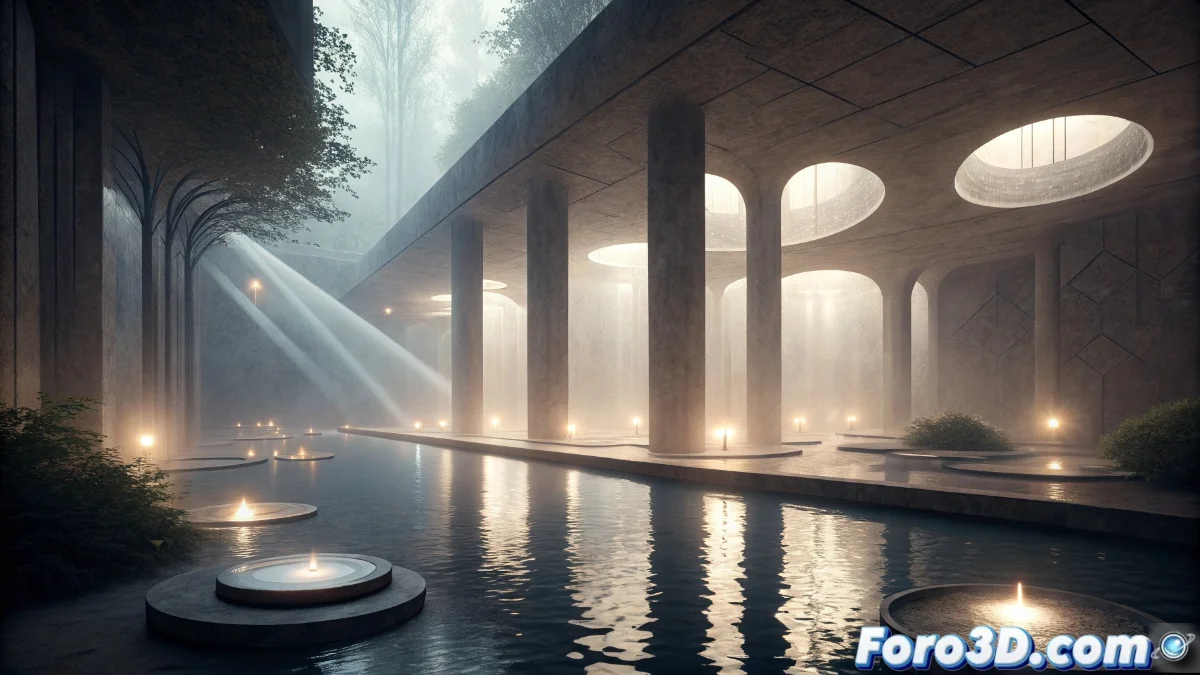
Lighting Design Without Visible Sources in Digital Environments
Lighting design without visible sources redefines digital scenes by creating experiences where light seems to emanate from nowhere, crafting ethereal environments that defy conventional physical laws. This methodology is based on the strategic use of global illumination (GI), light baking, and volumetric shaders, which scatter light organically without discernible points of origin, granting a magical sensation where every surface radiates its own internal luminosity 🌌.
Implementation Techniques in Modern Graphics Engines
On platforms like Unreal Engine 5 and Unity, developers strategically place light probes to capture and redistribute indirect lighting, combined with volumetric systems that simulate atmospheric scattering. Technologies like Lumen in UE5 allow for real-time calculations of light scattering on complex surfaces, while ray tracing generates reflections and refractions that multiply light sources without showing them directly. Artists manipulate low intensities across multiple layers, achieving subtle accumulations that mimic ambient light without a defined source ✨.
Key Technical Elements:- Light probes: Virtual devices that capture and redistribute indirect lighting in space
- Volumetric shaders: Simulate light scattering in media like air or fog for organic effects
- Luminous particle systems: Create effects of luminescence and ambient radiance
The true visual magic arises when light seems to exist without origin, challenging our perception of digital reality.
Creative Applications in Visual Storytelling
This approach finds its ultimate expression in genres like psychological horror, where uncertain lighting intensifies tension, or in dream sequences that reflect altered states of consciousness. Titles like Control and Hellblade have used these techniques to build worlds where architecture seems to emit its own light, while in digital cinematography it is applied for transitions between realities or abstract flashbacks. The balance between exposure and contrast directs the viewer's attention without revealing the underlying technical mechanisms 🎭.
Notable Use Cases:- Psychological horror: Uncertain lighting environments that heighten narrative unease
- Dreamlike scenes: Floating light that reinforces altered or surreal mental states
- Luminescent architecture: Environments where structures seem to contain internal luminous energy
Practical Challenges and Final Considerations
The greatest challenge arises in practical situations, such as when clients ask about switches in scenes without visible sources, suggesting telepathic control systems or accepting that certain lights shine eternally without human intervention. This underscores the importance of communicating that these techniques prioritize aesthetic experience over conventional functionality, creating visual universes where everyday logic yields to technical magic 🌟.