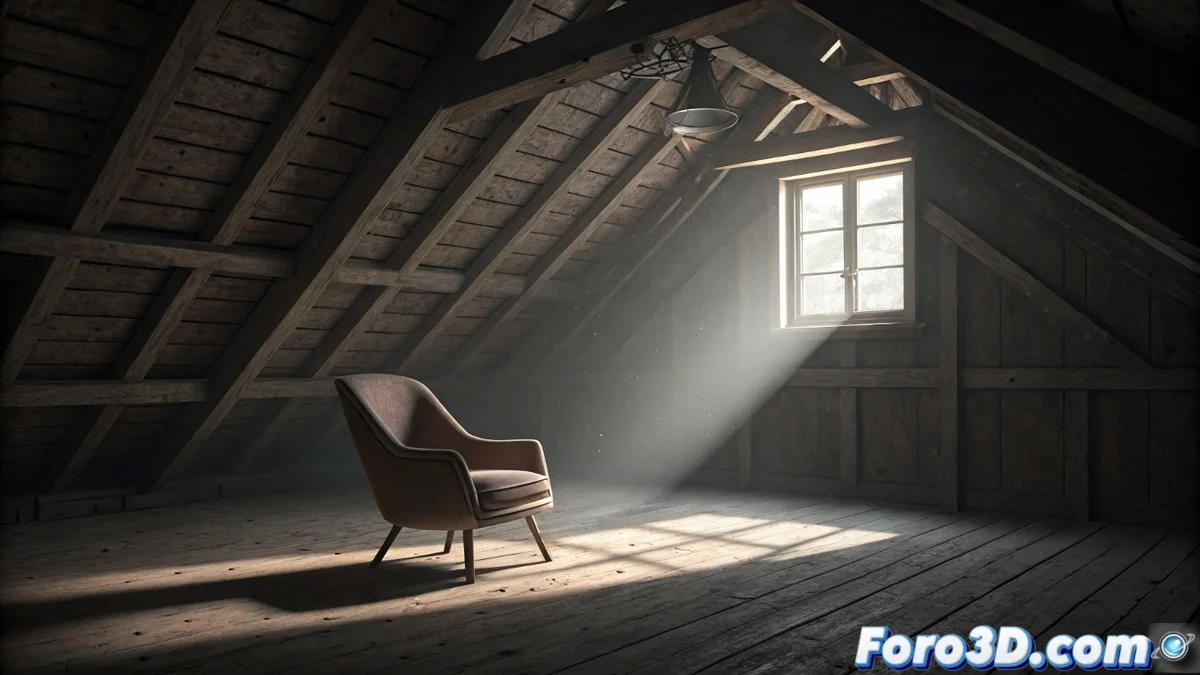
Invisible Source Light Breaks Logic in 3D Graphics
A common problem when creating 3D images or animations arises when light clearly reaches an object, but the environment does not show where it comes from. Omitting elements like the sun, a lamp, or a window makes the viewer perceive a disconnection. This lack of coherence weakens the image and makes objects appear artificial or floating without context. The human brain expects to see a logical relationship between the lighting and its origin. 🧠
Why It Is Crucial to Justify the Direction of Every Light Ray
To build believable scenes, it is essential to plan lighting with purpose. Every beam of light must be traceable to a logical emitter within the represented world, whether visible or suggested. If an intense key light is used from one side, an element like a half-open door or a lit computer screen must be included or hinted at. This not only resolves visual logic but also adds depth and enriches the scene's narrative.
Consequences of Not Justifying the Light:- The composition loses credibility and seems fake.
- Objects give the impression of floating, without anchoring in the space.
- The viewer's immersion is broken, as they seek coherence.
A perfectly lit character in a completely sealed and dark room only convinces in stories where magic is the default shader.
How to Fix the Problem in 3D Software
In applications like Blender, Maya, or Unreal Engine, this error can be solved by reviewing the position and properties of each light. Ensuring that its angle and intensity match the environment's geometry is key. Using emissive objects or textures with lighting (like a plane simulating a window) usually yields more convincing results than relying solely on abstract lights like Directional or Point without visual support to justify them.
Practical Techniques to Implement:- Review and adjust the position of each light to match architectural or decorative elements.
- Use geometry with emissive materials (planes, windows, screens) as realistic light sources.
- Render separate lighting passes to analyze and precisely adjust each light contribution.
Visual Coherence as the Basis of Credibility
Achieving logical and justified lighting in a 3D scene is a fundamental pillar for producing believable images. Planning light sources, whether explicit or suggested, and using technical tools to adjust their interaction with the environment, prevents the composition from feeling fake. Coherent lighting not only anchors objects in space but also enhances the story the image seeks to tell. ✨