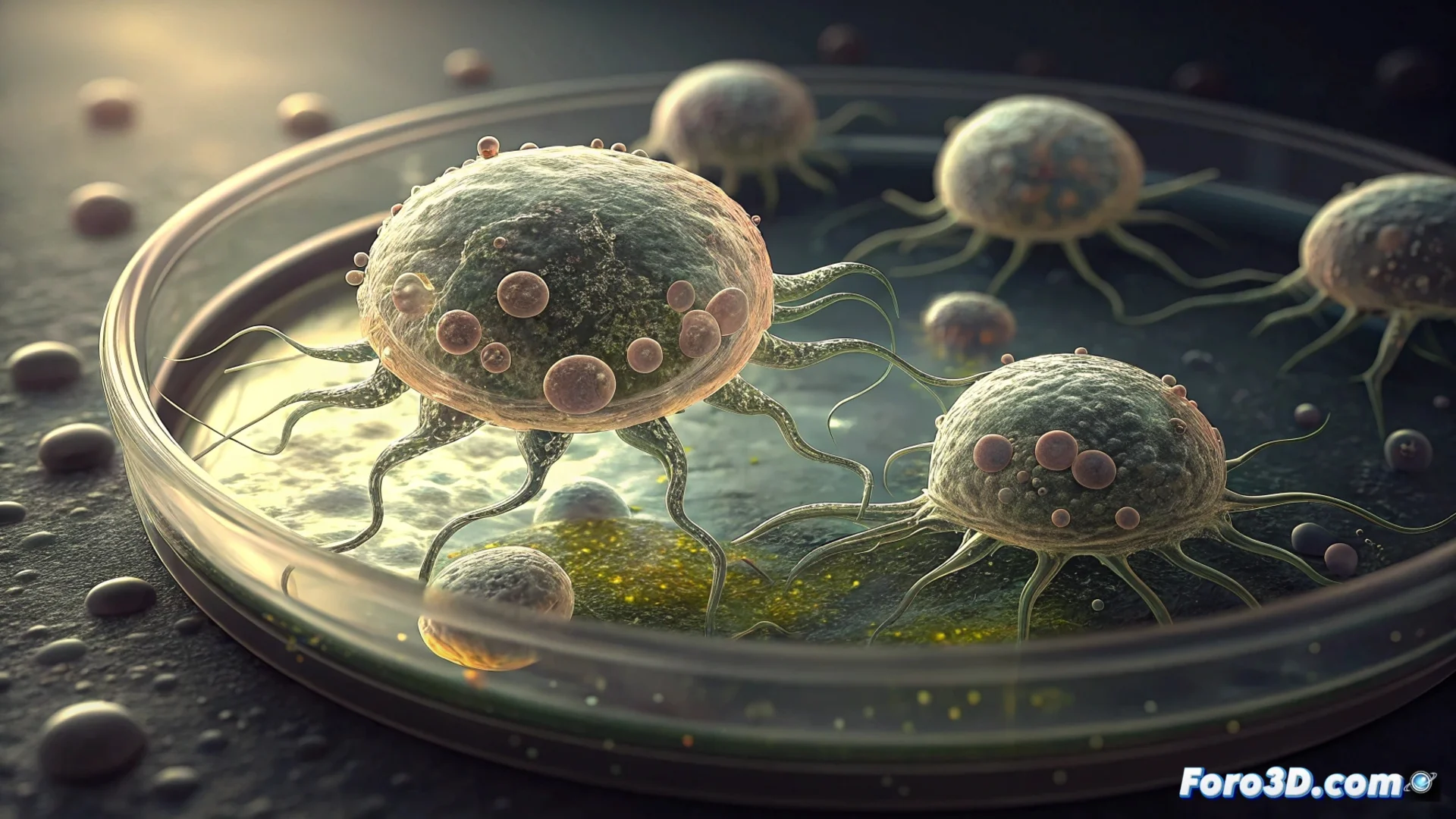
Life Challenges Definitions with Xenobots and Synthetic Biology
Science attempts to delineate what life is, but the complexity of biological systems and the emergence of forms like xenobots complicate this task. These assemblies, created from frog cells and designed by artificial intelligence algorithms, exhibit capabilities that challenge traditional categories. 🧬
Artificial Intelligence Redraws the Biological Frontier
Xenobots are neither machines nor common organisms. They represent cellular collectives with behaviors that emerge from their design. This process, guided by AI, reveals that life can manifest in forms radically different from those known, operating more as a dynamic system that processes information and uses energy than as a static set of parts.
Characteristics that blur boundaries:- They can move and self-heal in ways not observed in nature.
- They demonstrate a basic capacity for replication, assembling loose cells into new structures.
- Their design using evolutionary algorithms suggests that life is an adaptable process.
The difficulty in defining life is not a failure, but a reflection of its richness and diversity.
A Spectrum of Complexity Instead of a List of Rules
Researchers are abandoning the search for a universal list of characteristics, as exceptions always arise. Instead, they contemplate a spectrum of complexity where systems like xenobots occupy a fascinating gray zone. This approach expands with each discovery, from viruses to possible alien biochemistries.
Implications and Future Perspectives:- It opens new avenues in regenerative medicine and materials science with programmable biological assemblies.
- It drives rethinking fundamental concepts in biology and philosophy.
- It expands the horizon for space exploration and the search for life based on different principles.
The Search Redefines the Scientific Debate
The inability to close a definition demonstrates the elusive and diverse nature of life. Designed systems like xenobots force us to evaluate what it means to be alive, driving synthetic biology and generating an ongoing debate that, in itself, seems a sign of the vitality of scientific thought. 🤔