LiDAR and its Integration with 3D Printing: Applications and Workflow
LiDAR (Light Detection and Ranging) is an advanced technology that uses laser pulses to measure distances and create high-fidelity three-dimensional representations. By emitting light beams and calculating their return time, it generates detailed point clouds that capture the exact geometry of any surface or object. This millimeter precision makes it an ideal solution for digitizing intricate shapes that would be complicated to model manually. 🎯
Workflow: From Scanning to 3D Printing
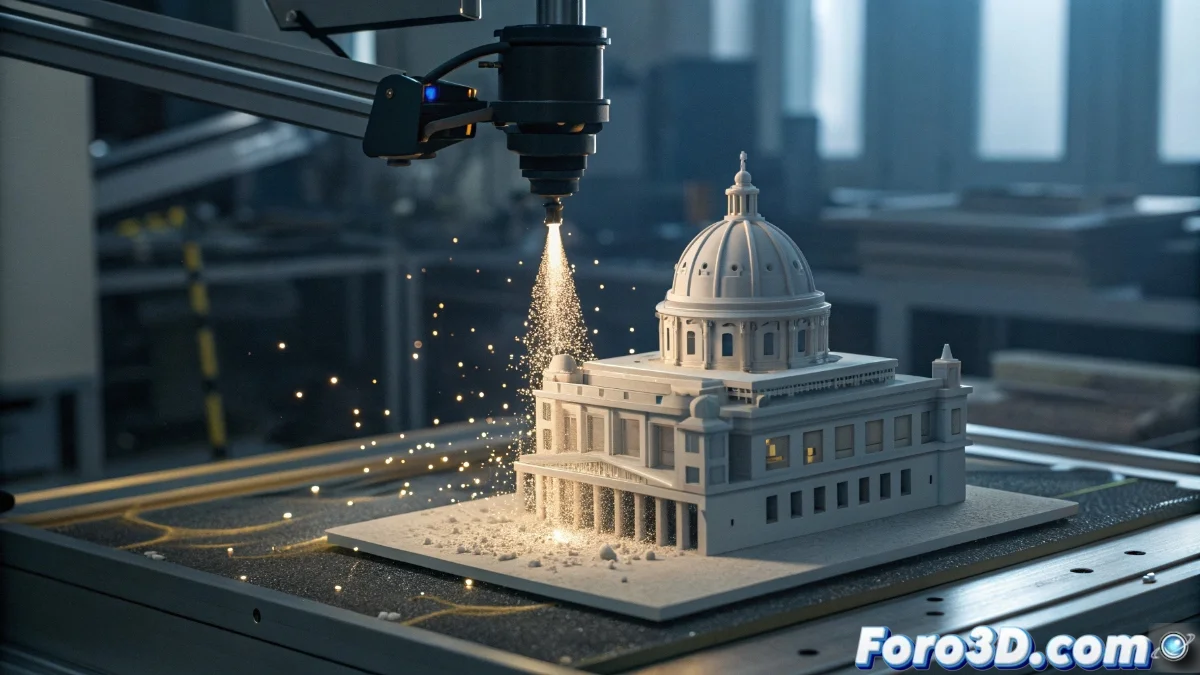
The process begins with capturing the geometry using a LiDAR scanner, which produces a dense three-dimensional mesh. Subsequently, specialized software is used to clean imperfections, reduce the number of polygons, and adapt the model for additive manufacturing. Compatibility with formats like STL and OBJ ensures a smooth transition from digitization to 3D printing, facilitating the creation of physical replicas.
Highlighted Applications of LiDAR Combined with 3D Printing:- Cultural Heritage: Replication of archaeological artifacts without direct contact, preserving fragile pieces.
- Industrial Design: Scanning prototypes for rapid iterations and improvements via 3D printing.
- Medicine: Creation of custom prostheses from patient anatomy scans.
Innovation does not always mean creating from scratch; sometimes, it lies in perfecting the ability to replicate exactly what already exists.
Impact on Reverse Engineering and Other Sectors
Reverse engineering benefits greatly from digitizing complex components for reproduction or modification. Additionally, sectors like architecture and automotive use this technology to optimize designs and ensure precision in their projects.
Key Advantages of LiDAR and 3D Printing Integration:- Millimeter precision in capturing and reproducing objects.
- Reduction in prototype development times.
- Ability to work with complex geometries without distortions.
Final Reflection: The Paradox of Precise Replication
It is ironic that we use high-precision laser technology to scan existing objects and then print them layer by layer, achieving nearly identical copies. This process demonstrates that, at times, innovation focuses on refining the art of replication rather than inventing from scratch, offering effective solutions in multiple disciplines. 🌟